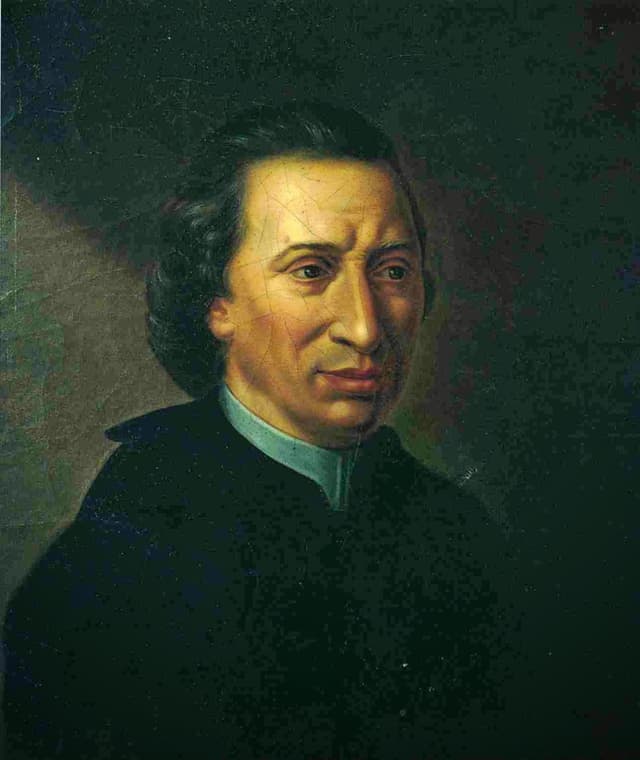
Luigi Lanzi
Luigi Antonio Lanzi was an Italian Jesuit priest renowned for his contributions to art history and archaeology. Born in 1732, he dedicated much of his life to the study of art, producing significant works that examined the evolution of Italian painting and sculpture. His most notable publication, 'Storia pittorica dell'Italia,' offered a comprehensive overview of Italian art from its origins to the 18th century, establishing him as a pivotal figure in the field. Lanzi's scholarship not only highlighted the achievements of individual artists but also contextualized their work within the broader cultural and historical landscape of Italy. Lanzi's influence extended beyond his writings; he played a crucial role in the development of art criticism and the appreciation of Italian artistic heritage. His methodical approach and emphasis on historical context laid the groundwork for future art historians. Lanzi's legacy is further cemented by his burial in the church of Santa Croce in Florence, alongside the great Michelangelo, symbolizing his lasting impact on the art world and his dedication to the preservation of Italy's artistic legacy.
Books from the author




Link to this page
Add a free, dofollow link to Lex on your blog, forum, syllabus, or reading list.

<a href="https://lex-books.com/author/luigi-lanzi"><img src="https://lex-books.com/badges/read-on-lex.svg" alt="Luigi Lanzi on Lex" width="160" height="40"></a>[](https://lex-books.com/author/luigi-lanzi)[url=https://lex-books.com/author/luigi-lanzi][img]https://lex-books.com/badges/read-on-lex.svg[/img][/url]Luigi Lanzi on Lex: https://lex-books.com/author/luigi-lanzi