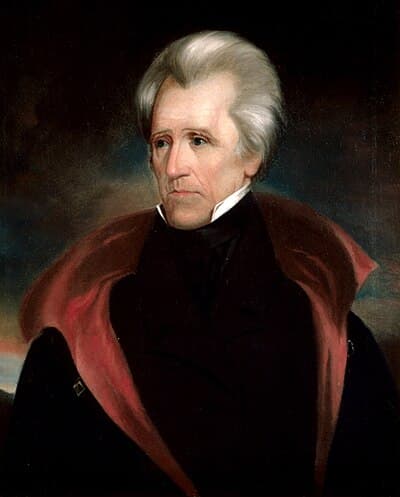
Andrew Jackson
Andrew Jackson was the seventh president of the United States, serving from 1829 to 1837, and is known for his significant impact on American politics and society. Born in the colonial Carolinas, he emerged from humble beginnings to become a prominent military leader and a frontier lawyer. His political career included roles in both the U.S. House of Representatives and the Senate, as well as a term as a justice on the Tennessee Superior Court. Jackson gained national fame as a U.S. Army general, particularly for his decisive victory at the Battle of New Orleans during the War of 1812, which solidified his status as a national hero. His presidency marked the rise of Jacksonian democracy, characterized by a focus on the common man and a shift towards greater political participation for white male citizens. However, Jackson's legacy is deeply controversial. He was a proponent of policies that led to the forced removal of Native Americans from their ancestral lands, most notably through the Indian Removal Act of 1830, which resulted in the tragic Trail of Tears. His administration also faced significant challenges, including a confrontation with South Carolina over tariff nullification and his opposition to the Second Bank of the United States, which he viewed as corrupt. Despite these controversies, Jackson's influence on the Democratic Party and American political culture was profound, as he helped shape a new political coalition that emphasized populism and the interests of the working class. His presidency remains a subject of intense debate, reflecting both his contributions to the nation and the darker aspects of his policies and actions.
Famous Quotes
View all 15 quotes“It is a damn poor mind that can think of only one way to spell a word.””
“Desperate courage makes One a majority.””
“I was born for the storm, and a calm does not suit me.””
Books from the author

Link to this page
Add a free, dofollow link to Lex on your blog, forum, syllabus, or reading list.

<a href="https://lex-books.com/author/andrew-jackson"><img src="https://lex-books.com/badges/read-on-lex.svg" alt="Andrew Jackson on Lex" width="160" height="40"></a>[](https://lex-books.com/author/andrew-jackson)[url=https://lex-books.com/author/andrew-jackson][img]https://lex-books.com/badges/read-on-lex.svg[/img][/url]Andrew Jackson on Lex: https://lex-books.com/author/andrew-jackson