With the Eyes Shut: 1898
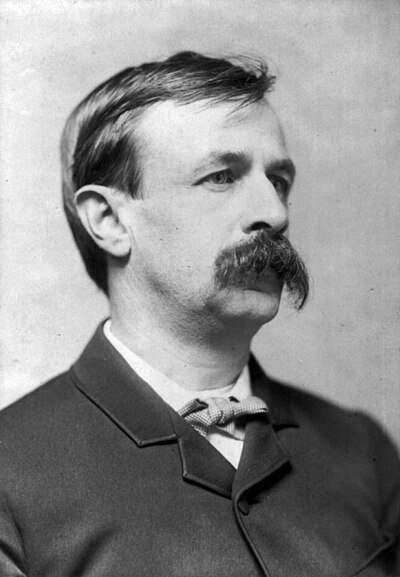
A man board a train in 1898, too queasy to read, when a salesman offers him a miraculous solution: a device that reads books aloud. What begins as convenience becomes a journey through a world where printed words have vanished entirely, replaced by phonographs that deliver literature, tell time, and carry correspondence. Edward Bellamy, the author of the utopian classic Looking Backward, constructs this speculative slice-of-life with a sly, ironic wink. His protagonist marvels at a talking clock whose 'low, rich, thrilling contralto tones' transform the mundane act of checking the hour into an almost erotic experience, revealing both the genuine wonder and the absurdity of a society that has outsourced memory and meaning to machines. With sharp comedic timing, Bellamy interrogates what is gained and lost when technology fulfills our deepest desires for ease and entertainment. More than a period curiosity, this is a surprisingly funny meditation on humanity's eternal relationship with innovation, and it anticipates with eerie precision the world we now inhabit: one where voices emerge from boxes, where we listen more than we read, and where the impulse to outsource cognition remains as tempting as ever.
Editions
Link to this book
Add a free, dofollow link to Lex on your blog, forum, syllabus, or reading list.

<a href="https://lex-books.com/book/with-the-eyes-shut-1898-0604d1e7-d9a2-4676-811c-067bf5bec4ed"><img src="https://lex-books.com/badges/read-on-lex.svg" alt="Read With the Eyes Shut: 1898 by Edward Bellamy free on Lex" width="160" height="40"></a>[](https://lex-books.com/book/with-the-eyes-shut-1898-0604d1e7-d9a2-4676-811c-067bf5bec4ed)[url=https://lex-books.com/book/with-the-eyes-shut-1898-0604d1e7-d9a2-4676-811c-067bf5bec4ed][img]https://lex-books.com/badges/read-on-lex.svg[/img][/url]Read With the Eyes Shut: 1898 by Edward Bellamy free on Lex: https://lex-books.com/book/with-the-eyes-shut-1898-0604d1e7-d9a2-4676-811c-067bf5bec4edCite this book
Reading this edition for a paper or guide? Copy a citation.
Bellamy, Edward. With the Eyes Shut: 1898. Lex, lex-books.com/book/with-the-eyes-shut-1898-0604d1e7-d9a2-4676-811c-067bf5bec4ed.Bellamy, E. (n.d.). With the Eyes Shut: 1898. Lex. https://lex-books.com/book/with-the-eyes-shut-1898-0604d1e7-d9a2-4676-811c-067bf5bec4edBellamy, Edward. With the Eyes Shut: 1898. Lex. https://lex-books.com/book/with-the-eyes-shut-1898-0604d1e7-d9a2-4676-811c-067bf5bec4ed.