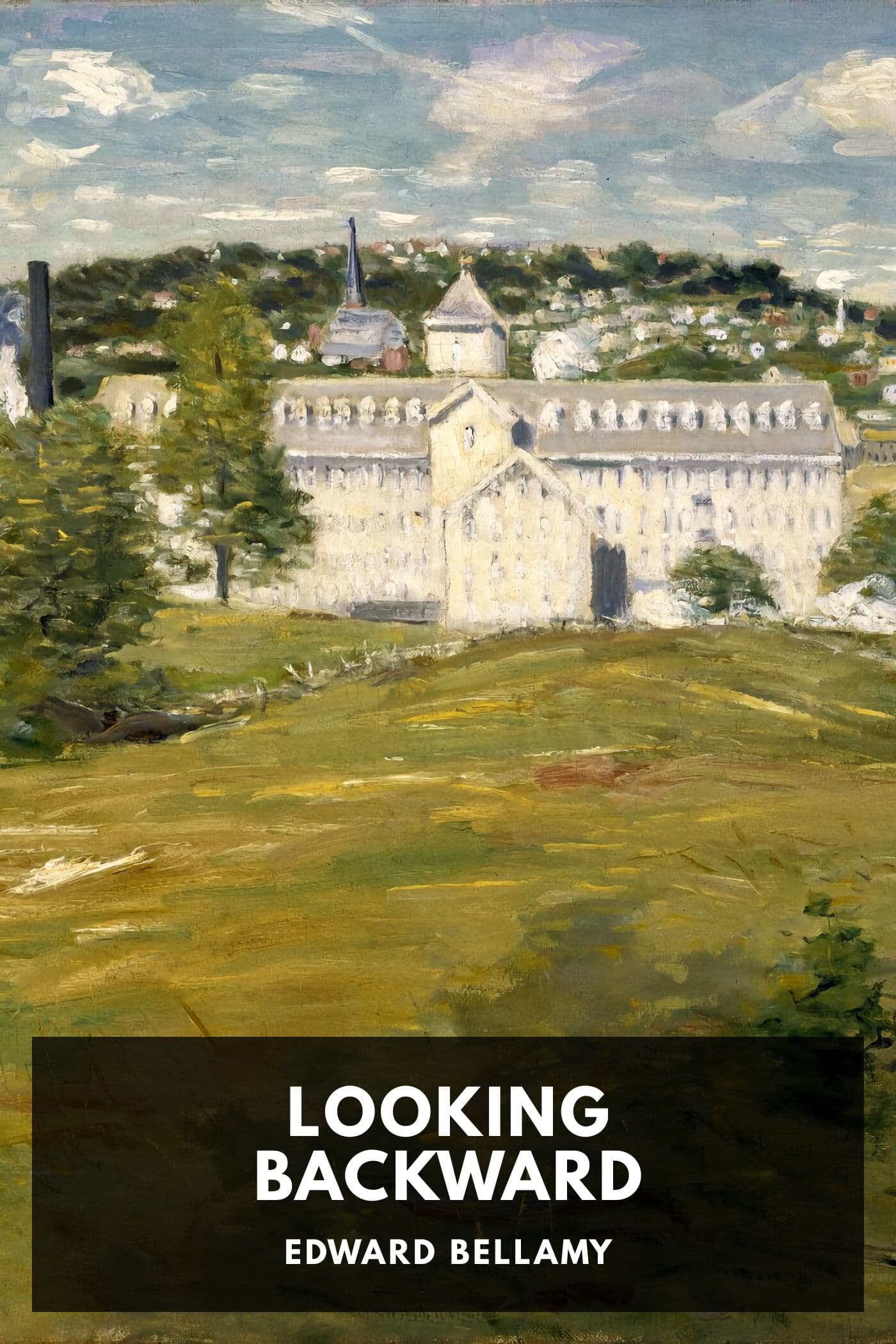
Looking Backward, 2000 to 1887
In 1887, Julian West, a wealthy Bostonian plagued by insomnia, falls into a mysterious deep sleep and awakens in the year 2000 to find his world utterly transformed. The grinding poverty, brutal labor struggles, and grotesque inequality of late nineteenth-century America have been replaced by a society where cooperation has replaced competition, and the means of production serve all citizens rather than a privileged few. Through his conversations with the kindly Dr. Leete and his daughter Edith, West learns how this great change came about, and gradually comes to see his own time as a barbaric age of unnecessary suffering. Originally published in 1888, this electrifying vision of a peaceful, prosperous future became one of the most influential novels in American history, inspiring real political movements and shaping the way generations imagined social progress. It remains a fascinating artifact of Victorian optimism and a provocation to every reader who wonders whether another world is possible.
Editions

X-Ray
“Human history, like all great movements, was cyclical, and returned to the point of beginning. The idea of indefinite progress in a right line was a chimera of the imagination, with no analogue in nature. The parabola of a comet was perhaps a yet better illustration of the career of humanity. Tending upward and sunward from the aphelion of barbarism, the race attained the perihelion of civilization only to plunge downward once more to its nether goal in the regions of chaos.””
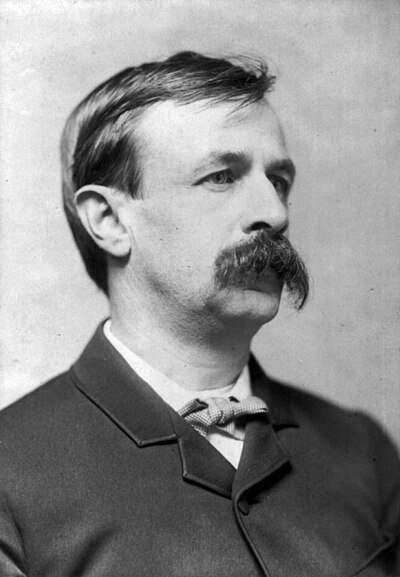
— Edward Bellamy
“Is a man satisfied, merely because he is perfumed himself, to mingle with a malodorous crowd?””
— Edward Bellamy
“There is no such thing in a civilized society as self-support. In a state of society so barbarous as not even to know family cooperation, each individual may possibly support himself, though even then for a part of his life only; but from the moment that men begin to live together, and constitute even the rudest of society, self-support becomes impossible. As men grow more civilized, and the subdivision of occupations and services is carried out, a complex mutual dependence becomes the universal rule. Every man, however solitary may seem his occupation, is a member of a vast industrial partnership, as large as the nation, as large as humanity. The necessity of mutual dependence should imply the duty and guarantee of mutual support...””
— Edward Bellamy
“If bread is the first necessity of life, recreation is a close second.””
— Edward Bellamy
“Caligula wished that the Roman people had but one neck that he might cut it off, and as I read this letter I am afraid that for a moment I was capable of wishing the same thing concerning the laboring class of America.””
— Edward Bellamy
“The effect of change in surroundings is like that of lapse of time in making the past seem remote.””
— Edward Bellamy
“With a tear for the dark past, turn we then to the dazzling future, and, veiling our eyes, press forward. The long and weary winter of the race is ended. Its summer has begun. Humanity has burst the chrysalis. The heavens are before it.””
— Edward Bellamy
“The folly of men not their hard heartedness was the great cause of the world s poverty.””
— Edward Bellamy
“Nothing could be simpler,” was Dr. Leete’s reply. “We require of each that he shall make the same effort; that is, we demand of him the best service it is in his power to give.” “And supposing all do the best they can,” I answered, “the amount of the product resulting is twice greater from one man than from another.” “Very true,” replied Dr. Leete; “but the amount of the resulting product has nothing whatever to do with the question, which is one of desert. Desert is a moral question, and the amount of the product a material quantity. It would be an extraordinary sort of logic which should try to determine a moral question by a material standard. The amount of the effort alone is pertinent to the question of desert. All men who do their best, do the same.””
— Edward Bellamy
Link to this book
Add a free, dofollow link to Lex on your blog, forum, syllabus, or reading list.

<a href="https://lex-books.com/book/looking-backward-2000-to-1887-6861a849-b759-43f4-8521-fafedd82f3d8"><img src="https://lex-books.com/badges/read-on-lex.svg" alt="Read Looking Backward, 2000 to 1887 by Edward Bellamy free on Lex" width="160" height="40"></a>[](https://lex-books.com/book/looking-backward-2000-to-1887-6861a849-b759-43f4-8521-fafedd82f3d8)[url=https://lex-books.com/book/looking-backward-2000-to-1887-6861a849-b759-43f4-8521-fafedd82f3d8][img]https://lex-books.com/badges/read-on-lex.svg[/img][/url]Read Looking Backward, 2000 to 1887 by Edward Bellamy free on Lex: https://lex-books.com/book/looking-backward-2000-to-1887-6861a849-b759-43f4-8521-fafedd82f3d8Cite this book
Reading this edition for a paper or guide? Copy a citation.
Bellamy, Edward. Looking Backward, 2000 to 1887. Lex, lex-books.com/book/looking-backward-2000-to-1887-6861a849-b759-43f4-8521-fafedd82f3d8.Bellamy, E. (n.d.). Looking Backward, 2000 to 1887. Lex. https://lex-books.com/book/looking-backward-2000-to-1887-6861a849-b759-43f4-8521-fafedd82f3d8Bellamy, Edward. Looking Backward, 2000 to 1887. Lex. https://lex-books.com/book/looking-backward-2000-to-1887-6861a849-b759-43f4-8521-fafedd82f3d8.