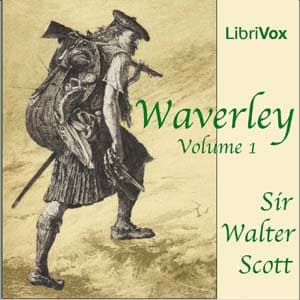
Waverley; Or, 'tis Sixty Years Since
1814
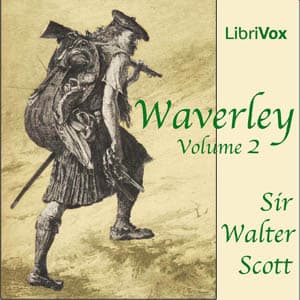
Published in 1814, 'Waverley; Or, 'tis Sixty Years Since' is a historical novel by Walter Scott that follows Edward Waverley, a young Englishman who becomes embroiled in the Jacobite Rebellion of 1745-1746. The narrative explores Edward's internal conflicts shaped by familial loyalties and the socio-political landscape of 18th-century Scotland. Notable for being one of the first historical novels, it offers insights into the tensions between Jacobites and Hanoverians during a tumultuous period in British history.
Editions

X-Ray
“Wounds sustained for the sake of conscience carry their own balsam with the blow.””
— Walter Scott
“No word of commiseration can make a burden feel one feather's weight lighter to the slave who must carry it.””
— Walter Scott
“In the wide pile, by others heeded not,Hers was one sacred solitary spot,Whose gloomy aisles and bending shelves containFor moral hunger food, and cures for moral pain.””
— Walter Scott
“Trade has all the fascination of gambling without its moral guilt.””
— Walter Scott
“How nearly can what we most despise and hate, approach in outward manner to that which we most venerate!””
— Walter Scott
“Honour is a homicide and a bloodspiller, that gangs about making frays in the street; but Credit is a decent honest man, that sits at hame and makes the pat play.””
— Walter Scott
“I should be rather like the wild hawk, who, barred the free exercise of his soar through heaven, will dash himself to pieces against the bars of his cage.””
— Walter Scott
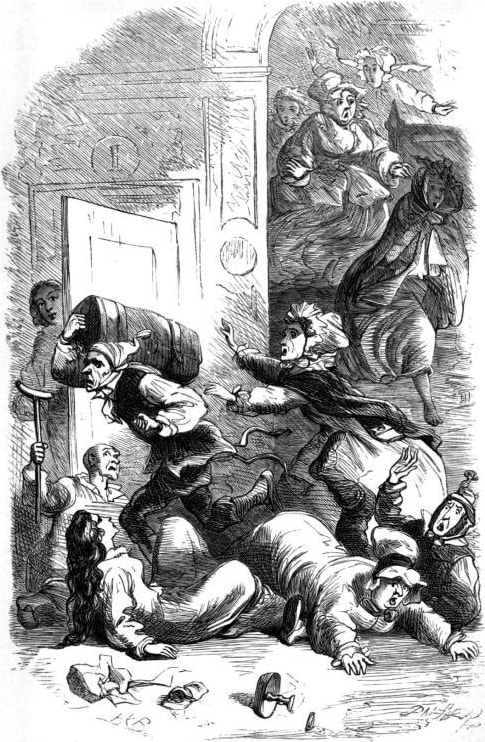
“I had just time to give a glance at these matters, when about twelve blue-coated servants burst into the hall with much tumult and talk, each rather employed in directing his comrades than in discharging his own duty. Some brought blocks and billets to the fire, which roared, blazed, and ascended, half in smoke, half in flame, up a huge tunnel, with an opening wide enough to accommodate a stone seat within its ample vault, and which was fronted, by way of chimney-piece, with a huge piece of heavy architecture, where the monsters of heraldry, embodied by the art of some Northumbrian chisel, grinned and ramped in red free-stone, now japanned by the smoke of centuries. Others of these old-fashioned serving-men bore huge smoking dishes, loaded with substantial fare; others brought in cups, flagons, bottles, yea barrels of liquor. All tramped, kicked, plunged, shouldered, and jostled, doing as little service with as much tumult as could well be imagined””
— Walter Scott
“unfortunate and ill-advised James II. But””
— Walter Scott
Link to this book
Add a free, dofollow link to Lex on your blog, forum, syllabus, or reading list.

<a href="https://lex-books.com/book/waverley-or-tis-sixty-years-since-86771504-abc8-47a8-b422-962b6e55617b"><img src="https://lex-books.com/badges/read-on-lex.svg" alt="Read Waverley; Or, 'tis Sixty Years Since by Walter Scott free on Lex" width="160" height="40"></a>[](https://lex-books.com/book/waverley-or-tis-sixty-years-since-86771504-abc8-47a8-b422-962b6e55617b)[url=https://lex-books.com/book/waverley-or-tis-sixty-years-since-86771504-abc8-47a8-b422-962b6e55617b][img]https://lex-books.com/badges/read-on-lex.svg[/img][/url]Read Waverley; Or, 'tis Sixty Years Since by Walter Scott free on Lex: https://lex-books.com/book/waverley-or-tis-sixty-years-since-86771504-abc8-47a8-b422-962b6e55617bCite this book
Reading this edition for a paper or guide? Copy a citation.
Scott, Walter. Waverley; Or, 'tis Sixty Years Since. Lex, lex-books.com/book/waverley-or-tis-sixty-years-since-86771504-abc8-47a8-b422-962b6e55617b.Scott, W. (1814). Waverley; Or, 'tis Sixty Years Since. Lex. https://lex-books.com/book/waverley-or-tis-sixty-years-since-86771504-abc8-47a8-b422-962b6e55617bScott, Walter. Waverley; Or, 'tis Sixty Years Since. Lex. https://lex-books.com/book/waverley-or-tis-sixty-years-since-86771504-abc8-47a8-b422-962b6e55617b.