Thoughts of Marcus Aurelius
1862
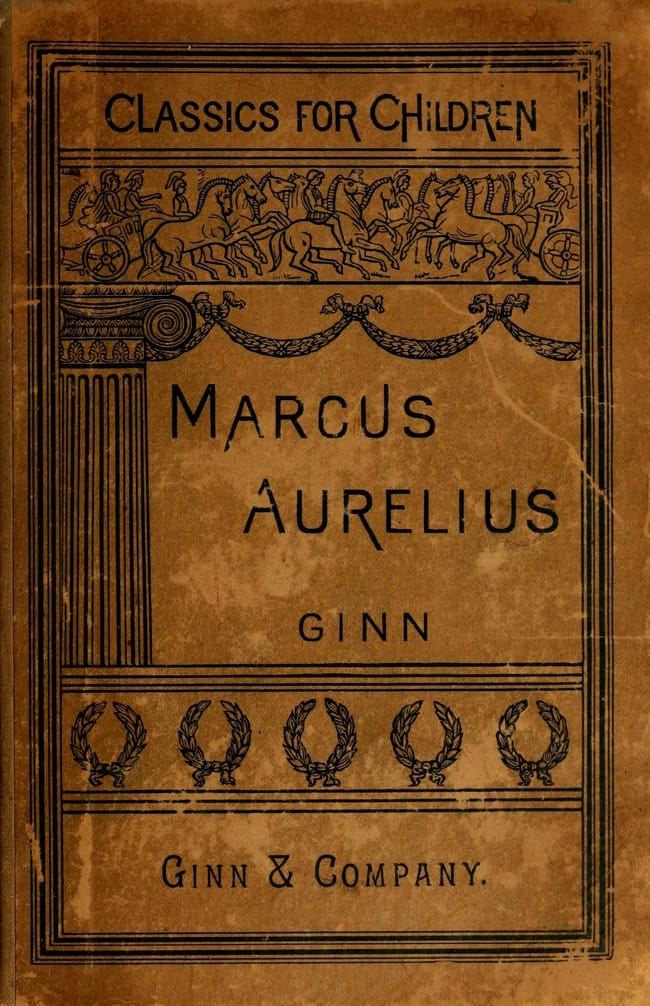
Thoughts of Marcus Aurelius
Emperor of Rome Marcus Aurelius
1862
Translated by George Long
Here is a ruler who commanded the world's greatest empire, who fought wars and buried his children, who faced plagues and conspiracies - and who chose to spend his nights writing private notes to himself about how to be a better human being. That is the miracle of the Meditations. Marcus Aurelius never intended these pages for publication; he wrote them as Stoic exercises, as daily discipline, as a conversation with his own soul. The result is one of the most intimate and honest works of philosophy ever preserved. Across twelve books of fragmented reflections, the Roman emperor examines what it means to live with virtue, to accept what cannot be controlled, to meet suffering with reason and compassion. He reminds himself constantly of mortality, of the brevity of fame, of the interconnectedness of all things. This is not abstract theory - it is a man thinking through his own life in real time, trying to get it right. The Meditations has survived nearly two millennia because it speaks to something permanent in us: the desire to face existence with dignity, to act justly despite chaos, to understand ourselves with ruthless honesty.
Editions
X-Ray
“You have power over your mind - not outside events. Realize this, and you will find strength.””
— Emperor of Rome Marcus Aurelius
“Dwell on the beauty of life. Watch the stars, and see yourself running with them.””
— Emperor of Rome Marcus Aurelius
“The happiness of your life depends upon the quality of your thoughts.””
— Emperor of Rome Marcus Aurelius
“Everything we hear is an opinion, not a fact. Everything we see is a perspective, not the truth.””
— Emperor of Rome Marcus Aurelius
“Waste no more time arguing about what a good man should be. Be one.””
— Emperor of Rome Marcus Aurelius
“If you are distressed by anything external, the pain is not due to the thing itself, but to your estimate of it; and this you have the power to revoke at any moment.””
— Emperor of Rome Marcus Aurelius
“When you arise in the morning think of what a privilege it is to be alive, to think, to enjoy, to love ...””
— Emperor of Rome Marcus Aurelius
“The best revenge is to be unlike him who performed the injury.””
— Emperor of Rome Marcus Aurelius
“The soul becomes dyed with the colour of its thoughts.””
— Emperor of Rome Marcus Aurelius
Link to this book
Add a free, dofollow link to Lex on your blog, forum, syllabus, or reading list.

<a href="https://lex-books.com/book/thoughts-of-marcus-aurelius-51c0ff5c-7d6b-42a2-9840-0a8bd1ff977e"><img src="https://lex-books.com/badges/read-on-lex.svg" alt="Read Thoughts of Marcus Aurelius by Emperor of Rome Marcus Aurelius free on Lex" width="160" height="40"></a>[](https://lex-books.com/book/thoughts-of-marcus-aurelius-51c0ff5c-7d6b-42a2-9840-0a8bd1ff977e)[url=https://lex-books.com/book/thoughts-of-marcus-aurelius-51c0ff5c-7d6b-42a2-9840-0a8bd1ff977e][img]https://lex-books.com/badges/read-on-lex.svg[/img][/url]Read Thoughts of Marcus Aurelius by Emperor of Rome Marcus Aurelius free on Lex: https://lex-books.com/book/thoughts-of-marcus-aurelius-51c0ff5c-7d6b-42a2-9840-0a8bd1ff977eCite this book
Reading this edition for a paper or guide? Copy a citation.
Aurelius, Emperor of Rome Marcus. Thoughts of Marcus Aurelius. Lex, lex-books.com/book/thoughts-of-marcus-aurelius-51c0ff5c-7d6b-42a2-9840-0a8bd1ff977e.Aurelius, E. O. R. M. (1862). Thoughts of Marcus Aurelius. Lex. https://lex-books.com/book/thoughts-of-marcus-aurelius-51c0ff5c-7d6b-42a2-9840-0a8bd1ff977eAurelius, Emperor of Rome Marcus. Thoughts of Marcus Aurelius. Lex. https://lex-books.com/book/thoughts-of-marcus-aurelius-51c0ff5c-7d6b-42a2-9840-0a8bd1ff977e.