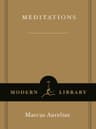
Meditations
180

Meditations
Emperor of Rome Marcus Aurelius
180
A Roman emperor wrote this book to no one but himself, and somehow it became one of the most enduring works of philosophy ever written. Marcus Aurelius jotted down these reflections during military campaigns and sleepless nights, wrestling with questions that haunt any thinking person: How should I live? What can I control? What does it mean to be good? The answers he found, rooted in Stoicism, form a practical manual for navigating pain, loss, power, and death without losing yourself. These aren't abstract treatises but gritty, intimate notes from a man trying to be better, now with the weight of an empire on his shoulders. Two thousand years later, we still read them because the struggles haven't changed. If you have ever wondered how to bear suffering, act with justice, or face your own mortality with dignity, you are reading the same private counsel that once steadied the ruler of the known world.
Editions



X-Ray
“You have power over your mind - not outside events. Realize this, and you will find strength.””
— Emperor of Rome Marcus Aurelius
“Dwell on the beauty of life. Watch the stars, and see yourself running with them.””
— Emperor of Rome Marcus Aurelius
“The happiness of your life depends upon the quality of your thoughts.””
— Emperor of Rome Marcus Aurelius
“Everything we hear is an opinion, not a fact. Everything we see is a perspective, not the truth.””
— Emperor of Rome Marcus Aurelius
“Waste no more time arguing about what a good man should be. Be one.””
— Emperor of Rome Marcus Aurelius
“If you are distressed by anything external, the pain is not due to the thing itself, but to your estimate of it; and this you have the power to revoke at any moment.””
— Emperor of Rome Marcus Aurelius
“When you arise in the morning think of what a privilege it is to be alive, to think, to enjoy, to love ...””
— Emperor of Rome Marcus Aurelius
“The best revenge is to be unlike him who performed the injury.””
— Emperor of Rome Marcus Aurelius
“The soul becomes dyed with the colour of its thoughts.””
— Emperor of Rome Marcus Aurelius
About Meditations
Chapter Summaries
- 1
- Marcus Aurelius lists the virtues and lessons he learned from various family members and teachers, including gentleness from his grandfather, religiousness from his mother, and steadfastness from Apollonius. This book serves as a gratitude list and an outline of the moral foundations he built.
- 2
- Marcus urges himself to live fully in the present, to perform every action with integrity as if it were his last, and to understand his place in the universe. He reflects on the transience of life and fame, the nature of sin (preferring lust over anger), and the importance of focusing on one's inner spirit rather than external distractions.
- 3
- Marcus contemplates the decay of the intellect with age and the natural beauty found in all things, even those seemingly imperfect or decaying. He reflects on the deaths of famous historical figures to underscore life's brevity and the universality of change, urging himself to focus on present, just actions and to avoid idle thoughts about others.
Key Themes
- Mortality and Transience
- Marcus Aurelius constantly reminds himself of the fleeting nature of human life, fame, and all worldly things. He emphasizes that all things and people eventually pass away, dissolving back into the universal substance, urging the reader to live virtuously in the present moment rather than clinging to temporary attachments or seeking posthumous glory.
- Duty and Virtue
- A core Stoic theme, Marcus stresses the paramount importance of performing one's duty with justice, temperance, courage, and wisdom. He believes that true happiness and the proper function of a rational being lie in acting in accordance with one's nature and for the common good, regardless of external circumstances or outcomes.
- Acceptance and Providence
- Marcus advocates for a complete acceptance of whatever happens, viewing all events as either divinely ordained by a benevolent Providence or as necessary consequences of the universe's natural order. This acceptance is crucial for maintaining inner tranquility and avoiding discontent, as nothing truly evil can befall a good person's soul.
Characters
- Marcus Aurelius Antoninus(protagonist)
- The Emperor of Rome and author of 'Meditations,' he records his innermost thoughts and Stoic philosophical reflections for self-improvement and guidance in life.
Link to this book
Add a free, dofollow link to Lex on your blog, forum, syllabus, or reading list.

<a href="https://lex-books.com/book/meditations-d79d080c-e6fe-434c-9c41-0fed202c1f38"><img src="https://lex-books.com/badges/read-on-lex.svg" alt="Read Meditations by Emperor of Rome Marcus Aurelius free on Lex" width="160" height="40"></a>[](https://lex-books.com/book/meditations-d79d080c-e6fe-434c-9c41-0fed202c1f38)[url=https://lex-books.com/book/meditations-d79d080c-e6fe-434c-9c41-0fed202c1f38][img]https://lex-books.com/badges/read-on-lex.svg[/img][/url]Read Meditations by Emperor of Rome Marcus Aurelius free on Lex: https://lex-books.com/book/meditations-d79d080c-e6fe-434c-9c41-0fed202c1f38Cite this book
Reading this edition for a paper or guide? Copy a citation.
Aurelius, Emperor of Rome Marcus. Meditations. Lex, lex-books.com/book/meditations-d79d080c-e6fe-434c-9c41-0fed202c1f38.Aurelius, E. O. R. M. (180). Meditations. Lex. https://lex-books.com/book/meditations-d79d080c-e6fe-434c-9c41-0fed202c1f38Aurelius, Emperor of Rome Marcus. Meditations. Lex. https://lex-books.com/book/meditations-d79d080c-e6fe-434c-9c41-0fed202c1f38.