Theaetetus
1861
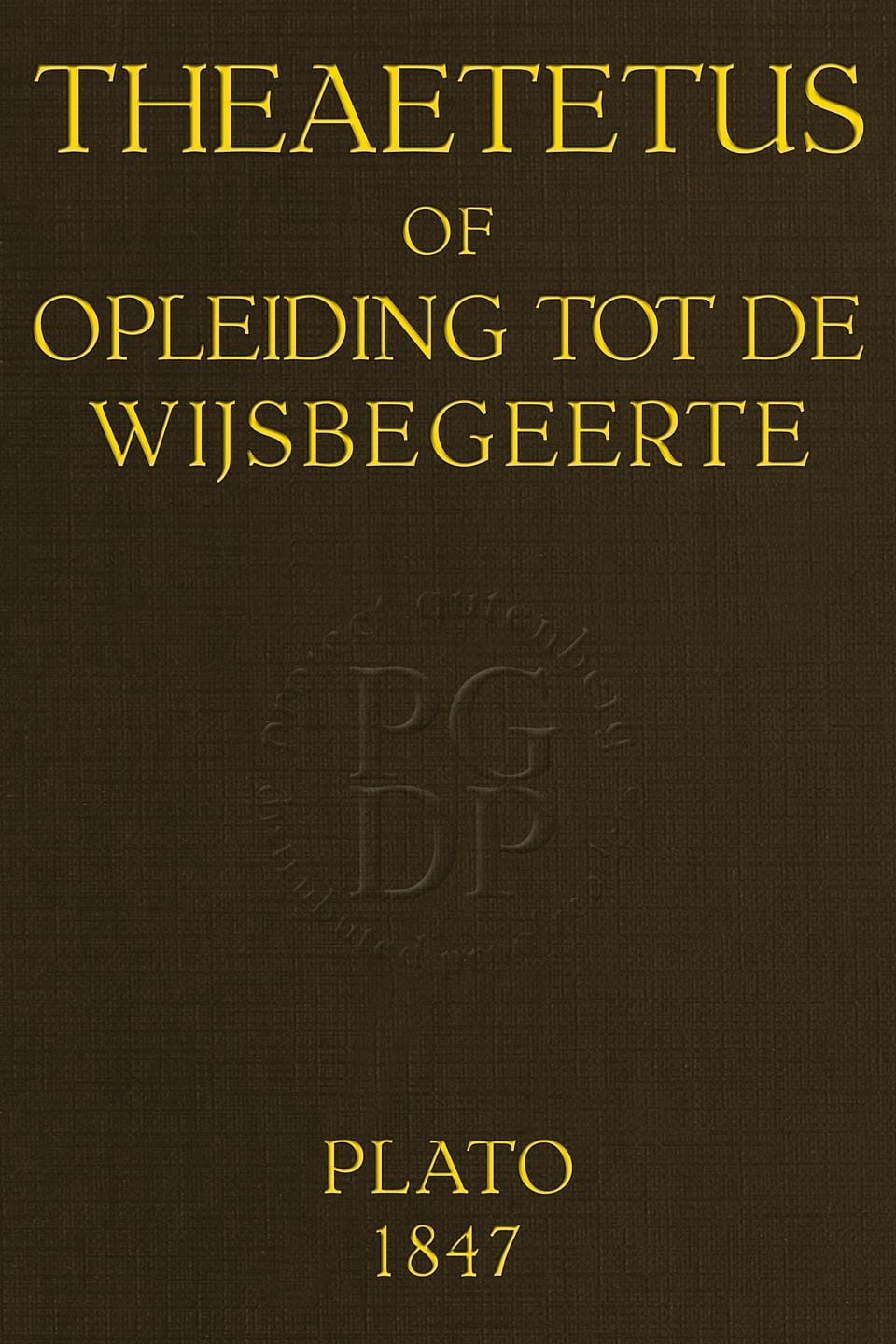
Theaetetus is a philosophical dialogue by Plato, written in the late 4th century BC and first published in 1861. The text features a conversation between Socrates and the young mathematician Theaetetus, exploring the nature of knowledge and whether it is based solely on sensory experiences or has a more substantial foundation. This work is notable for its early examination of epistemology and has influenced subsequent philosophical inquiry. The translation by M. J. Levett, revised by Myles Burnyeat in 1928, maintains the original's style and imagery while enhancing accuracy.
Editions
X-Ray
“For this feeling of wonder shows that you are a philosopher, since wonder is the only beginning of philosophy.””
— Plato
“Man is the measure of all things: of things which are, that they are, and of things which are not, that they are not. ~ Protagoras””
— Plato
“SOCRATES: What evidence could be appealed to, supposing we were asked at this very moment whether we are asleep or awake?THEAETETUS: Indeed, Socrates, I do not see by what evidence it is to be proved; for the two conditions correspond in every circumstance like exact counterparts.””
— Plato
“Philosophy starts nowhere else but with wondering.””
— Plato
“Evils, Theodorus, can never pass away; for there must always remain something which is antagonistic to good. Having no place among the gods in heaven, of necessity they hover around the mortal nature, and this earthly sphere. Wherefore we ought to fly away from earth to heaven as quickly as we can; and to fly away is to become like God, as far as this is possible; and to become like him, is to become holy, just, and wise.””
— Plato
“Socrates : Then would he not be conceding that his own opinion is false, if he grants that the opinion of those who think he is in error is true?Theodorus : Necessarily.Socrates : But the others do not concede that they are in error, do they?Theodorus : No, they do not.Socrates : And he, in turn, according to his writings, grants that this opinion also is true.Theodorus : Evidently.Socrates : Then all men, beginning with Protagoras, will dispute”
— Plato
“But it is not possible, Theodorus, that evil should be destroyed--for there must always be something opposed to the good; nor is it possible that it should have its seat in heaven. But it must inevitably haunt human life, and prowl about this earth. That is why a man should make all haste to escape from earth to heaven; and escape means becoming as like God as possible; and a man becomes like God when he becomes just and pious, with understanding.””
— Plato
“El asombro es la sensación de un filósofo y la filosofía empieza con el asombro””
— Plato
“Ничто не мешает нам принять наш теперешний разговор за сон, и, даже когда во сне нам кажется, что мі видим сні, получается нелепое сходство этого с происходящим наяву””
— Plato
Link to this book
Add a free, dofollow link to Lex on your blog, forum, syllabus, or reading list.

<a href="https://lex-books.com/book/theaetetus-7814d6e2-5f55-444c-8d20-191ba37aa145"><img src="https://lex-books.com/badges/read-on-lex.svg" alt="Read Theaetetus by Plato free on Lex" width="160" height="40"></a>[](https://lex-books.com/book/theaetetus-7814d6e2-5f55-444c-8d20-191ba37aa145)[url=https://lex-books.com/book/theaetetus-7814d6e2-5f55-444c-8d20-191ba37aa145][img]https://lex-books.com/badges/read-on-lex.svg[/img][/url]Read Theaetetus by Plato free on Lex: https://lex-books.com/book/theaetetus-7814d6e2-5f55-444c-8d20-191ba37aa145Cite this book
Reading this edition for a paper or guide? Copy a citation.
Plato. Theaetetus. Lex, lex-books.com/book/theaetetus-7814d6e2-5f55-444c-8d20-191ba37aa145.Plato (1861). Theaetetus. Lex. https://lex-books.com/book/theaetetus-7814d6e2-5f55-444c-8d20-191ba37aa145Plato. Theaetetus. Lex. https://lex-books.com/book/theaetetus-7814d6e2-5f55-444c-8d20-191ba37aa145.