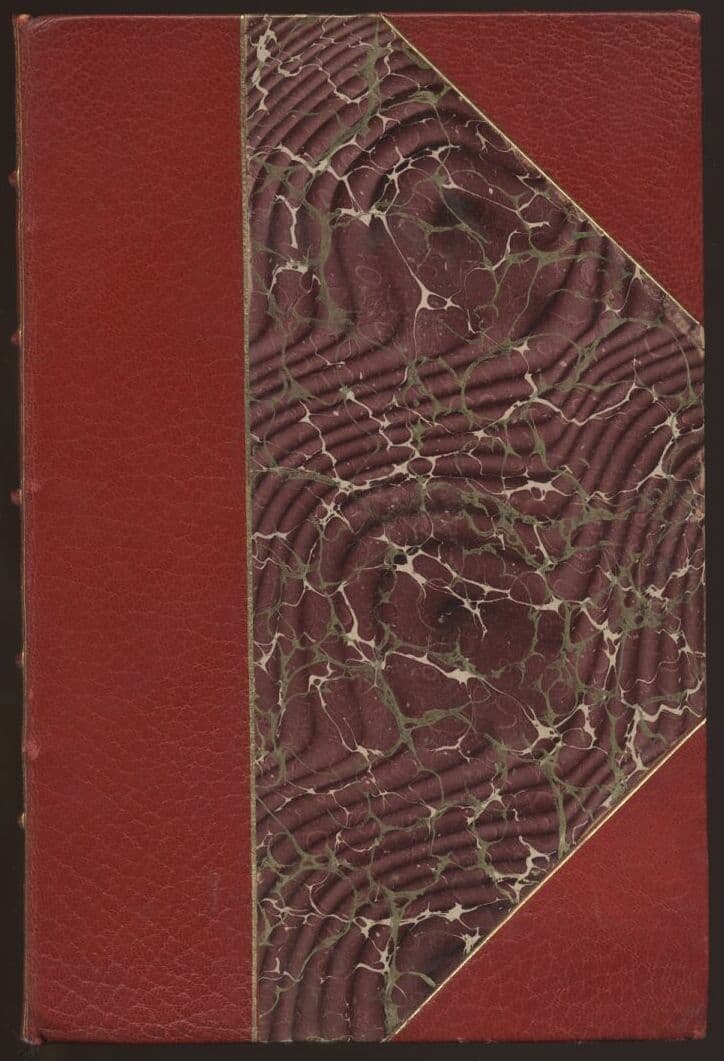
The Way of All Flesh
The Way of All Flesh traces the life of Ernest Pontifex from his oppressive childhood under the thumb of his father Theobald, a tyrannical Victorian clergyman, through his troubled adulthood and eventual liberation. Butler channels his own miserable upbringing into a devastating portrait of a family locked in cycles of cruelty, hypocrisy, and spiritual bankruptcy across four generations. The novel charts Ernest's struggle to escape the expectations of heredity and environment that have determined the fates of every Pontifex before him. Written in the shadow of Darwin but published posthumously in 1903, this book detonated beneath Victorian society's self-satisfaction, exposing the family, the church, and the class system as instruments of psychological destruction. Its raw autobiographical fury and pioneering psychological depth made it a template for the twentieth-century novel to come. It remains essential reading for anyone who wants to understand how literature helped tear down the edifice of Victorian hypocrisy.
Editions

X-Ray
“All progress is based upon a universal innate desire on the part of every organism to live beyond its income””
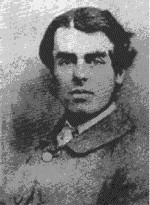
— Samuel Butler
“Sensible people get the greater part of their own dying done during their own lifetime””
— Samuel Butler
“Young people have a marvelous faculty of either dying or adapting themselves to circumstances. Even if they are unhappy - very unhappy - it is astonishing how easily they can be prevented from finding it out, or at any rate from attributing it to any other cause than their own sinfulness.To parents who wish to lead a quiet life I would say: Tell your children that they are naughty - much naughtier than most children. Point to the young people of some acquaintances as models of perfection and impress your own children with a deep sense of their own inferiority. You carry so many more guns than they do that they cannot fight you. This is called moral influence, and it will enable you to bounce them as much as you please. They think you know and they will not have yet caught you lying often enough to suspect that you are not the unworldly and scrupulously truthful person which you represent yourself to be; nor yet will they know how great a coward you are, nor how soon you will run away if they fight you with persistency and judgment. You keep the dice and throw them both for your children and yourself. Load them then, for you can easily manage to stop your children from examining them. Tell them how singularly indulgent you are; insist on the incalculable benefit you conferred upon them, firstly in bringing them into the world at all, but more particularly in bringing them into it as your own children rather than anyone else's... You hold all the trump cards, or if you do not you can filch them; if you play them with anything like judgment you will find yourselves heads of happy, united, God-fearing families... True, your children will probably find out all about it some day, but not until too late to be of much service to them or inconvenience to yourself.””
— Samuel Butler
“To me it seems that youth is like spring, an overpraised season-- delightful if it happen to be a favoured one, but in practice very rarely favoured and more remarkable, as a general rule, for biting east winds than genial breezes. Autumn is the mellower season, and what we lose in flowers we more than gain in fruits.””
— Samuel Butler
“I suppose in reality not a leaf goes yellow in autumn without ceasing to care about its sap and making the parent tree very uncomfortable by long growling and grumbling - but surely nature might find some less irritating way of carrying on business if she would give her mind to it. Why should the generations overlap one another at all? Why cannot we be buried as eggs in neat little cells with ten or twenty thousand pounds each wrapped round us in Bank of England notes, and wake up, as the sphex wasp does, to find that its papa and mamma have not only left ample provision at its elbow, but have been eaten by sparrows some weeks before it began to live consciously on its own account?””
— Samuel Butler
“we must judge men not so much by what they, as by what they make us feel that they have it in them to do. If a man has done enough in either painting, music, or the affairs of life, to make me feel that I might trust him in an emergency he has done enough””
— Samuel Butler
“If people who are in a difficulty will only do the first little reasonable thing which they can clearly recognize as reasonable, they will always find the next step more easy both to see and take.””
— Samuel Butler
“All our lives long, every day and every hour, we are engaged in the process of accommodating our changed and unchanged selves to changed and unchanged surroundings: living, in fact, is nothing else than this process of accommodation; when we fail in it a little we are stupid, when flagrantly we are mad, when we give up the attempt altogether we die, when we suspend it temporarily we sleep.””
— Samuel Butler
“Embryos think with each stage of their development that they have now reached the only condition that really suits them. This, they say, must certainly be their last, inasmuch as its close will be so great a shock that nothing can survive it. Every change is a shock; every shock is a pro tanto death. What we call death is only a shock great enough to destroy our power to recognize a past and a present as resembling one another. ””
— Samuel Butler
Link to this book
Add a free, dofollow link to Lex on your blog, forum, syllabus, or reading list.

<a href="https://lex-books.com/book/the-way-of-all-flesh-24e19dcc-ae33-4b02-951f-c8f591e23605"><img src="https://lex-books.com/badges/read-on-lex.svg" alt="Read The Way of All Flesh by Samuel Butler free on Lex" width="160" height="40"></a>[](https://lex-books.com/book/the-way-of-all-flesh-24e19dcc-ae33-4b02-951f-c8f591e23605)[url=https://lex-books.com/book/the-way-of-all-flesh-24e19dcc-ae33-4b02-951f-c8f591e23605][img]https://lex-books.com/badges/read-on-lex.svg[/img][/url]Read The Way of All Flesh by Samuel Butler free on Lex: https://lex-books.com/book/the-way-of-all-flesh-24e19dcc-ae33-4b02-951f-c8f591e23605Cite this book
Reading this edition for a paper or guide? Copy a citation.
Butler, Samuel. The Way of All Flesh. Lex, lex-books.com/book/the-way-of-all-flesh-24e19dcc-ae33-4b02-951f-c8f591e23605.Butler, S. (n.d.). The Way of All Flesh. Lex. https://lex-books.com/book/the-way-of-all-flesh-24e19dcc-ae33-4b02-951f-c8f591e23605Butler, Samuel. The Way of All Flesh. Lex. https://lex-books.com/book/the-way-of-all-flesh-24e19dcc-ae33-4b02-951f-c8f591e23605.