Luck, or Cunning, as the Main Means of Organic Modification
Luck, or Cunning, as the Main Means of Organic Modification
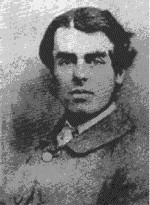
In 1886, Samuel Butler launched a furious assault on the foundations of Darwinian evolution. Best known for his satirical novel Erewhon, Butler was no mere crank: he argued that natural selection was a theory of 'luck' that ignored the deeper truth of 'cunning' - the purposeful, memory-like inheritance of acquired characteristics. He contends that heredity is fundamentally memory, that instinct is inherited experience, and that living organisms are not passive clay shaped by random variation but active agents of their own modification. This wasn't just scientific disagreement: it was intellectual warfare. Butler had publicly feuded with Darwin's supporters, accused them of stealing his ideas, and this book is his extended polemic against the dominant theory of his age. Dense, combative, and frequently maddening, it anticipates debates about epigenetics and directed evolution that we are still having today. For readers who enjoy intellectual history, Victorian polemics, or watching a brilliant contrarian pick a fight with the scientific establishment.
Editions
Link to this book
Add a free, dofollow link to Lex on your blog, forum, syllabus, or reading list.

<a href="https://lex-books.com/book/luck-or-cunning-as-the-main-means-of-organic-modification-1838b31e-df20-4b22-8e68-3a2cb798568a"><img src="https://lex-books.com/badges/read-on-lex.svg" alt="Read Luck, or Cunning, as the Main Means of Organic Modification by Samuel Butler free on Lex" width="160" height="40"></a>[](https://lex-books.com/book/luck-or-cunning-as-the-main-means-of-organic-modification-1838b31e-df20-4b22-8e68-3a2cb798568a)[url=https://lex-books.com/book/luck-or-cunning-as-the-main-means-of-organic-modification-1838b31e-df20-4b22-8e68-3a2cb798568a][img]https://lex-books.com/badges/read-on-lex.svg[/img][/url]Read Luck, or Cunning, as the Main Means of Organic Modification by Samuel Butler free on Lex: https://lex-books.com/book/luck-or-cunning-as-the-main-means-of-organic-modification-1838b31e-df20-4b22-8e68-3a2cb798568aCite this book
Reading this edition for a paper or guide? Copy a citation.
Butler, Samuel. Luck, or Cunning, as the Main Means of Organic Modification. Lex, lex-books.com/book/luck-or-cunning-as-the-main-means-of-organic-modification-1838b31e-df20-4b22-8e68-3a2cb798568a.Butler, S. (n.d.). Luck, or Cunning, as the Main Means of Organic Modification. Lex. https://lex-books.com/book/luck-or-cunning-as-the-main-means-of-organic-modification-1838b31e-df20-4b22-8e68-3a2cb798568aButler, Samuel. Luck, or Cunning, as the Main Means of Organic Modification. Lex. https://lex-books.com/book/luck-or-cunning-as-the-main-means-of-organic-modification-1838b31e-df20-4b22-8e68-3a2cb798568a.