The Trembling of a Leaf: Little Stories of the South Sea Islands
The Trembling of a Leaf: Little Stories of the South Sea Islands
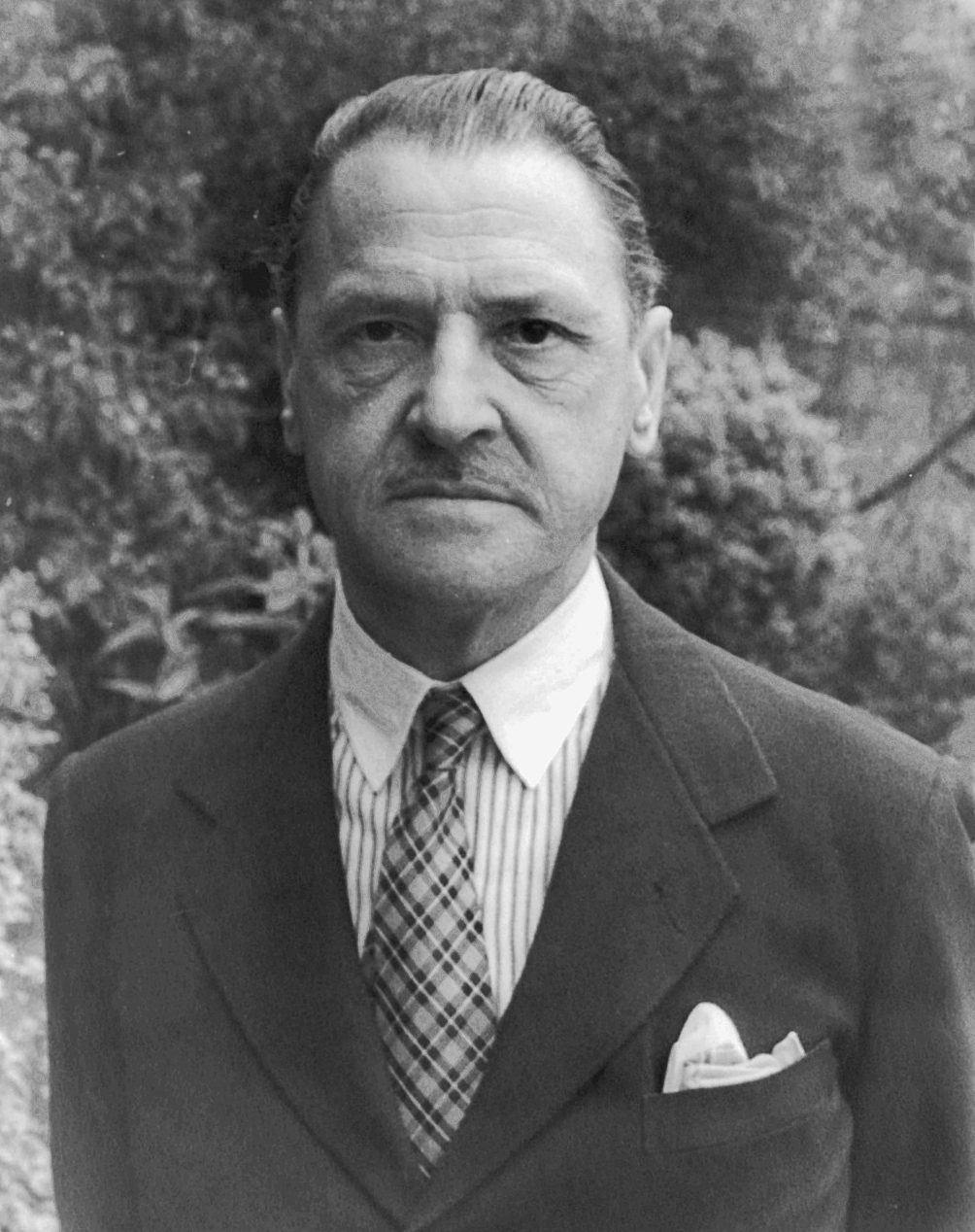
Maugham arrived in the Pacific in 1917, and what he found there transformed him. The South Sea Islands became his laboratory for examining the collision between Western civilization and something older, wilder, more honest. In these stories, missionaries confront their own hypocrisy, colonial administrators crack under tropical heat, and expats discover that escape to paradise reveals more about themselves than they ever wanted to know.The collection contains Maugham at his most audacious. 'Rain' follows a strait-laced missionary whose righteous crusade against a prostitute dissolves into something far more complicated and unsettling. 'Macintosh' traces the poisonous rivalry between two British officials, each trying to outmaneuver the other on a remote island where the rules of Empire mean nothing. 'The Fall of Edward Barnard' shows a young man shedding his respectable life for something primal, and 'The Pool' dissects a marriage across cultural lines with an anthropologist's precision.These are stories about desire, corruption, and the territories between civilization and savagery. Maugham writes with cool precision about hot climates, and the result is endlessly seductive. For readers who want fiction that challenges as much as it dazzles.
Editions
X-Ray
“Is that what we come into the world for, to hurry to an office, and work hour after hour till night, then hurry home and dine and go to a theatre? Is that how I must spend my youth? Youth lasts so short a time, Bateman. And when I am old, what have I to look forward to? To hurry from my home in the morning to my office and work hour after hour after hour till night, and then hurry home again, and dine and go to a theatre? That may be worthwhile if you make a fortune; I don’t know, it depends on your nature; but if you don’t, is it worth while then? I want to make more out of my life than that, Bateman.””
— W. Somerset Maugham
“She gathered herself together. No one could describe the scorn of her expression or the contemptuous hatred she put into her answer. "You men! You filthy dirty pigs! You're all the same, all of you. Pigs! Pigs!””
— W. Somerset Maugham
“What do you value in life then?""I'm afraid you'll laugh at me. Beauty, truth, and goodness.””
— W. Somerset Maugham
“The tragedy of love is not death or separation. How long do you think it would have been before one or other of them ceased to care? Oh, it is dreadfully bitter to look at a woman whom you have loved with all your heart and soul, so that you felt you could not bear to let her out of your sight, and realise that you would not mind if you never saw her again. The tragedy of love is indifference.””
— W. Somerset Maugham
“going about with a huge, heavy arm or dragging along a grossly disfigured leg. Men and women wore the lava-lava. “It’s a very indecent costume,” said Mrs. Davidson. “Mr. Davidson thinks it should be prohibited by law. How can you expect people to be moral when they wear nothing but a strip of red cotton round their loins?” “It’s suitable enough to the climate,” said the doctor, wiping the sweat off his head. Now that they were on land the heat, though it was so early in the morning, was already oppressive. Closed in by its hills, not a breath of air came in to Pago-Pago. “In our islands,” Mrs. Davidson went on in her high-pitched tones, “we’ve practically eradicated the lava-lava. A few old men still continue to wear it, but that’s all. The women have all taken to the Mother Hubbard,””
— W. Somerset Maugham
“When I look back now and reflect on that brief passionate love of Red and Sally, I think that perhaps they should thank the ruthless fate that separated them when their love seemed still to be at its height. They suffered, but they suffered in beauty. They were spared the real tragedy of love.""I don't know exactly as I get you," said the skipper."The tragedy of love is not death or separation. How long do you think it would have been before one or other of them ceased to care? Oh, it is dreadfully bitter to look at a woman whom you have loved with all your heart and soul, so that you felt you could not bear to let her out of your sight, and realise that you would not mind if you never saw her again. The tragedy of love is indifference.””
— W. Somerset Maugham
“His love became a prison from which he longed to escape, but he had not the strength merely to open the door-that was all it needed-and walk out into the open air. It was torture and at last he became numb and hopeless.””
— W. Somerset Maugham
“He loved not only her beauty, but that dim soul which he divined behind her suffering eyes. He would intoxicate her with his passion. In the end he would make her forget.””
— W. Somerset Maugham
“They seemed to love one another as-I hesitate to say passionately, for passion has in it always a shade of sadness, a touch of bitterness or anguish, but as whole heartedly, as simply and naturally as on that first day on which, meeting, they had recognised that a god was in them.If you had asked them I have no doubt that they would have thought it impossible to suppose their love could ever cease. Do we not know that the essential element of love is a belief in its own eternity?””
— W. Somerset Maugham
Link to this book
Add a free, dofollow link to Lex on your blog, forum, syllabus, or reading list.

<a href="https://lex-books.com/book/the-trembling-of-a-leaf-little-stories-of-the-south-sea-islands-a35ec90b-49b4-4780-9524-d5ac3631221b"><img src="https://lex-books.com/badges/read-on-lex.svg" alt="Read The Trembling of a Leaf: Little Stories of the South Sea Islands by W. Somerset Maugham free on Lex" width="160" height="40"></a>[](https://lex-books.com/book/the-trembling-of-a-leaf-little-stories-of-the-south-sea-islands-a35ec90b-49b4-4780-9524-d5ac3631221b)[url=https://lex-books.com/book/the-trembling-of-a-leaf-little-stories-of-the-south-sea-islands-a35ec90b-49b4-4780-9524-d5ac3631221b][img]https://lex-books.com/badges/read-on-lex.svg[/img][/url]Read The Trembling of a Leaf: Little Stories of the South Sea Islands by W. Somerset Maugham free on Lex: https://lex-books.com/book/the-trembling-of-a-leaf-little-stories-of-the-south-sea-islands-a35ec90b-49b4-4780-9524-d5ac3631221bCite this book
Reading this edition for a paper or guide? Copy a citation.
Maugham, W. Somerset. The Trembling of a Leaf: Little Stories of the South Sea Islands. Lex, lex-books.com/book/the-trembling-of-a-leaf-little-stories-of-the-south-sea-islands-a35ec90b-49b4-4780-9524-d5ac3631221b.Maugham, W. S. (n.d.). The Trembling of a Leaf: Little Stories of the South Sea Islands. Lex. https://lex-books.com/book/the-trembling-of-a-leaf-little-stories-of-the-south-sea-islands-a35ec90b-49b4-4780-9524-d5ac3631221bMaugham, W. Somerset. The Trembling of a Leaf: Little Stories of the South Sea Islands. Lex. https://lex-books.com/book/the-trembling-of-a-leaf-little-stories-of-the-south-sea-islands-a35ec90b-49b4-4780-9524-d5ac3631221b.