Penelope: A Comedy in Three Acts
1912
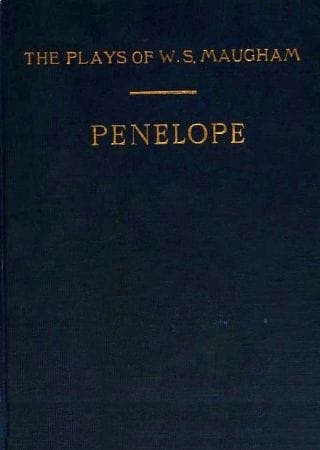
Penelope: A Comedy in Three Acts
1912
Penelope has a plan. Her husband Dickie has been unfaithful, and she's called a houseful of guests to Dr. O'Farrell's drawing-room under false pretenses, a mysterious Archduchess Anastasia is supposedly visiting. But the real revelation is Penelope herself: a woman who has decided she will not quietly endure her husband's betrayal. As family and friends arrive, confusion multiplies, gossip flies, and the comedy unfolds with sharp, elegant precision. Maugham, writing in 1912, gives us a heroine who refuses to perform the wounded wife. Instead, she orchestrates her own public reckoning, gathering the people who matter most to witness her decision. The play crackles with the complications that follow, when everyone expects scandal, when secrets collide, when a household must confront the wreckage of a marriage while still maintaining social appearances. It's a comedy of manners, yes, but one with an edge: beneath the wit lies genuine provocation about what women were permitted to want. For readers who enjoy the plays of Oscar Wilde or George Bernard Shaw, or anyone fascinated by early twentieth-century portraits of marriage as performance.
Editions
Link to this book
Add a free, dofollow link to Lex on your blog, forum, syllabus, or reading list.

<a href="https://lex-books.com/book/penelope-a-comedy-in-three-acts-3193dbe7-e6fc-4d7d-b4f6-29e628e57cf7"><img src="https://lex-books.com/badges/read-on-lex.svg" alt="Read Penelope: A Comedy in Three Acts by W. Somerset Maugham free on Lex" width="160" height="40"></a>[](https://lex-books.com/book/penelope-a-comedy-in-three-acts-3193dbe7-e6fc-4d7d-b4f6-29e628e57cf7)[url=https://lex-books.com/book/penelope-a-comedy-in-three-acts-3193dbe7-e6fc-4d7d-b4f6-29e628e57cf7][img]https://lex-books.com/badges/read-on-lex.svg[/img][/url]Read Penelope: A Comedy in Three Acts by W. Somerset Maugham free on Lex: https://lex-books.com/book/penelope-a-comedy-in-three-acts-3193dbe7-e6fc-4d7d-b4f6-29e628e57cf7Cite this book
Reading this edition for a paper or guide? Copy a citation.
Maugham, W. Somerset. Penelope: A Comedy in Three Acts. Lex, lex-books.com/book/penelope-a-comedy-in-three-acts-3193dbe7-e6fc-4d7d-b4f6-29e628e57cf7.Maugham, W. S. (1912). Penelope: A Comedy in Three Acts. Lex. https://lex-books.com/book/penelope-a-comedy-in-three-acts-3193dbe7-e6fc-4d7d-b4f6-29e628e57cf7Maugham, W. Somerset. Penelope: A Comedy in Three Acts. Lex. https://lex-books.com/book/penelope-a-comedy-in-three-acts-3193dbe7-e6fc-4d7d-b4f6-29e628e57cf7.