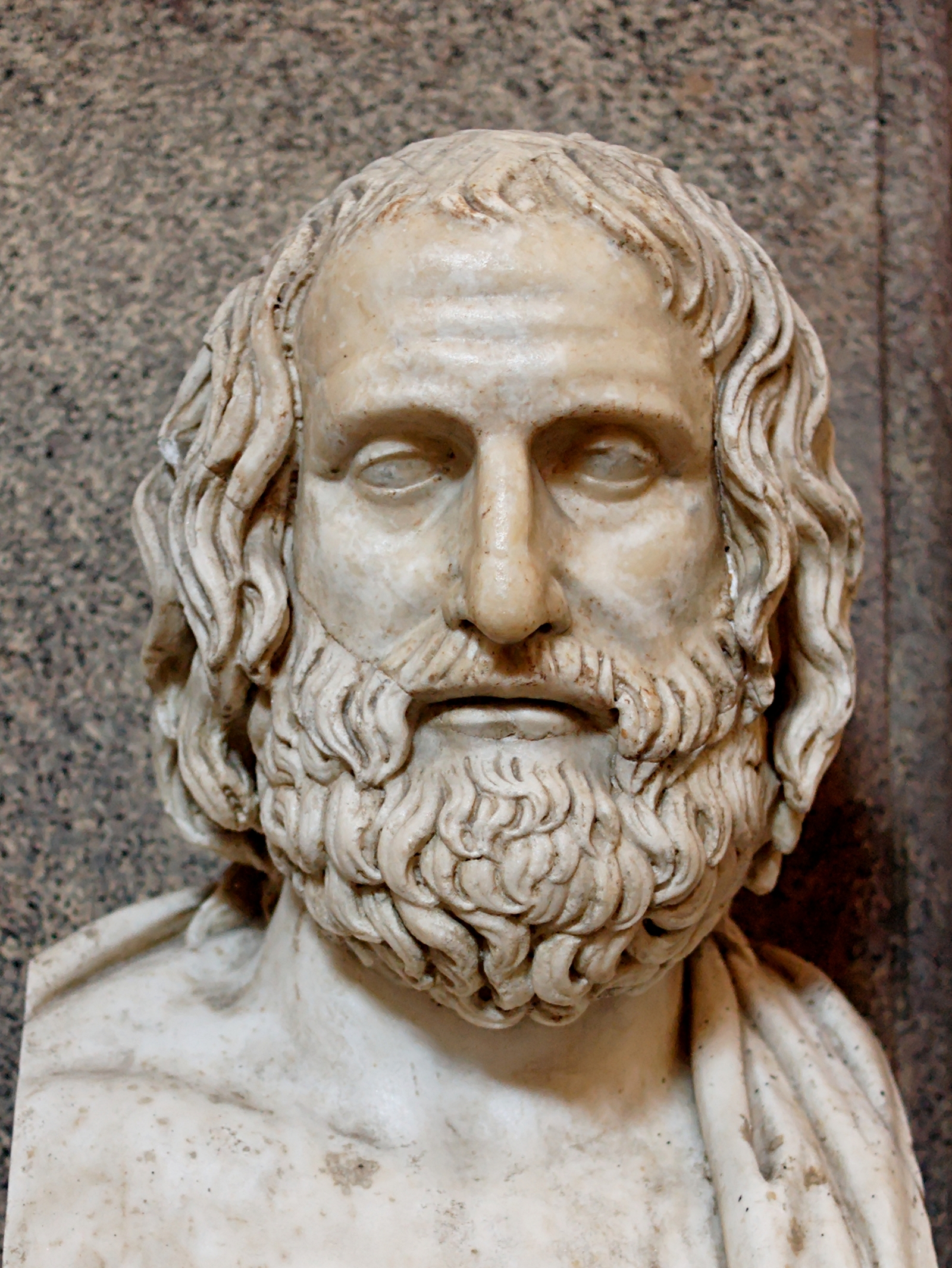
The Tragedies of Euripides, Volume I.
1894
The Tragedies of Euripides, Volume I.
1894
Translated by Theodore Alois Buckley
Euripides wrote tragedy not for heroes but for the broken. This collection gathers three of his most devastating plays: Medea, a woman betrayed beyond endurance; Hecuba, queen of fallen Troy, reduced to slavery and grief; and Orestes, a son haunted by the crime of avenging his father. These are not tales of noble suffering but of rage, desperation, and the terrible choices left to those with no power. Euripides populates his stage with women, captives, and the mentally undone - the voiceless of ancient Athens given devastating speeches. His gods are indifferent or cruel; his humans are startlingly, uncomfortably modern in their capacity for both cruelty and love. The plays confront you with the wreckage of war, the costs of justice, and the question of whether vengeance can ever be justified. They have survived twenty-five centuries because they still sting. Read them and understand why the Greeks invented tragedy: not to feel better, but to feel more.
Editions
X-Ray
“Every thing appears terrible even to the bold, when his foot shall pass across a hostile country.””
— Euripides
“But if Diana hath wished to receive my body, shall I, being mortal, become an opponent to the Goddess! But it can not be. I give my body for Greece. Sacrifice it, and sack Troy. For this for a long time will be my memorial, and this my children, my wedding, and my glory. But it is meet that Greeks should rule over barbarians, O mother, but not barbarians over Greeks, for the one is slavish, but the others are free.””
— Euripides
“To live dishonorably is better than to die gloriously.””
— Euripides
“But the natures of mortals are different, and their manners are different, [40] but that which is clearly good is ever plain. And the education which trains [41] [men] up, conduces greatly to virtue, for to have reverence is wisdom, and it possesses an equivalent advantage, viz. to perceive what is fitting by one's mind, where report bears unwasting glory to life. [42] 'Tis a great thing to hunt for [the praise of] virtue, among women indeed, by a secret affection, [43] but among men, on the other hand, honor being inherent, [44] [bears that praise, honor,] which increases a state to an incalculable extent.””
— Euripides
“MEN. For thou thinkest inconsistently, now one thing, before another, another thing presently. AG. Well hast thou talked evil. Hateful is a too clever tongue. [20] MEN. But an unstable mind is an unjust thing to possess, and””
— Euripides
“AG. I envy thee, old man, and I envy that man who has passed through a life without danger, unknown, unglorious; but I less envy those in honor. OLD M. And yet 'tis in this that the glory of life is. AG. But this very glory is uncertain, for the love of popularity is pleasant indeed, but hurts when present. Sometimes the worship of the Gods not rightly conducted upturns one's life, and sometimes the many and dissatisfied opinions of men harass.””
— Euripides
“THE ARGUMENT. When the Greeks were detained at Aulis by stress of weather, Calchas declared that they would never reach Troy unless the daughter of Agamemnon, Iphigenia, was sacrificed to Diana. Agamemnon sent for his daughter with this view, but repenting, he dispatched a messenger to prevent Clytæmnestra sending her. The messenger being intercepted by Menelaus, an altercation between the brother chieftains arose, during which Iphigenia, who had been tempted with the expectation of being wedded to Achilles, arrived with her mother. The latter, meeting with Achilles, discovered the deception, and Achilles swore to protect her. But Iphigenia, having determined to die nobly on behalf of the Greeks, was snatched away by the Goddess, and a stag substituted in her place. The Greeks were then enabled to set sail.””
— Euripides
“CRE. There is nobleness in thee; but there is some degree of folly.””
— Euripides
“ŒD. O Fate, from the beginning how wretched [and unhappy] didst thou form me, [if ever other man was formed!] whom, even before I came into the light from my mother's womb, when yet unborn Apollo foretold that I should be the murderer of my father Laïus, alas! wretch that I am! And when I was born, again my father who gave me life, seeks to take my life, considering that I was born his enemy: for it was fated that he should die by my hands, and he sends me, poor wretch, as I craved the breast, a prey for the wild beasts: where I was preserved”
— Euripides
Link to this book
Add a free, dofollow link to Lex on your blog, forum, syllabus, or reading list.

<a href="https://lex-books.com/book/the-tragedies-of-euripides-volume-i-2938bf35-7dee-4ab5-8223-caaf3b771dfe"><img src="https://lex-books.com/badges/read-on-lex.svg" alt="Read The Tragedies of Euripides, Volume I. by Euripides free on Lex" width="160" height="40"></a>[](https://lex-books.com/book/the-tragedies-of-euripides-volume-i-2938bf35-7dee-4ab5-8223-caaf3b771dfe)[url=https://lex-books.com/book/the-tragedies-of-euripides-volume-i-2938bf35-7dee-4ab5-8223-caaf3b771dfe][img]https://lex-books.com/badges/read-on-lex.svg[/img][/url]Read The Tragedies of Euripides, Volume I. by Euripides free on Lex: https://lex-books.com/book/the-tragedies-of-euripides-volume-i-2938bf35-7dee-4ab5-8223-caaf3b771dfeCite this book
Reading this edition for a paper or guide? Copy a citation.
Euripides. The Tragedies of Euripides, Volume I.. Lex, lex-books.com/book/the-tragedies-of-euripides-volume-i-2938bf35-7dee-4ab5-8223-caaf3b771dfe.Euripides (1894). The Tragedies of Euripides, Volume I.. Lex. https://lex-books.com/book/the-tragedies-of-euripides-volume-i-2938bf35-7dee-4ab5-8223-caaf3b771dfeEuripides. The Tragedies of Euripides, Volume I.. Lex. https://lex-books.com/book/the-tragedies-of-euripides-volume-i-2938bf35-7dee-4ab5-8223-caaf3b771dfe.