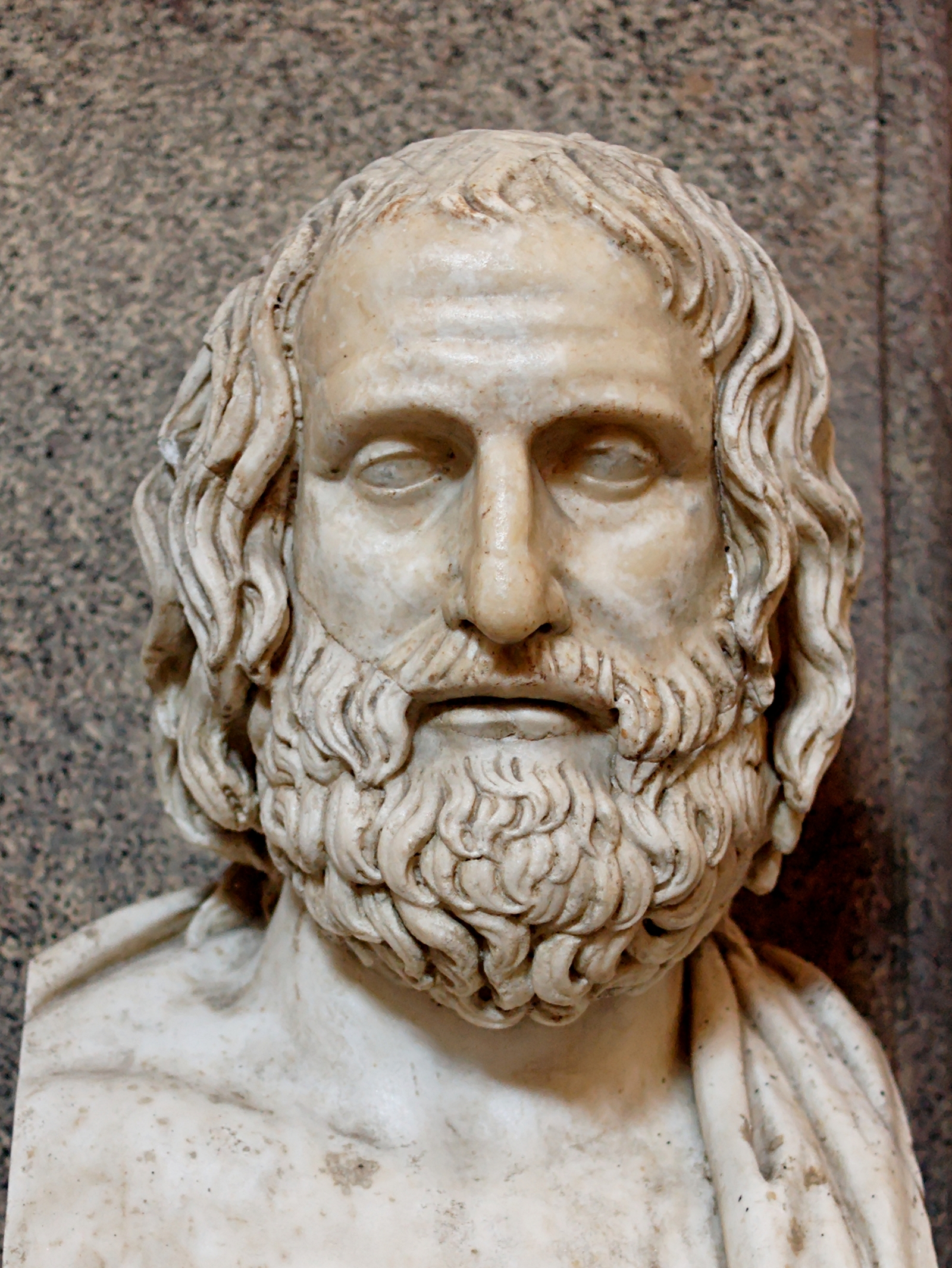
The Rhesus of Euripides
On a moonless night outside Troy, the Trojans wait in uneasy silence. Hector has won a victory, but Greek fires burn on the horizon and the wind carries rumors of ambush. When a young Trojan named Dolon volunteers to slip into the Greek camp as a spy, he leaves behind a wife and children, dreaming of glory. He will never return. What follows is one of the most unusual surviving Greek tragedies: a tense, propulsive tale of a spy caught in the dark, of legendary heroes moving like ghosts through enemy lines, and of Rhesus, a mighty Thracian king who arrives at Troy convinced his divine horses will turn the war. He never gets the chance to fight. Sleep, not battle, claims him. The goddess Athena manipulates it all, directing Odysseus's hand as much as any puppet's. The play is fast, brutal, and knows something most tragedies don't: the audience watches characters walk toward their deaths while we hold our breath, unable to warn them. If you've ever wanted to see the machinery of fate exposed, this is it.
Editions
X-Ray
“Thracian. The army lost and the king slain,Stabbed in the dark! Ah, pain! pain!This deep raw wound . . . Oh, let me dieBy thy side, Master, by thy side!In shame together let us lieWho came to save, and failed and died.””
— Euripides
“Rhesus. Thy way is mine, friend. Straight I run my raceIn word and deed, and bear no double tongue.””
— Euripides
“We cannot force Fortune against her will.””
— Euripides
“Rhesus. Who next to him hath honour in their host? Hector. Next, to my seeming, Ajax hath the most,Or Diomede.”
— Euripides
“Brother, I would thy wit were like thy spear!But Nature wills not one man should be wiseIn all things; each must seek his separate prize.And thine is battle pure. There comes this word””
— Euripides
“Hector. My word is simple. Arm and face the foe.””
— Euripides
“The ordinary style of Euripides is full, flexible, lucid, antithetic, studiously simple in vocabulary and charged with philosophic reflection. If we look in his extant remains for any trace of a style, like that of the Rhesus, which is comparatively terse, rich, romantic, not shrinking from rare words and strong colour and generally untinged by philosophy, we shall find the nearest approach to it in the Cyclops. Next to the Cyclops I am not sure what play would come, but the Alcestis would not be far off. It has especially several Epic forms which cannot be paralleled in tragedy. Now the conjunction of these two plays with the Rhesus is significant. The three seem to be three earliest of the extant plays;””
— Euripides
“P. 51, l. 915. The speech of the Muse seems like the writing of a poet who is, for the moment, tired of mere drama, and wishes to get back into his own element. Such passages are characteristic of Euripides.”
— Euripides
“Muse. I say to thee: Curse Odysseus,And cursèd be Diomede!For they made me childless, and forlorn for ever, ofthe flower of sons.Yea, curse Helen, who left the houses of Hellas.She knew her lover, she feared not the ships and sea.She called thee, called thee, to die for the sake of Paris,Belovèd, and a thousand citiesShe made empty of good men.””
— Euripides
Link to this book
Add a free, dofollow link to Lex on your blog, forum, syllabus, or reading list.

<a href="https://lex-books.com/book/the-rhesus-of-euripides-207dd5bc-c1ff-4c32-bf19-c8c29c5f3aff"><img src="https://lex-books.com/badges/read-on-lex.svg" alt="Read The Rhesus of Euripides by Euripides free on Lex" width="160" height="40"></a>[](https://lex-books.com/book/the-rhesus-of-euripides-207dd5bc-c1ff-4c32-bf19-c8c29c5f3aff)[url=https://lex-books.com/book/the-rhesus-of-euripides-207dd5bc-c1ff-4c32-bf19-c8c29c5f3aff][img]https://lex-books.com/badges/read-on-lex.svg[/img][/url]Read The Rhesus of Euripides by Euripides free on Lex: https://lex-books.com/book/the-rhesus-of-euripides-207dd5bc-c1ff-4c32-bf19-c8c29c5f3affCite this book
Reading this edition for a paper or guide? Copy a citation.
Euripides. The Rhesus of Euripides. Lex, lex-books.com/book/the-rhesus-of-euripides-207dd5bc-c1ff-4c32-bf19-c8c29c5f3aff.Euripides (n.d.). The Rhesus of Euripides. Lex. https://lex-books.com/book/the-rhesus-of-euripides-207dd5bc-c1ff-4c32-bf19-c8c29c5f3affEuripides. The Rhesus of Euripides. Lex. https://lex-books.com/book/the-rhesus-of-euripides-207dd5bc-c1ff-4c32-bf19-c8c29c5f3aff.