The Old Curiosity Shop
1841
Dickens's 1841 novel opened with a child lost on London's midnight streets and became the Victorian era's most devastating tear-jerker. Nell Trent and her grandfather occupy the cluttered Old Curiosity Shop, their world defined by genteel poverty until gambling debts to the monstrous Daniel Quilp force them into flight. What follows is a desperate pilgrimage through shadowed England, the old man and innocent girl thrust into a landscape stripped of safety. Nell's unwavering devotion and her grandfather's tragic weakness drive the narrative's emotional weight, while Dickens populates the margins with unforgettable grotesques: the villainous, lustful Quilp, the hapless Dick Swiveller, the starved Marchioness who finds redemption in unlikely friendship. The novel's sentimentality drew criticism from Wilde and others, yet its raw portrayal of childhood vulnerability and sacrifice endures. This is Dickens at his most raw, trading his usual social satire for pure melodrama that still manages to capture something true about love, loss, and what we owe those who cannot save themselves.
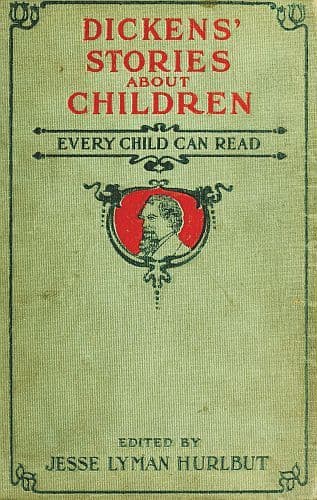
Editions

X-Ray
“It is a pleasant world we live in, sir, a very pleasant world. There are bad people in it, Mr. Richard, but if there were no bad people, there would be no good lawyers.””
— Charles Dickens
“Thus violent deeds live after men upon the earth, and traces of war and bloodshed will survive in mournful shapes long after those who worked the desolation are but atoms of earth themselves.””
— Charles Dickens
“Fan the sinking flame of hilarity with the wing of friendship; and pass the rosy wine.””
— Charles Dickens
“Have I yet to learn that the hardest and best-borne trials are those which are never chronicled in any earthly record, and are suffered every day!””
— Charles Dickens
“The ties that bind the wealthy and the proud to home may be forged on earth, but those which link the poor man to his humble hearth are of truer metal and bear the stamp of Heaven.””
— Charles Dickens
“On the eve of long voyages or an absence of many years, friends who are tenderly attached will seperate with the usual look, the usual pressure of the hand, planning one final interview for the morrow, while each well knows that it is but a poor feint to save the pain of uttering that one word, and the meeting will never be. Should possibilities be worse to bear than certainties?””
— Charles Dickens
“However, the Sun himself is weak when he first rises, and gathers strength and courage as the day gets on.””
— Charles Dickens
“The fire? It has been alive as long as I have. We talk and think together all night long. It’s like a book to me – the only book I ever learned to read; and many an old story it tells me. It’s music, for I should know its voice among a thousand, and there are other voices in its roar. It has its pictures too. You don’t know how many strange faces and different scenes I trace in the red-hot coals. It’s my memory, that fire, and shows me all my life.””
— Charles Dickens
“Such is the difference between yesterday and today. We are all going to the play, or coming home from it.””
— Charles Dickens
Link to this book
Add a free, dofollow link to Lex on your blog, forum, syllabus, or reading list.

<a href="https://lex-books.com/book/the-old-curiosity-shop-6929bb33-aa0c-4a01-8263-5b41a0c0ea75"><img src="https://lex-books.com/badges/read-on-lex.svg" alt="Read The Old Curiosity Shop by Charles Dickens free on Lex" width="160" height="40"></a>[](https://lex-books.com/book/the-old-curiosity-shop-6929bb33-aa0c-4a01-8263-5b41a0c0ea75)[url=https://lex-books.com/book/the-old-curiosity-shop-6929bb33-aa0c-4a01-8263-5b41a0c0ea75][img]https://lex-books.com/badges/read-on-lex.svg[/img][/url]Read The Old Curiosity Shop by Charles Dickens free on Lex: https://lex-books.com/book/the-old-curiosity-shop-6929bb33-aa0c-4a01-8263-5b41a0c0ea75Cite this book
Reading this edition for a paper or guide? Copy a citation.
Dickens, Charles. The Old Curiosity Shop. Lex, lex-books.com/book/the-old-curiosity-shop-6929bb33-aa0c-4a01-8263-5b41a0c0ea75.Dickens, C. (1841). The Old Curiosity Shop. Lex. https://lex-books.com/book/the-old-curiosity-shop-6929bb33-aa0c-4a01-8263-5b41a0c0ea75Dickens, Charles. The Old Curiosity Shop. Lex. https://lex-books.com/book/the-old-curiosity-shop-6929bb33-aa0c-4a01-8263-5b41a0c0ea75.