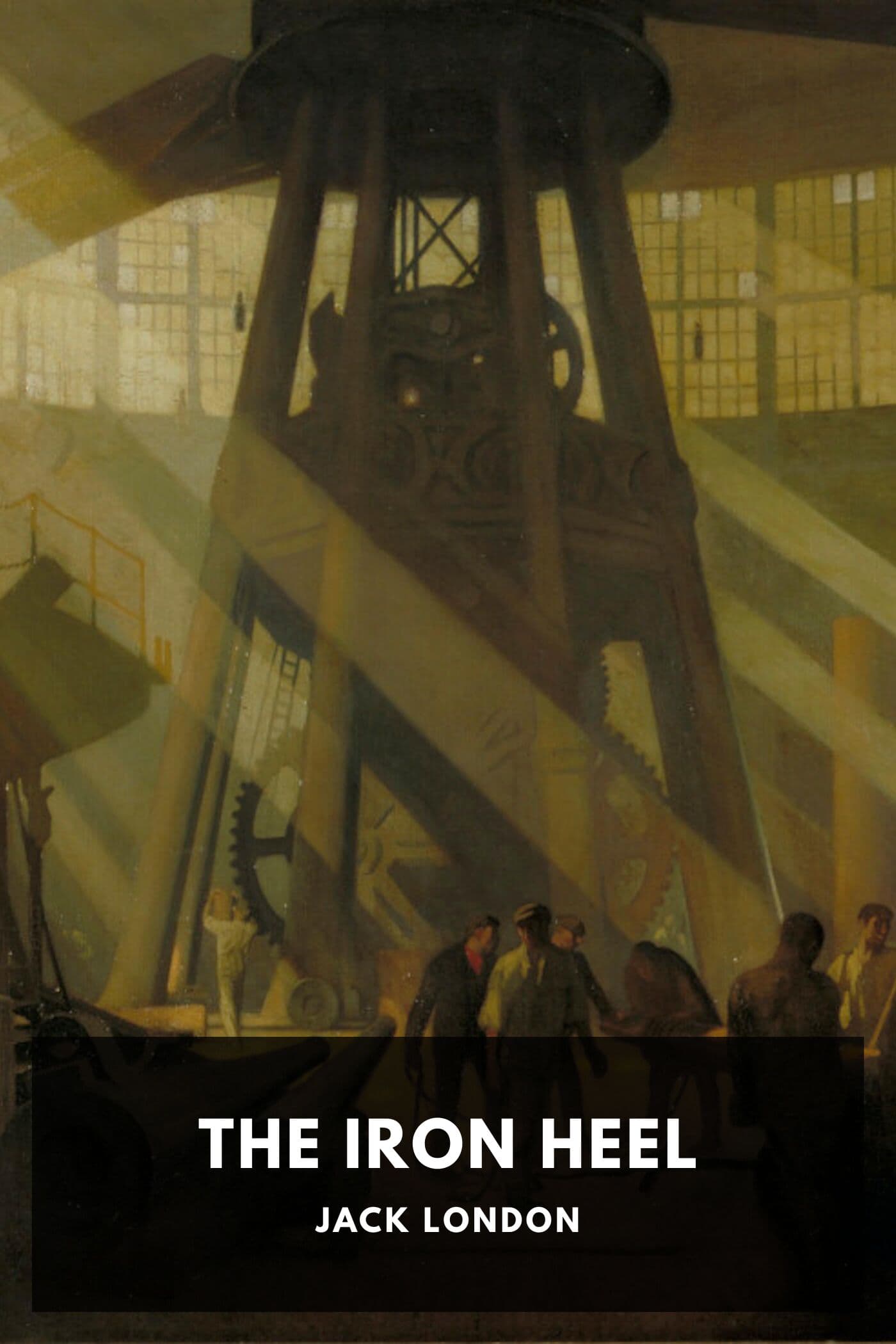
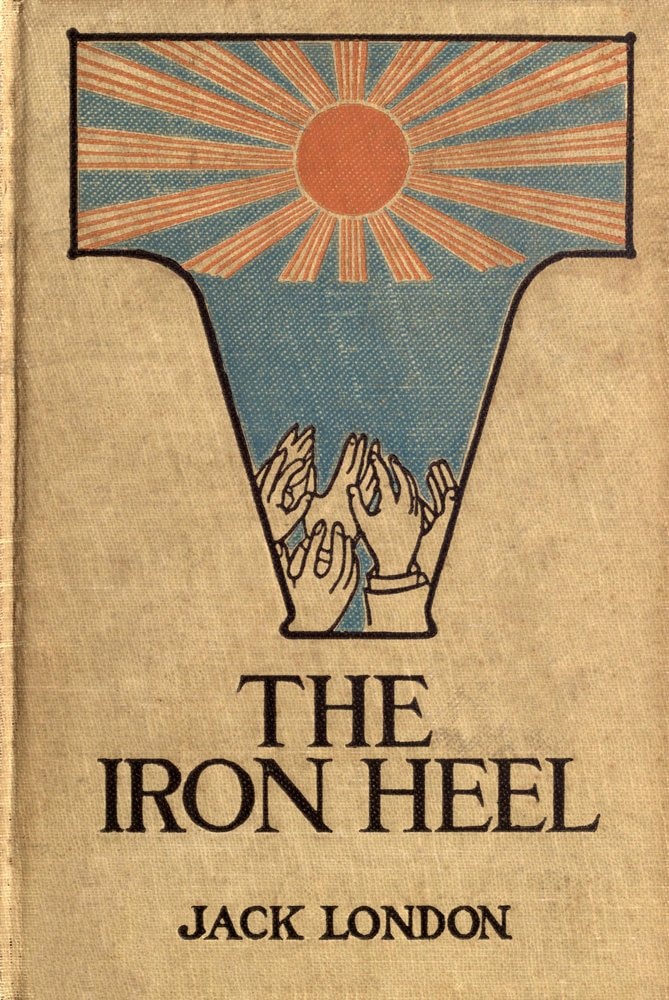
The Iron Heel
1908
Published eight years before the Russian Revolution and four decades before Orwell's 1984, Jack London's The Iron Heel stands as the earliest of the modern dystopias: a prophetic vision of capitalist oligarchy collapsing into fascist tyranny. The novel arrives through a framing device that feels almost archaeological: Avis Everhard's manuscript, hidden and discovered centuries later, documents her husband Ernest's revolutionary socialist movement and the brutal suppression that follows. Through Avis's intimate narration, we watch America transform from a nation of comfortable inequality into a nightmarish hierarchy where the oligarchic "Iron Heel" crushes all dissent with organized violence, private armies, and methodical terror. London, never subtle about his politics, uses the novel as both warning and weapon, arguing that capitalism's logical endpoint is not reform but fascism. The prose burns with conviction, and the vision is unflinching: revolutions are betrayed, leaders are executed, hope seems extinguished. Yet the manuscript's very existence implies something more. For readers who want to understand where dystopian literature came from, or who crave politically engaged fiction that refuses to look away from injustice, this is the ancestor of everything from 1984 to The Hunger Games.
Editions
X-Ray
“I know nothing that I may say can influence you," he said. "You have no souls to be influenced. You are spineless, flaccid things. You pompously call yourselves Republicans and Democrats. There is no Republican Party. There is no Democratic Party. There are no Republicans nor Democrats in this House. You are lick-spittlers and panderers, the creatures of the Plutocracy.””
— Jack London
“The press of the United States? It is a parasitic growth that battens on the capitalist class. Its function is to serve the established by moulding public opinion, and right well it serves it.””
— Jack London
“No man can be intellectually insulted. Insult, in its very nature, is emotional.””
— Jack London
“It is far easier to see brave men die than to hear a coward beg for life.””
— Jack London
“We will grind you revolutionists down under our heel, and we shall walk upon your faces. The world is ours, we are its lords, and ours it shall remain. As for the host of labor, it has been in the dirt since history began, and I read history aright. And in the dirt it shall remain so long as I and mine and those that come after us have the power. There is the word. It is the king of words”
— Jack London
“Though, like Everhard, they did not dream of the nature of it, there were men, even before his time, who caught glimpses of the shadow. John C. Calhoun said: "A power has risen up in the government greater than the people themselves, consisting of many and various and powerful interests, combined into one mass, and held together by the cohesive power of the vast surplus in the banks." And that great humanist, Abraham Lincoln, said, just before his assassination: "I see in the near future a crisis approaching that unnerves me and causes me to tremble for the safety of my country. . . . Corporations have been enthroned, an era of corruption in high places will follow, and the money-power of the country will endeavor to prolong its reign by working upon the prejudices of the people until the wealth is aggregated in a few hands and the Republic is destroyed.””
— Jack London
“They, as a class, believed that they alone maintained civilization.””
— Jack London
“I call you metaphysicians because you reason metaphysically," Ernest went on. "Your method of reasoning is the opposite to that of science. There is no validity to your conclusions. You can prove everything and nothing, and no two of you can agree upon anything. Each of you goes into his own consciousness to explain himself and the universe. As well may you lift yourselves by your own bootstraps as to explain consciousness by consciousness.””
— Jack London
“You are metaphysicians. You can prove anything by metaphysics; and having done so, every metaphysician can prove every other metaphysician wrong”
— Jack London
Link to this book
Add a free, dofollow link to Lex on your blog, forum, syllabus, or reading list.

<a href="https://lex-books.com/book/the-iron-heel-b44293a6-06df-43dd-9dff-fcc3c13e7a70"><img src="https://lex-books.com/badges/read-on-lex.svg" alt="Read The Iron Heel by Jack London free on Lex" width="160" height="40"></a>[](https://lex-books.com/book/the-iron-heel-b44293a6-06df-43dd-9dff-fcc3c13e7a70)[url=https://lex-books.com/book/the-iron-heel-b44293a6-06df-43dd-9dff-fcc3c13e7a70][img]https://lex-books.com/badges/read-on-lex.svg[/img][/url]Read The Iron Heel by Jack London free on Lex: https://lex-books.com/book/the-iron-heel-b44293a6-06df-43dd-9dff-fcc3c13e7a70Cite this book
Reading this edition for a paper or guide? Copy a citation.
London, Jack. The Iron Heel. Lex, lex-books.com/book/the-iron-heel-b44293a6-06df-43dd-9dff-fcc3c13e7a70.London, J. (1908). The Iron Heel. Lex. https://lex-books.com/book/the-iron-heel-b44293a6-06df-43dd-9dff-fcc3c13e7a70London, Jack. The Iron Heel. Lex. https://lex-books.com/book/the-iron-heel-b44293a6-06df-43dd-9dff-fcc3c13e7a70.