John Barleycorn
1913
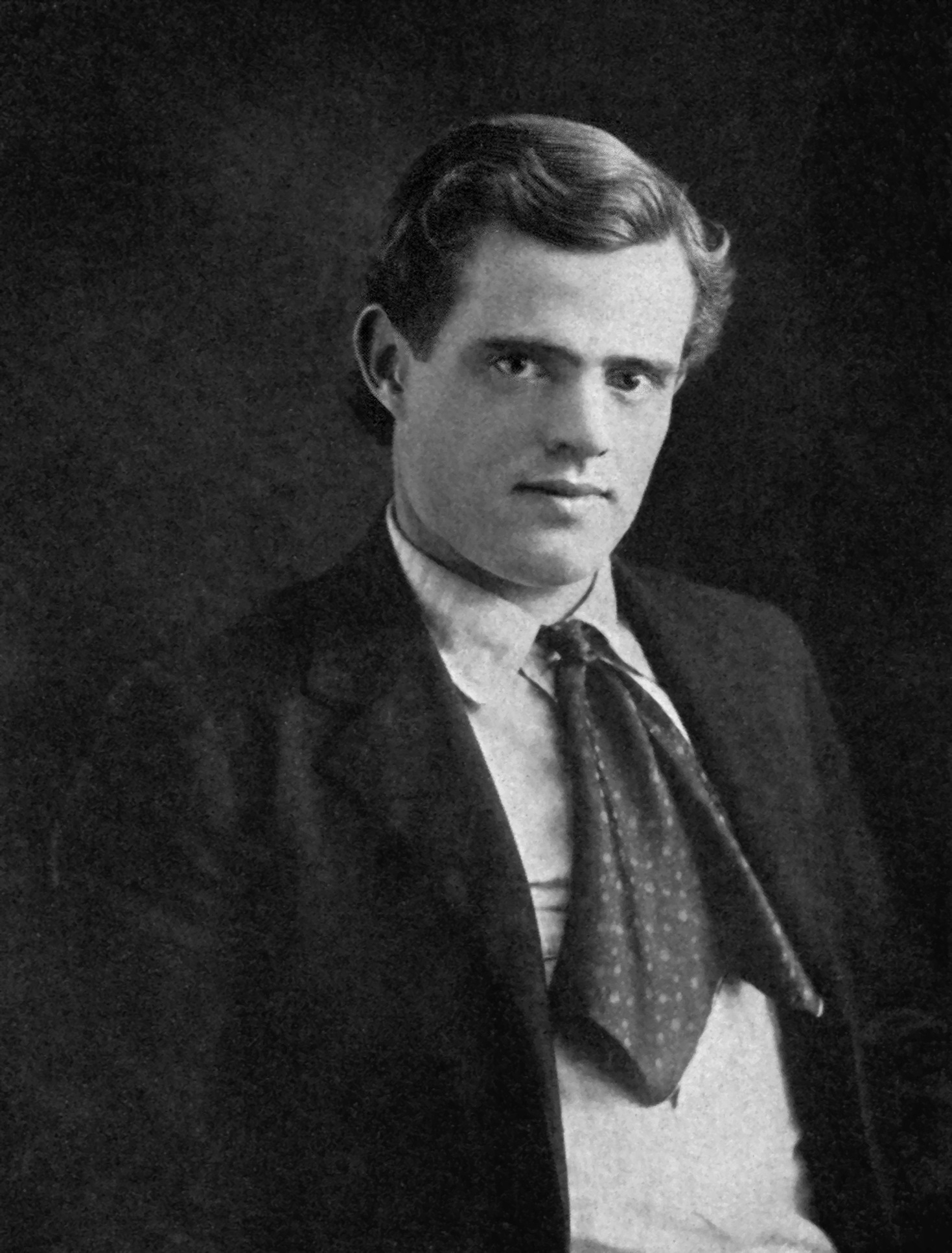
This is Jack London at his most raw and self-lacerating. Written in the final years of his short life, John Barleycorn is an unflinching confession and philosophical meditation on the drink that shaped and ultimately helped destroy him. London recounts his journey from a boy's first sip of beer through decades of epic drinking that accompanied his adventuring across the Pacific, prospecting in the Yukon, and ascending to become one of America's highest-paid authors. He presents alcohol as both a brutal teacher and a treacherous friend, one that strips away comfortable illusions to reveal life's stark truths while simultaneously pulling him toward despair. The memoir captures London's remarkable existence, oyster pirate, sealer, hobo, gold seeker, literary star, and embeds it within a larger meditation on American culture's complicated relationship with intoxication. What makes this book endure is its radical lack of redemption narrative. London does not clean himself up on the page. He simply documents his own spectacular undoing with the same muscular prose he brought to his adventure novels, and in doing so, created the first honest American memoir about addiction.
Editions
X-Ray
“Oh!--and I speak out of later knowledge--Heaven forefend me from the most of the average run of male humans who are not good fellows, the ones cold of heart and cold of head who don't smoke, drink, or swear, or do much of anything else that is brase, and resentful, and stinging, because in their feeble fibres there has never been the stir and prod of life to well over its boundaries and be devilish and daring. One doesn't meet these in saloons, nor rallying to lost causes, nor flaming on the adventure-paths, nor loving as God's own mad lovers. They are too busy keeping their feet dry, conserving their heart-beats, and making unlovely life-successes of their spirit-mediocrity.””
— Jack London
“The fortunate man is the one who cannot take more than a couple of drinks without becoming intoxicated. The unfortunate wight is the one who can take many glasses without betraying a sign; who must take numerous glasses in order to get the ‘kick’.””
— Jack London
“It is nothing new, these vital lies men tell themselves, muttering and mumbling them like charms and incantations against the powers of Night. The voodoos and medicine men and the devil-devil doctors were the fathers of metaphysics. Night and the Noseless One were ogres that beset the way of light and life. And the metaphysicians would win by if they had to tell lies to do it. They were vexed by the brazen law of the Ecclesiast that men die like the beasts of the field and their end is the same. Their creeds were their schemes, their religions their nostrums, their philosophies their devices, by which they half-believed they would outwit the Noseless One and the Night. "Bog-lights, vapours of mysticism, psychic overtones, soul orgies, wailings among the shadows, weird gnosticisms, veils and tissues of words, gibbering subjectivisms, gropings and maunderings, ontological fantasies, pan-psychic hallucinations”
— Jack London
“Drink," says the White Logic. "The Greeks believed that the gods gave them wine so that they might forget the miserableness of existence.””
— Jack London
“John Barleycorn's inhibition rises like a wall betweenone's immediate desires and long-learned morality.””
— Jack London
“Is this flesh of yours you? Or is it an extraneous something possessed by you? Your body”
— Jack London
“To man, alone among the animals, has been given the awful privilege of reason. Man, with his brain, can penetrate the intoxicating show of things and look upon the universe brazen with indifference toward him and his dreams.””
— Jack London
“John Barleycorn makes his appeal to weakness and failure, to weariness and exhaustion. He is the easy way out. And he is lying all the time. He offers false strength to the body, false elevation to the spirit, making things seem what they are not and vastly fairer than what they are.””
— Jack London
“Let the doctors of all the schools condemn me," White Logic whispers as I ride along. "What of it? I am truth. You know it. You cannot combat me. They say I make for death. What of it? It is truth. Life lies in order to live. Life is a perpetual lie-telling process. Life is a mad dance in the domain of flux, wherein appearances in mighty tides ebb and flow, chained to the wheels of moons beyond our ken. Appearances are ghosts. Life is ghost land, where appearances change, transfuse, permeate each the other and all the others, that are, that are not, that always flicker, fade, and pass, only to come again as new appearances, as other appearances. You are such an appearance, composed of countless appearances out of the past. All an appearance can know is mirage. You know mirages of desire. These very mirages are the unthinkable and incalculable congeries of appearances that crowd in upon you and form you out of the past, and that sweep you on into dissemination into other unthinkable and incalculable congeries of appearances to people the ghost land of the future. Life is apparitional, and passes. You are an apparition. Through all the apparitions that preceded you and that compose the parts of you, you rose gibbering from the evolutionary mire, and gibbering you will pass on, interfusing, permeating the procession of apparitions that will succeed you." And of course it is all unanswerable, and as I ride along through the evening shadows I sneer at that Great Fetish which Comte called the world. And I remember what another pessimist of sentiency has uttered: "Transient are all. They, being born, must die, and, being dead, are glad to be at rest.””
— Jack London
Link to this book
Add a free, dofollow link to Lex on your blog, forum, syllabus, or reading list.

<a href="https://lex-books.com/book/john-barleycorn-781c7331-3a52-4568-b1b2-e309e3ed4cf0"><img src="https://lex-books.com/badges/read-on-lex.svg" alt="Read John Barleycorn by Jack London free on Lex" width="160" height="40"></a>[](https://lex-books.com/book/john-barleycorn-781c7331-3a52-4568-b1b2-e309e3ed4cf0)[url=https://lex-books.com/book/john-barleycorn-781c7331-3a52-4568-b1b2-e309e3ed4cf0][img]https://lex-books.com/badges/read-on-lex.svg[/img][/url]Read John Barleycorn by Jack London free on Lex: https://lex-books.com/book/john-barleycorn-781c7331-3a52-4568-b1b2-e309e3ed4cf0Cite this book
Reading this edition for a paper or guide? Copy a citation.
London, Jack. John Barleycorn. Lex, lex-books.com/book/john-barleycorn-781c7331-3a52-4568-b1b2-e309e3ed4cf0.London, J. (1913). John Barleycorn. Lex. https://lex-books.com/book/john-barleycorn-781c7331-3a52-4568-b1b2-e309e3ed4cf0London, Jack. John Barleycorn. Lex. https://lex-books.com/book/john-barleycorn-781c7331-3a52-4568-b1b2-e309e3ed4cf0.