The Road
1907
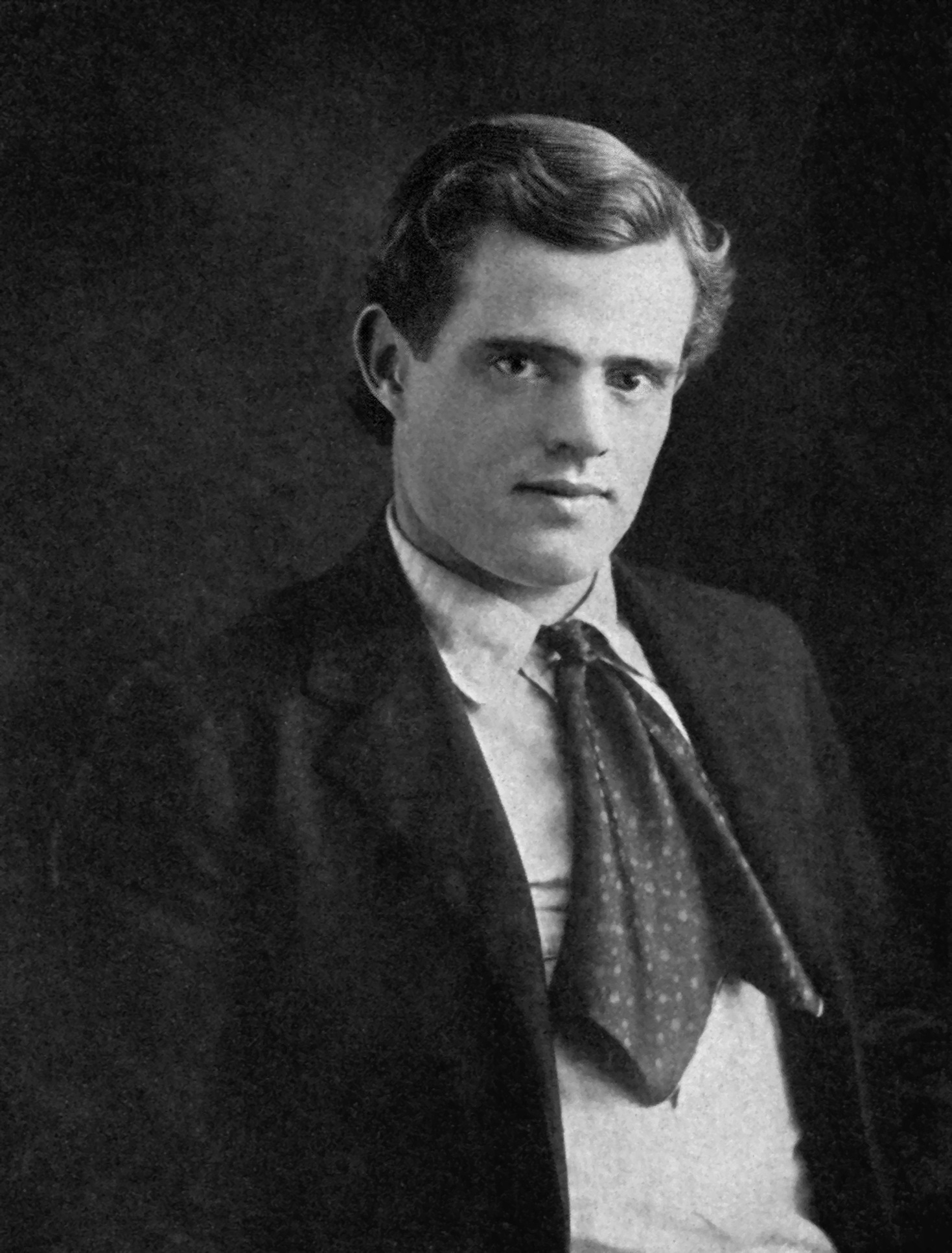
Jack London spent the 1890s as a hobo, riding freight trains and wandering America. "The Road" is his raw, funny, unsentimental account of that life. He writes about catching rides on moving trains, cadging meals from suspicious strangers, sleeping injungle yards with other tramps, and the wholecode of the road. This is not romantic wanderlustit is survival at the margins, told with sharp humor and deep affection for his fellow outcasts. London captures a hidden America: the sociology of hoboes, the kindness of occasional strangers, the constant hunger, the ingenuity required to stay alive. The prose has a brawling, rhythmic energy that makes you feel the rattle of boxcars and the weariness of long miles on foot. Over a century later, it remains a landmark account of American poverty and freedom, a window into a world that still echoes in the margins of our society.
Editions
X-Ray
“Every once in a while, in newspapers, magazines, and biographical dictionaries, I run upon sketches of my life, wherein, delicately phrased, I learn that it was in order to study sociology that I became a tramp. This is very nice and thoughtful of the biographers, but it is inaccurate. I became a tramp”
— Jack London
“Perhaps the greatest charm of tramp-life is the absence of monotony. In Hobo Land the face of life is protean”
— Jack London
“He cut short my request for something to eat, snapping out, "I don't believe you want to work."Now this was irrelevant. I hadn't said anything about work. The topic of conversation I had introduced was "food." In fact, I didn't want to work. I wanted to take the westbound overland that night.””
— Jack London
“That was a page read and turned over; I was busy now with this new page, and when the engine whistled on the grade, this page would be finished and another begun; and so the book of life goes on, page after page and pages without end”
— Jack London
“And all the while the four men lay beside me and watched and made no move. Nor did I move, and without shame I say it; though my reason was compelled to struggle hard against my natural impulse to rise up and interfere. I knew life. Of what use to the woman, or to me, would be my being beaten to death by five men there on the bank of the Susquehanna? I once saw a man hanged, and though my whole soul cried protest, my mouth cried not. Had it cried, I should most likely have had my skull crushed by the butt of a revolver, for it was the law that the man should hang. And here, in this gypsy group, it was the law that the woman should be whipped.Even so, the reason in both cases that I did not interfere was not that it was the law, but that the law was stronger than I. Had it not been for those four men beside me in the grass, right gladly would I have waded into the man with the whip. And, barring the accident of the landing on me with a knife or a club in the hands of some of the various women of the camp, I am confident that I should have beaten him into a mess. But the four men were beside me in the grass. They made their law stronger than I.””
— Jack London
“We took up a collection and sent a telegram to the authorities of that town. The text of the message was that eighty-five healthy, hungry hoboes would arrive about noon and that it would be a good idea to have dinner ready for them.””
— Jack London
“Now it happens that I am a fluid sort of an organism, with sufficient kinship with life to fit myself in 'most anywhere.””
— Jack London
“. I have sometimes held forth (facetiously, so my listeners believed) that the chief distinguishing trait between man and the other animals is that man is the only animal that maltreats the females of his kind. It is something of which no wolf nor cowardly coyote is ever guilty. It is something that even the dog, degenerated by domestication, will not do.””
— Jack London
“I couldn't find any straw to step upon, so I stepped upon more men. The resentment increased, so did my forward movement. I lost my footing and sat down with sharp abruptness. Unfortunately, it was on a man's head. The next moment he had risen on his hands and knees in wrath, and I was flying through the air. What goes up must come down, and I came down on another man's head.What happened after that is very vague in my memory. It was like going through a threshing-machine. I was bandied about from one end of the car to the other. Those eighty-four hoboes winnowed me out till what little was lift of me, by some miracle, found a bit of straw to rest upon””
— Jack London
Link to this book
Add a free, dofollow link to Lex on your blog, forum, syllabus, or reading list.

<a href="https://lex-books.com/book/the-road-77382d19-a446-4279-bba5-fd66b0cff938"><img src="https://lex-books.com/badges/read-on-lex.svg" alt="Read The Road by Jack London free on Lex" width="160" height="40"></a>[](https://lex-books.com/book/the-road-77382d19-a446-4279-bba5-fd66b0cff938)[url=https://lex-books.com/book/the-road-77382d19-a446-4279-bba5-fd66b0cff938][img]https://lex-books.com/badges/read-on-lex.svg[/img][/url]Read The Road by Jack London free on Lex: https://lex-books.com/book/the-road-77382d19-a446-4279-bba5-fd66b0cff938Cite this book
Reading this edition for a paper or guide? Copy a citation.
London, Jack. The Road. Lex, lex-books.com/book/the-road-77382d19-a446-4279-bba5-fd66b0cff938.London, J. (1907). The Road. Lex. https://lex-books.com/book/the-road-77382d19-a446-4279-bba5-fd66b0cff938London, Jack. The Road. Lex. https://lex-books.com/book/the-road-77382d19-a446-4279-bba5-fd66b0cff938.