The Bacchae of Euripides
1954
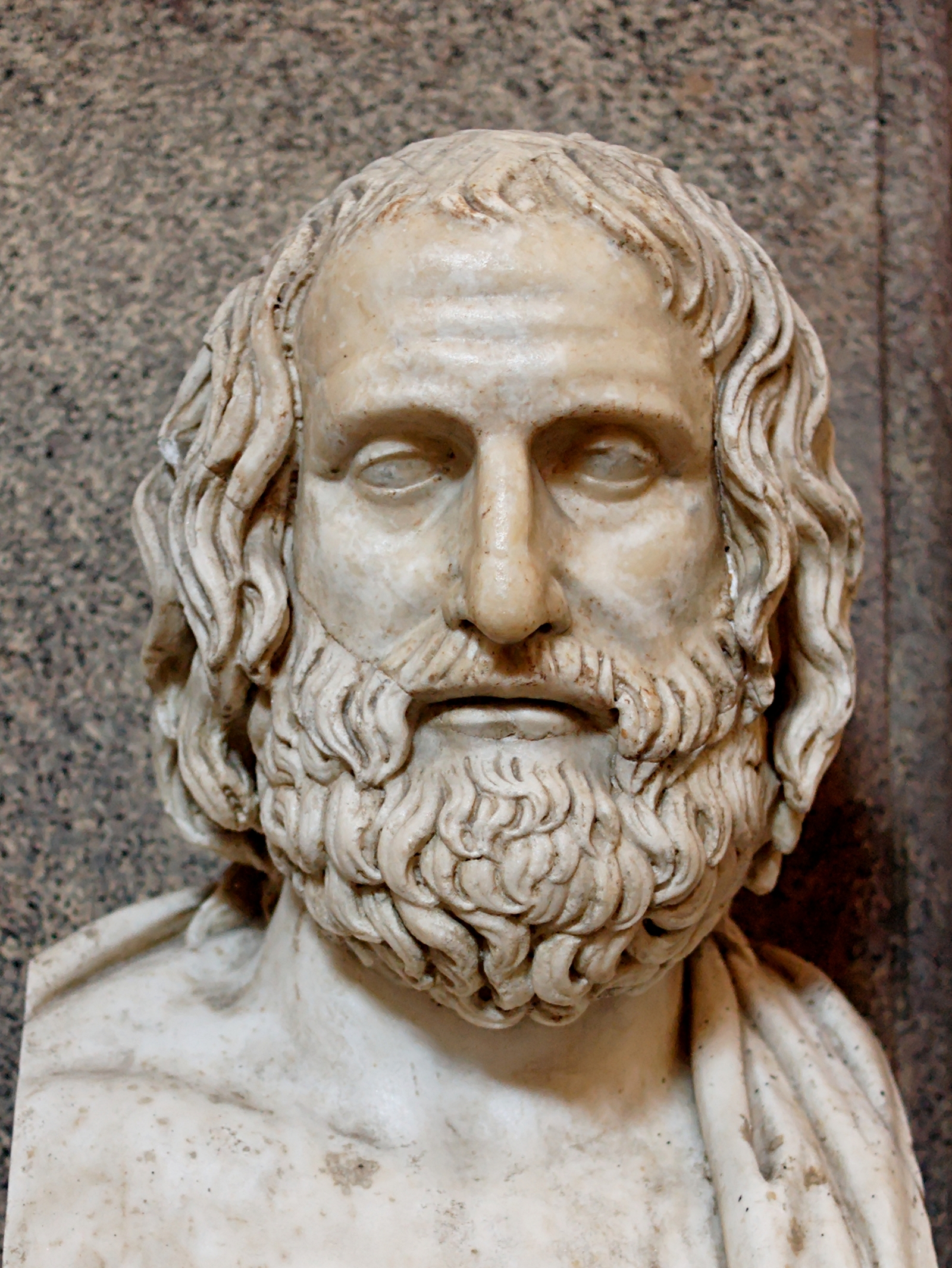
The most terrifying portrait of divine vengeance ever staged. Euripides wrote this tragedy in 5th-century Athens, and it still has the power to shock: a king torn apart by women he mocked, his own mother wearing his blood as a crown. Dionysus, the god of wine and ecstasy, returns to Thebes to punish the city that denied his mother's claim to have borne a god. Pentheus, the rigid king, tries to reason with madness itself, and finds himself consumed by it. The play asks what happens when you refuse to acknowledge what you cannot control: the divine, the primal, the ecstatic. It is both a meditation on the price of arrogance and an anatomy of religious terror. No other Greek tragedy ends so violently, so viscerally, so memorably. If you want to understand why the ancients feared the gods of excess, read this.
Editions
X-Ray
“Talk sense to a fool and he calls you foolish.””
— Euripides
“Cleverness is not wisdom.””
— Euripides
“Do not mistake the rule of forcefor true power. Men are not shaped by force.””
— Euripides
“He who believes needs no explanation.””
— Euripides
“[Diontsos].Swoony type,long hair, bedroom eyes,cheeks like wine.””
— Euripides
“He is life's liberating force.He is release of limbs and communion through dance.He is laughter, and music in flutes. He is repose from all cares -- he is sleep!When his blood bursts from the grapeand flows across tables laid in his honorto fuse with our blood,he gently, gradually, wraps us in shadowsof ivy-cool sleep.””
— Euripides
“Knowledge is not wisdom: cleverness is not, not without awareness of our death, not without recalling just how brief our flare is. He who overreaches will, in his overreaching, lose what he possesses, betray what he has now. That which is beyond us, which is greater than the human, the unattainably great, is for the mad, or for those who listen to the mad, and then believe them.””
— Euripides
“Young man, two are the forces most precious to mankind.The first is Demeter, the Goddess.She is the Earth -- or any name you wish to call her -- and she sustains humanity with solid food.Next came Dionysus, the son of the virgin, bringing the counterpart to bread: wineand the blessings of life's flowing juices.His blood, the blood of the grape,lightens the burden of our mortal misery.Though himself a God, it is his blood we pour outto offer thanks to the Gods. And through him, we are blessed.””
— Euripides
“Prepare yourselvesfor the roaring voice of the God of Joy!””
— Euripides
Link to this book
Add a free, dofollow link to Lex on your blog, forum, syllabus, or reading list.

<a href="https://lex-books.com/book/the-bacchae-of-euripides-aaf540cf-bc10-4be3-b24a-bbc7ee23cd9e"><img src="https://lex-books.com/badges/read-on-lex.svg" alt="Read The Bacchae of Euripides by Euripides free on Lex" width="160" height="40"></a>[](https://lex-books.com/book/the-bacchae-of-euripides-aaf540cf-bc10-4be3-b24a-bbc7ee23cd9e)[url=https://lex-books.com/book/the-bacchae-of-euripides-aaf540cf-bc10-4be3-b24a-bbc7ee23cd9e][img]https://lex-books.com/badges/read-on-lex.svg[/img][/url]Read The Bacchae of Euripides by Euripides free on Lex: https://lex-books.com/book/the-bacchae-of-euripides-aaf540cf-bc10-4be3-b24a-bbc7ee23cd9eCite this book
Reading this edition for a paper or guide? Copy a citation.
Euripides. The Bacchae of Euripides. Lex, lex-books.com/book/the-bacchae-of-euripides-aaf540cf-bc10-4be3-b24a-bbc7ee23cd9e.Euripides (1954). The Bacchae of Euripides. Lex. https://lex-books.com/book/the-bacchae-of-euripides-aaf540cf-bc10-4be3-b24a-bbc7ee23cd9eEuripides. The Bacchae of Euripides. Lex. https://lex-books.com/book/the-bacchae-of-euripides-aaf540cf-bc10-4be3-b24a-bbc7ee23cd9e.