Storm
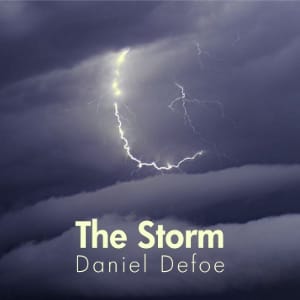
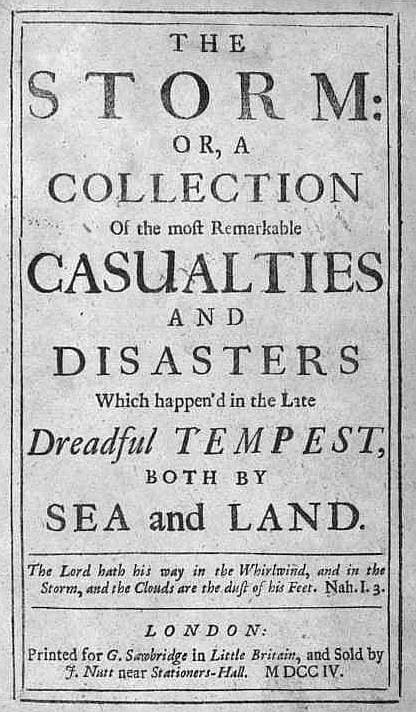
The Storm is the book that almost wasn't. In November 1703, the most violent hurricane in English history tore across the country, leveling churches, sinking ships, and reducing homes to rubble. Daniel Defoe, then a young pamphleteer, did something no one had done before: he placed advertisements in newspapers asking survivors to send in their accounts. What he collected became the first work of modern investigative journalism, a genre-defying account that reads like disaster journalism, oral history, and proto-true crime all at once. The opening chapters are Defoe at his most vivid, painting the storm as something almost biblical in its fury. Then comes something startling: dozens of first-person testimonies from sailors, farmers, clergymen, and London shopkeepers. Their voices are raw, specific, deeply human. You hear the terror in their words. You feel the wind that blew the Duke of Devonshire's coach off a bridge. This is where Defoe learned the telling detail that would later make Robinson Crusoe feel so startlingly real. It's journalism invented in real time, by a writer who had no idea he was inventing a form that would dominate the next three centuries.
Editions

Link to this book
Add a free, dofollow link to Lex on your blog, forum, syllabus, or reading list.

<a href="https://lex-books.com/book/storm-25868798-b14d-404c-bff6-586dec2e4c5a"><img src="https://lex-books.com/badges/read-on-lex.svg" alt="Read Storm by Daniel Defoe free on Lex" width="160" height="40"></a>[](https://lex-books.com/book/storm-25868798-b14d-404c-bff6-586dec2e4c5a)[url=https://lex-books.com/book/storm-25868798-b14d-404c-bff6-586dec2e4c5a][img]https://lex-books.com/badges/read-on-lex.svg[/img][/url]Read Storm by Daniel Defoe free on Lex: https://lex-books.com/book/storm-25868798-b14d-404c-bff6-586dec2e4c5aCite this book
Reading this edition for a paper or guide? Copy a citation.
Defoe, Daniel. Storm. Lex, lex-books.com/book/storm-25868798-b14d-404c-bff6-586dec2e4c5a.Defoe, D. (n.d.). Storm. Lex. https://lex-books.com/book/storm-25868798-b14d-404c-bff6-586dec2e4c5aDefoe, Daniel. Storm. Lex. https://lex-books.com/book/storm-25868798-b14d-404c-bff6-586dec2e4c5a.