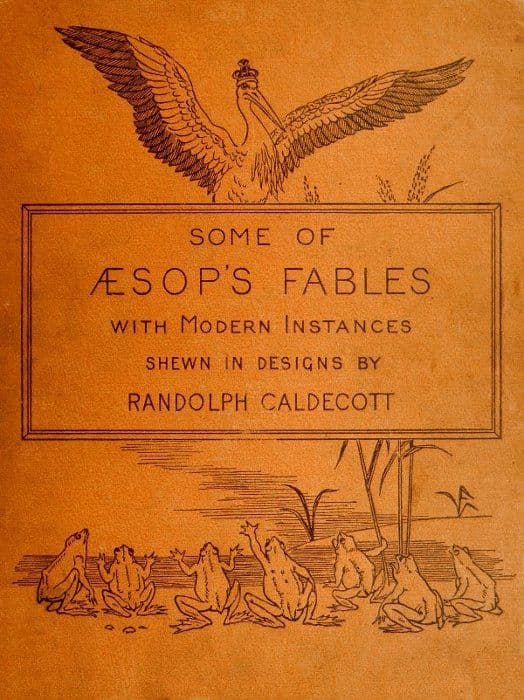
Æsop's Fables, Embellished with One Hundred and Eleven Emblematical Devices.
1813
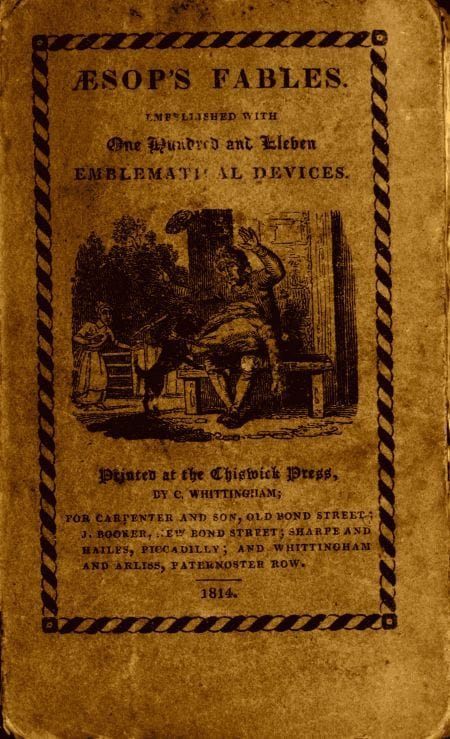
Æsop's Fables, Embellished with One Hundred and Eleven Emblematical Devices.
1813
Translated by Samuel Croxall
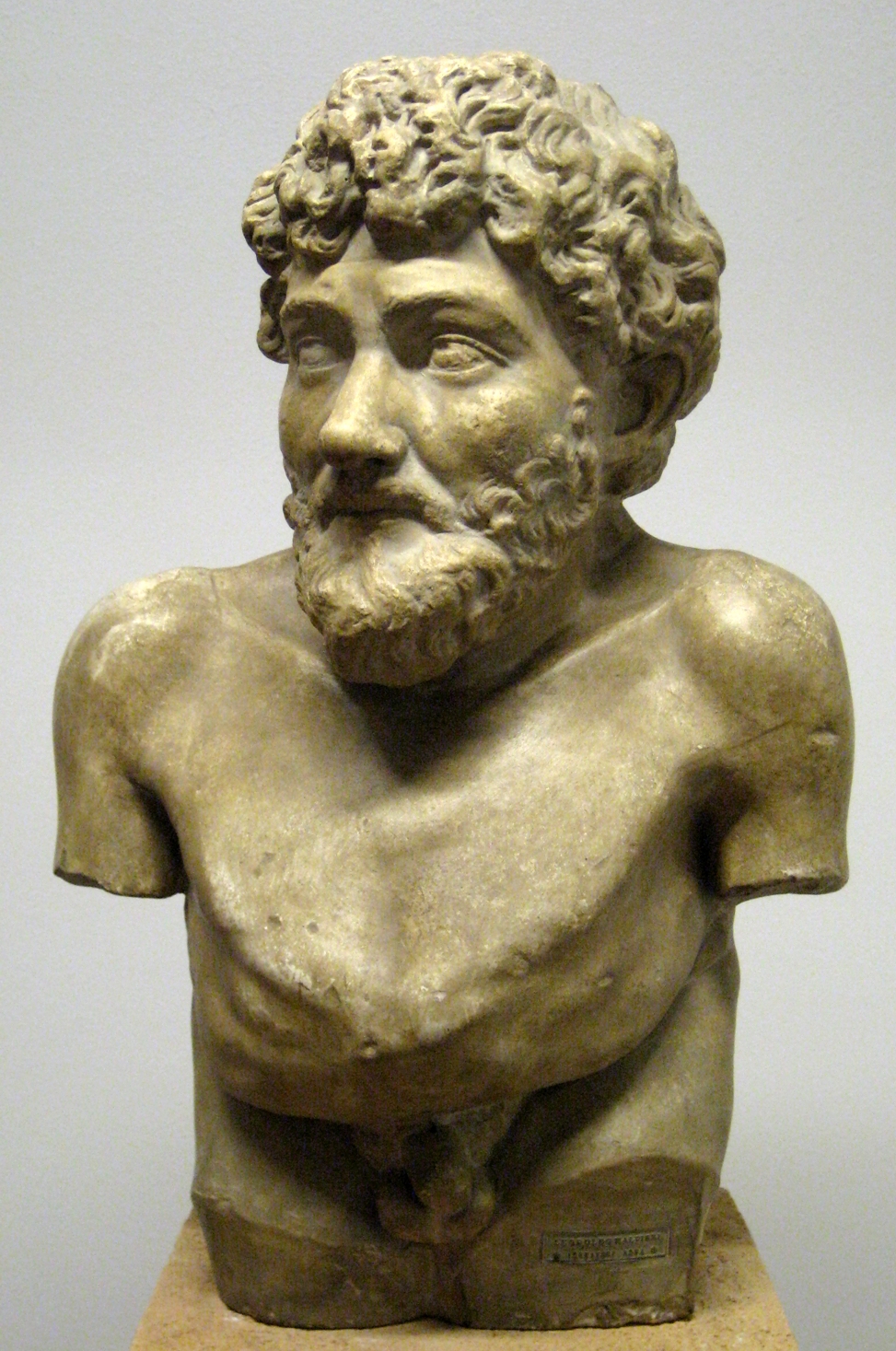
''Æsop's Fables, Embellished with One Hundred and Eleven Emblematical Devices'' is a collection of moral tales attributed to the ancient Greek storyteller Æsop, first published in 1813. This edition features a variety of fables that convey moral lessons through anthropomorphized animals, emphasizing virtues such as knowledge, justice, kindness, and prudence. Each fable serves as a lens for examining human behavior and ethics, making it a significant work in children's literature and moral education.
Editions
X-Ray
“A doubtful friend is worse than a certain enemy. Let a man be one thing or the other, and we then know how to meet him.””
— Aesop
“If you choose bad companions, no one will believe that you are anything but bad yourself.””
— Aesop
“The injury we do and the one we suffer are not weighed in the same scales.””
— Aesop
“Once a wolf, always a wolf.””
— Aesop
“Give assistance, not advice, in a crisis.””
— Aesop
“In trying to please all, he had pleased none.””
— Aesop
“Those who suffer most cry out the least.””
— Aesop
“Look and see which way the wind blows before you commit yourself.””
— Aesop
“All men are more concerned to recover what they lose than to acquire what they lack.””
— Aesop
Link to this book
Add a free, dofollow link to Lex on your blog, forum, syllabus, or reading list.

<a href="https://lex-books.com/book/sop-s-fables-embellished-with-one-hundred-and-eleven-emblematical-devices-aa6a4f30-51c5-4f3e-9cbc-c1881bb69f5f"><img src="https://lex-books.com/badges/read-on-lex.svg" alt="Read Æsop's Fables, Embellished with One Hundred and Eleven Emblematical Devices. by Aesop free on Lex" width="160" height="40"></a>[](https://lex-books.com/book/sop-s-fables-embellished-with-one-hundred-and-eleven-emblematical-devices-aa6a4f30-51c5-4f3e-9cbc-c1881bb69f5f)[url=https://lex-books.com/book/sop-s-fables-embellished-with-one-hundred-and-eleven-emblematical-devices-aa6a4f30-51c5-4f3e-9cbc-c1881bb69f5f][img]https://lex-books.com/badges/read-on-lex.svg[/img][/url]Read Æsop's Fables, Embellished with One Hundred and Eleven Emblematical Devices. by Aesop free on Lex: https://lex-books.com/book/sop-s-fables-embellished-with-one-hundred-and-eleven-emblematical-devices-aa6a4f30-51c5-4f3e-9cbc-c1881bb69f5fCite this book
Reading this edition for a paper or guide? Copy a citation.
Aesop. Æsop's Fables, Embellished with One Hundred and Eleven Emblematical Devices.. Lex, lex-books.com/book/sop-s-fables-embellished-with-one-hundred-and-eleven-emblematical-devices-aa6a4f30-51c5-4f3e-9cbc-c1881bb69f5f.Aesop (1813). Æsop's Fables, Embellished with One Hundred and Eleven Emblematical Devices.. Lex. https://lex-books.com/book/sop-s-fables-embellished-with-one-hundred-and-eleven-emblematical-devices-aa6a4f30-51c5-4f3e-9cbc-c1881bb69f5fAesop. Æsop's Fables, Embellished with One Hundred and Eleven Emblematical Devices.. Lex. https://lex-books.com/book/sop-s-fables-embellished-with-one-hundred-and-eleven-emblematical-devices-aa6a4f30-51c5-4f3e-9cbc-c1881bb69f5f.