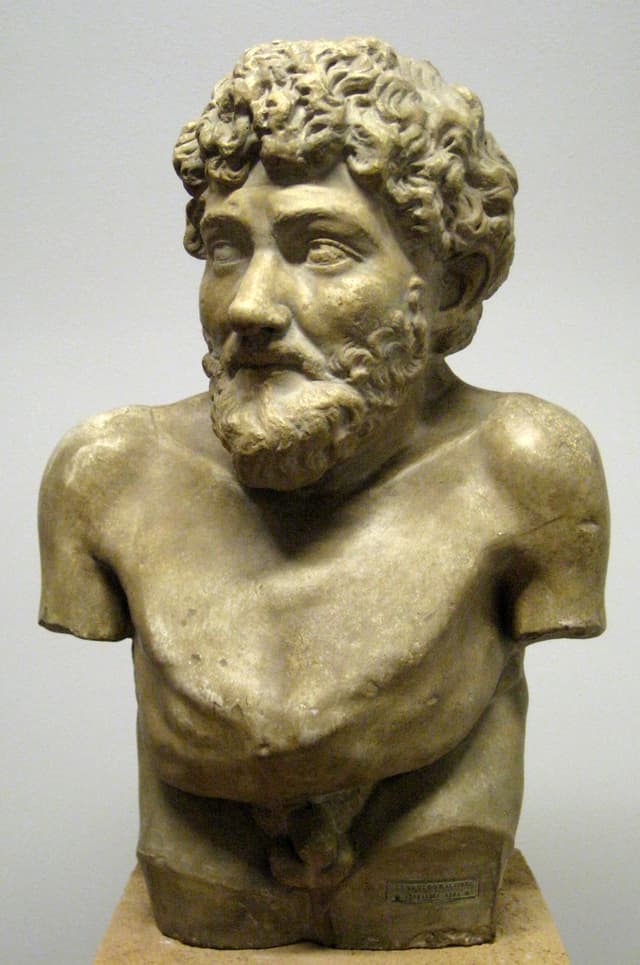
Aesop
Aesop was a Greek fabulist and storyteller whose legacy is rooted in a rich tradition of oral storytelling. Although the details of his life remain shrouded in mystery, with no surviving texts directly authored by him, he is credited with a collection of fables that have transcended time and culture. These tales, often featuring anthropomorphic animals, convey moral lessons and reflect human nature, making them accessible and relevant across generations. Aesop's Fables have been passed down through oral tradition and later compiled into written collections, influencing countless writers and educators throughout history. The significance of Aesop's work lies not only in the fables themselves but also in their enduring impact on literature and moral philosophy. His stories, such as "The Tortoise and the Hare" and "The Boy Who Cried Wolf," have become foundational texts in the genre of fable, establishing a framework for storytelling that emphasizes ethical lessons. Aesop's ability to distill complex human behaviors into simple narratives has made his fables a staple in both children's literature and moral instruction, ensuring his place as a pivotal figure in the literary canon.
Famous Quotes
View all 57 quotes“THE FOX AND THE CROWA Crow was sitting on a branch of a tree with a piece of cheese in her beak when a Fox observed her and set his wits to work to discover some way of getting the cheese. Coming and standing under the tree he looked up and said, "What a noble bird I see above me! Her beauty is without equal, the hue of her plumage exquisite. If only her voice is as sweet as her looks are fair, she ought without doubt to be Queen of the Birds." The Crow was hugely flattered by this, and just to show the Fox that she could sing she gave a loud caw. Down came the cheese, of course, and the Fox, snatching it up, said, "You have a voice, madam, I see: what you want is wits.”
“The north wind and the sun were disputing which was the stronger, and agreed to acknowledge as the victor whichever of them could strip a traveler of his clothing. The wind tried first. But its violent gusts only made the man hold his clothes tightly around him, and when it blew harder still the cold made him so uncomfortable that he put on an extra wrap. Eventually the wind got tired of it and handed him over to the sun. The sun shone first with moderate warmth, which made the man take off his topcoat. Then it blazed fiercely, till, unable to stand the heat, he stripped and went off to a bathe in a nearby river. Persuasion is more effective than force.”
“THE MISCHIEVOUS DOGThere was once a Dog who used to snap at people and bite them without any provocation, and who was a great nuisance to every one who came to his master's house. So his master fastened a bell round his neck to warn people of his presence. The Dog was very proud of the bell, and strutted about tinkling it with immense satisfaction. But an old dog came up to him and said, "The fewer airs you give yourself the better, my friend. You don't think, do you, that your bell was given you as a reward of merit? On the contrary, it is a badge of disgrace."Notoriety is often mistaken for fame.”
Books from the author








Link to this page
Add a free, dofollow link to Lex on your blog, forum, syllabus, or reading list.

<a href="https://lex-books.com/author/aesop"><img src="https://lex-books.com/badges/read-on-lex.svg" alt="Aesop on Lex" width="160" height="40"></a>[](https://lex-books.com/author/aesop)[url=https://lex-books.com/author/aesop][img]https://lex-books.com/badges/read-on-lex.svg[/img][/url]Aesop on Lex: https://lex-books.com/author/aesop