Saint Joan: A Chronicle Play in Six Scenes and an Epilogue
1924
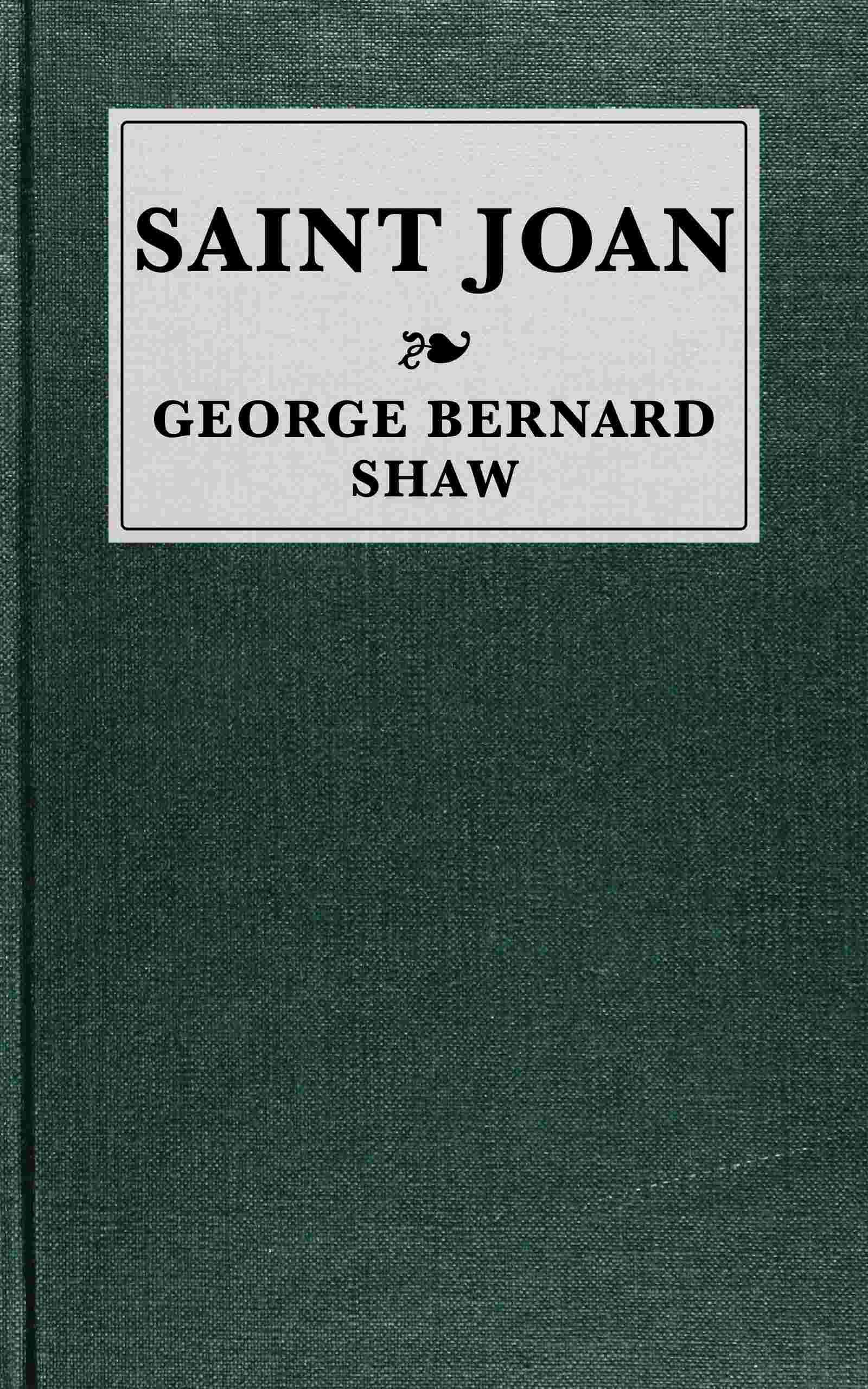
Saint Joan: A Chronicle Play in Six Scenes and an Epilogue
1924
Bernard Shaw's Saint Joan explodes the myth of the mad saint to reveal something far more dangerous: a shrewd, practical visionary whose conviction shakes empires. In this chronicle play, a peasant girl convinces the Dauphin of France to give her an army, leading besieged forces to victory and securing a coronation at Reims, all while insisting her 'voices' are simply intense imagination, not divine revelation. Shaw constructs no simple tale of heroism and martyrdom. Instead, he depicts Joan's trial and execution as a tragedy produced not by villains but by ordinary men, Bishop Cauchon, the Earl of Warwick, the Inquisitor, each acting according to their institutional logic. The collision between individual conscience and institutional authority resonates far beyond medieval France. Shaw's Joan is rebellious, politically astute, and unbearable to the powerful precisely because she will not stop. Nearly a century after its premiere, the play endures because it asks the same question facing every age: what happens when genuine vision meets the machinery of established power?
Editions

X-Ray
“Don't think you can frighten me by telling me that I am alone. France is alone. God is alone. And the loneliness of God is His strength.””
— Bernard Shaw
“The truth sticks in our throats with all the sauces it is served with: it will never go down until we take it without any sauce at all.””
— Bernard Shaw
“I could do without my warhorse; I could drag about in a skirt; I could let the banners and the trumpets and the knights and soldiers pass me and leave me behind as they leave the other women, if only I could still hear the wind in the trees, the larks in the sunshine, the young lambs crying through the healthy frost, and the blessed blessed church bells that send my angel voices floating to me on the wind. But without these things I cannot live; and by your wanting to take them away from me, or from any human creature, I know that your counsel is of the devil, and that mine is of God.””
— Bernard Shaw
“We must face the fact that society is founded on intolerance. [. . .] We may prate of toleration as we will; but society must always draw a line somewhere between allowable conduct and insanity or crime, in spite of the risk of mistaking sages for lunatics and saviours for blasphemers. We must persecute, even to the death; and all we can do to mitigate the danger of persecution is, first, to be very careful what we persecute, and second, to bear in mind that unless there is a large liberty to shock conventional people, and a well informed sense of the value of originality, individuality, and eccentricity, the result will be apparent stagnation covering a repression of evolutionary forces which will eventually explode with extravagant and probably destructive violence.””
— Bernard Shaw
“O God that madest this beautiful earth, when will it be ready to receive Thy saints? How long, O Lord, how long?””
— Bernard Shaw
“We want a few mad people now. See where the sane ones have landed us!””
— Bernard Shaw
“If if's and and's were pots and pans, there'd be no need for tinkers.””
— Bernard Shaw
“I say, if you hate cruelty, remember that nothing is so cruel in its consequences as the toleration of heresy!””
— Bernard Shaw
“Well, what do they all amount to, these kings and captains and bishops and lawyers and such like? They just leave you in the ditch to bleed to death; and the next thing is, you meet them down there, for all the airs they give themselves.””
— Bernard Shaw
Link to this book
Add a free, dofollow link to Lex on your blog, forum, syllabus, or reading list.

<a href="https://lex-books.com/book/saint-joan-a-chronicle-play-in-six-scenes-and-an-epilogue-49ea2268-e4f2-4161-9443-2f7f41d7cb09"><img src="https://lex-books.com/badges/read-on-lex.svg" alt="Read Saint Joan: A Chronicle Play in Six Scenes and an Epilogue by Bernard Shaw free on Lex" width="160" height="40"></a>[](https://lex-books.com/book/saint-joan-a-chronicle-play-in-six-scenes-and-an-epilogue-49ea2268-e4f2-4161-9443-2f7f41d7cb09)[url=https://lex-books.com/book/saint-joan-a-chronicle-play-in-six-scenes-and-an-epilogue-49ea2268-e4f2-4161-9443-2f7f41d7cb09][img]https://lex-books.com/badges/read-on-lex.svg[/img][/url]Read Saint Joan: A Chronicle Play in Six Scenes and an Epilogue by Bernard Shaw free on Lex: https://lex-books.com/book/saint-joan-a-chronicle-play-in-six-scenes-and-an-epilogue-49ea2268-e4f2-4161-9443-2f7f41d7cb09Cite this book
Reading this edition for a paper or guide? Copy a citation.
Shaw, Bernard. Saint Joan: A Chronicle Play in Six Scenes and an Epilogue. Lex, lex-books.com/book/saint-joan-a-chronicle-play-in-six-scenes-and-an-epilogue-49ea2268-e4f2-4161-9443-2f7f41d7cb09.Shaw, B. (1924). Saint Joan: A Chronicle Play in Six Scenes and an Epilogue. Lex. https://lex-books.com/book/saint-joan-a-chronicle-play-in-six-scenes-and-an-epilogue-49ea2268-e4f2-4161-9443-2f7f41d7cb09Shaw, Bernard. Saint Joan: A Chronicle Play in Six Scenes and an Epilogue. Lex. https://lex-books.com/book/saint-joan-a-chronicle-play-in-six-scenes-and-an-epilogue-49ea2268-e4f2-4161-9443-2f7f41d7cb09.