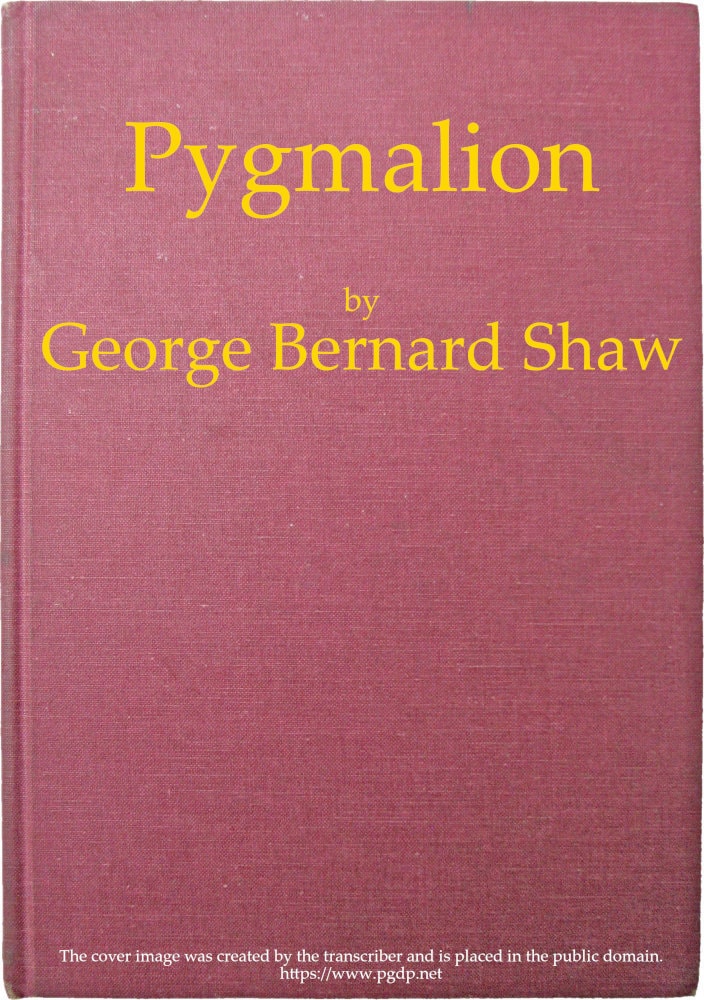
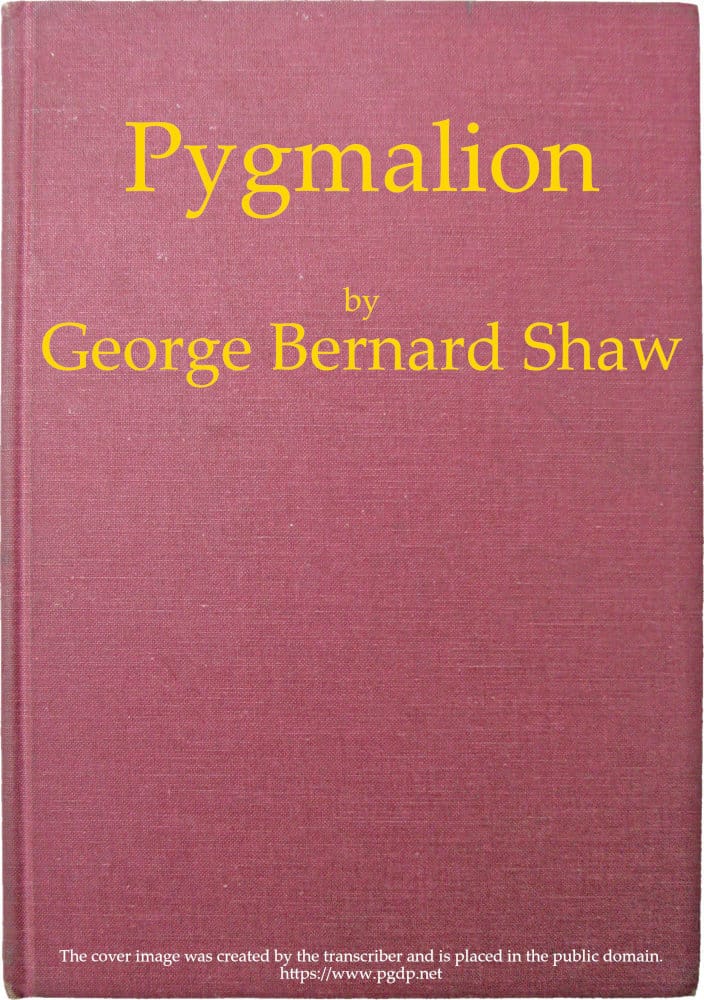
Pygmalion
1916
What happens when a man decides to remake a woman into something more respectable and discovers he's bitten off more than he can chew? Pygmalion takes as its premise a bet: can Professor Henry Higgins, a brilliant but arrogant phonetics expert, take a Cockney flower girl and teach her to pass as a duchess? The answer is yes, of course he can. But what happens to Eliza in the process the question that still burns. Shaw's play is a detonation of British class pretension, a comedy of manners that refuses to stay politely funny. When Higgins treats Eliza like a fascinating specimen rather than a person, the play becomes something sharper: a debate about autonomy, about who has the right to shape another human being, about whether transformation is liberation or violence. The dialogue crackles with Shaw's ferocious intelligence, every exchange a verbal sparring match. The ending refuses easy resolution, asking instead what freedom actually looks like for a woman who has been remade but not asked if she wanted to be. Over a century later, the play remains explosive: a challenge to anyone who believes they know who someone else really is.
Editions
X-Ray
“What you are to do without me I cannot imagine.””
— Bernard Shaw
“If you can’t appreciate what you’ve got, you’d better get what you can appreciate.””
— Bernard Shaw
“Happy is the man who can make a living by his hobby””
— Bernard Shaw
“What is life but a series of inspired follies? The difficulty is to find them to do. Never lose a chance: it doesn’t come every day.””
— Bernard Shaw
“I sold flowers. I didn't sell myself. Now you've made a lady of me I'm not fit to sell anything else.””
— Bernard Shaw
“HIGGINSI find that the moment I let a woman make friends with me, she becomes jealous, exacting, suspicious, and a damned nuisance. I find that the moment I let myself make friends with a woman, I become selfish and tyrannical. Women upset everything. When you let them into your life, you find that the woman is driving at one thing and you're driving at another.PICKERINGAt what, for example?HIGGINSOh, Lord knows! I suppose the woman wants to live her own life; and the man wants to live his; and each tries to drag the other on to the wrong track. One wants to go north and the other south; and the result is that both have to go east, though they both hate the east wind.””
— Bernard Shaw
“I can't turn your soul on. Leave me those feelings; and you can take away the voice and the face. They are not you.””
— Bernard Shaw
“I shall always be a flower girl to Professor Higgins, because he always treats me as a flower girl, and always will; but I know I can be a lady to you, because you always treat me as a lady, and always will.””
— Bernard Shaw
“Get out of my way; for I won't stop for you.””
— Bernard Shaw
Link to this book
Add a free, dofollow link to Lex on your blog, forum, syllabus, or reading list.

<a href="https://lex-books.com/book/pygmalion-ea387293-fda1-48b4-afec-6f582b0dd259"><img src="https://lex-books.com/badges/read-on-lex.svg" alt="Read Pygmalion by Bernard Shaw free on Lex" width="160" height="40"></a>[](https://lex-books.com/book/pygmalion-ea387293-fda1-48b4-afec-6f582b0dd259)[url=https://lex-books.com/book/pygmalion-ea387293-fda1-48b4-afec-6f582b0dd259][img]https://lex-books.com/badges/read-on-lex.svg[/img][/url]Read Pygmalion by Bernard Shaw free on Lex: https://lex-books.com/book/pygmalion-ea387293-fda1-48b4-afec-6f582b0dd259Cite this book
Reading this edition for a paper or guide? Copy a citation.
Shaw, Bernard. Pygmalion. Lex, lex-books.com/book/pygmalion-ea387293-fda1-48b4-afec-6f582b0dd259.Shaw, B. (1916). Pygmalion. Lex. https://lex-books.com/book/pygmalion-ea387293-fda1-48b4-afec-6f582b0dd259Shaw, Bernard. Pygmalion. Lex. https://lex-books.com/book/pygmalion-ea387293-fda1-48b4-afec-6f582b0dd259.