Puck of Pook's Hill
1906
Puck of Pook's Hill
1906
On a summer afternoon in the Sussex hills, two children named Dan and Una accidentally summon something ancient. They perform a clumsy scene from Shakespeare's fairy play in a meadow called Pook's Hill, and the earth responds: Puck himself rises from the ground, the oldest spirit in England, amused and delighted by their small magic. What follows is a sequence of journeys through time, as the children are introduced to Romans, Saxons, Norman knights, and Elizabethan soldiers each drawn from history by Puck's command, men and women who tell their own stories of Britain. The tales range from a Roman centurion guarding Hadrian's Wall to a fugitive fleeing the Norman Conquest, from the building of a medieval manor to the signing of the Magna Carta. Each narrative is bracketed by a poem that echoes its themes. This is not merely nostalgia: Kipling constructed an argument about empire, belonging, and what it means to be English, embedded in fantasy. The magic is real, the history is vivid, and the underlying message is that the past does not disappear it waits in the soil, in the place names, in the bones of the land, for anyone perceptive enough to listen.
Editions
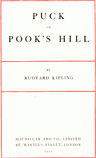
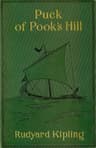
X-Ray
“It isn't what you say so much. It's what you mean when you say it.””
— Rudyard Kipling
“There is no gift like friendship. Remember this - when you become a young man. For your fate will turn on the first true friend you make.””
— Rudyard Kipling
“Threatened men live long.””
— Rudyard Kipling
“Barbarians are all alike... sit up half the night to discuss anything a Roman says.””
— Rudyard Kipling
“Witta feared nothing - except to be poor.””
— Rudyard Kipling
“I had come down here, not to serve God as a craftsman should, but to show my people how great a craftsman I was. They cared not.””
— Rudyard Kipling
“I have joyfully done much evil in my life to those who have wished me evil (General Maximus)””
— Rudyard Kipling
“Cites and Thrones and PowersStand in Time's eyeWhich daily die;But, as new buds put forthTo glad new men, Out of the spend and unconsidered Earth,The cities will rise again””
— Rudyard Kipling
“Like everything else in the world, it is one man's work.””
— Rudyard Kipling
Link to this book
Add a free, dofollow link to Lex on your blog, forum, syllabus, or reading list.

<a href="https://lex-books.com/book/puck-of-pook-s-hill-0682971d-0f10-4666-8710-c8da2b7756e5"><img src="https://lex-books.com/badges/read-on-lex.svg" alt="Read Puck of Pook's Hill by Rudyard Kipling free on Lex" width="160" height="40"></a>[](https://lex-books.com/book/puck-of-pook-s-hill-0682971d-0f10-4666-8710-c8da2b7756e5)[url=https://lex-books.com/book/puck-of-pook-s-hill-0682971d-0f10-4666-8710-c8da2b7756e5][img]https://lex-books.com/badges/read-on-lex.svg[/img][/url]Read Puck of Pook's Hill by Rudyard Kipling free on Lex: https://lex-books.com/book/puck-of-pook-s-hill-0682971d-0f10-4666-8710-c8da2b7756e5Cite this book
Reading this edition for a paper or guide? Copy a citation.
Kipling, Rudyard. Puck of Pook's Hill. Lex, lex-books.com/book/puck-of-pook-s-hill-0682971d-0f10-4666-8710-c8da2b7756e5.Kipling, R. (1906). Puck of Pook's Hill. Lex. https://lex-books.com/book/puck-of-pook-s-hill-0682971d-0f10-4666-8710-c8da2b7756e5Kipling, Rudyard. Puck of Pook's Hill. Lex. https://lex-books.com/book/puck-of-pook-s-hill-0682971d-0f10-4666-8710-c8da2b7756e5.