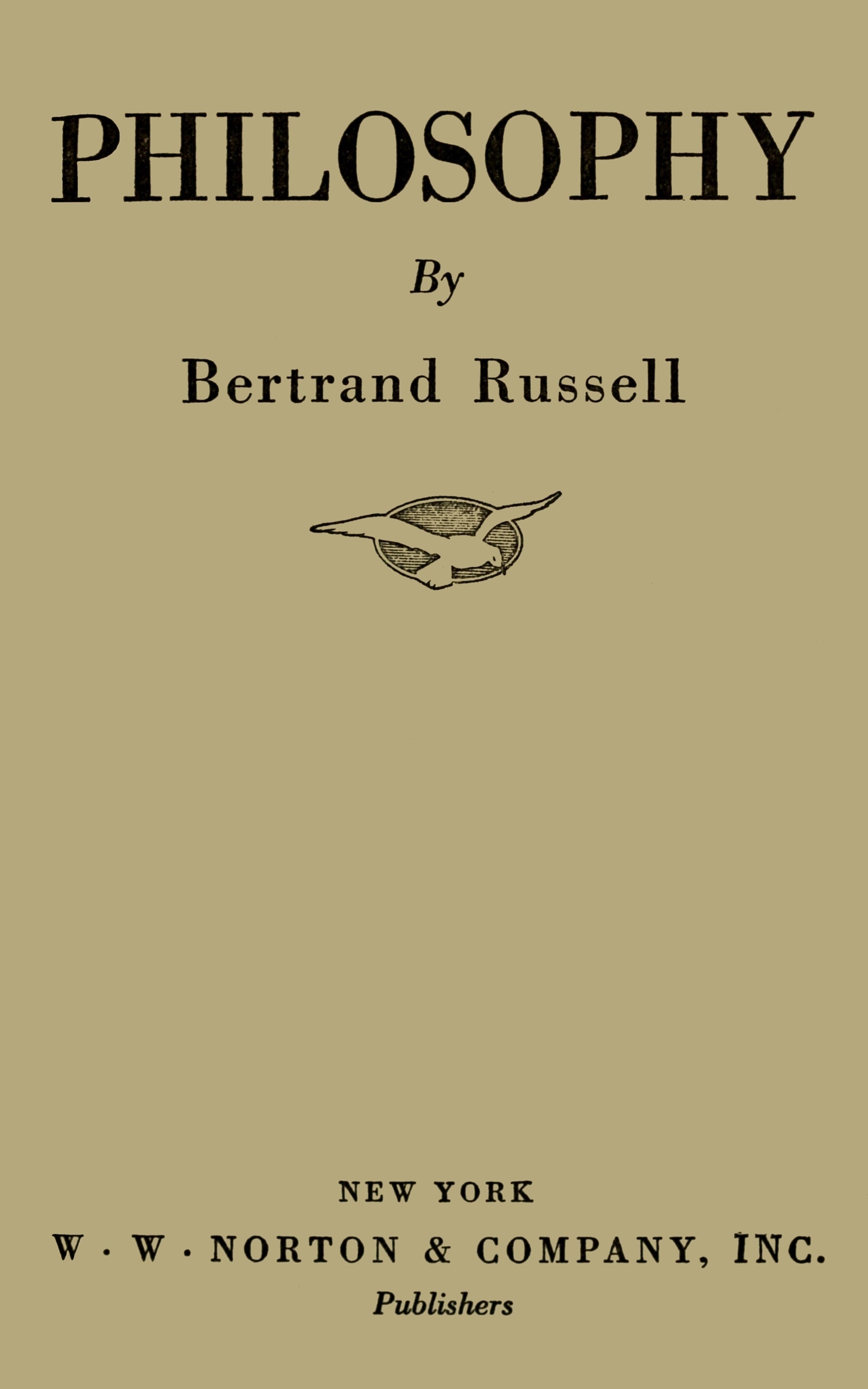
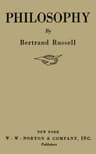
Philosophy
1927
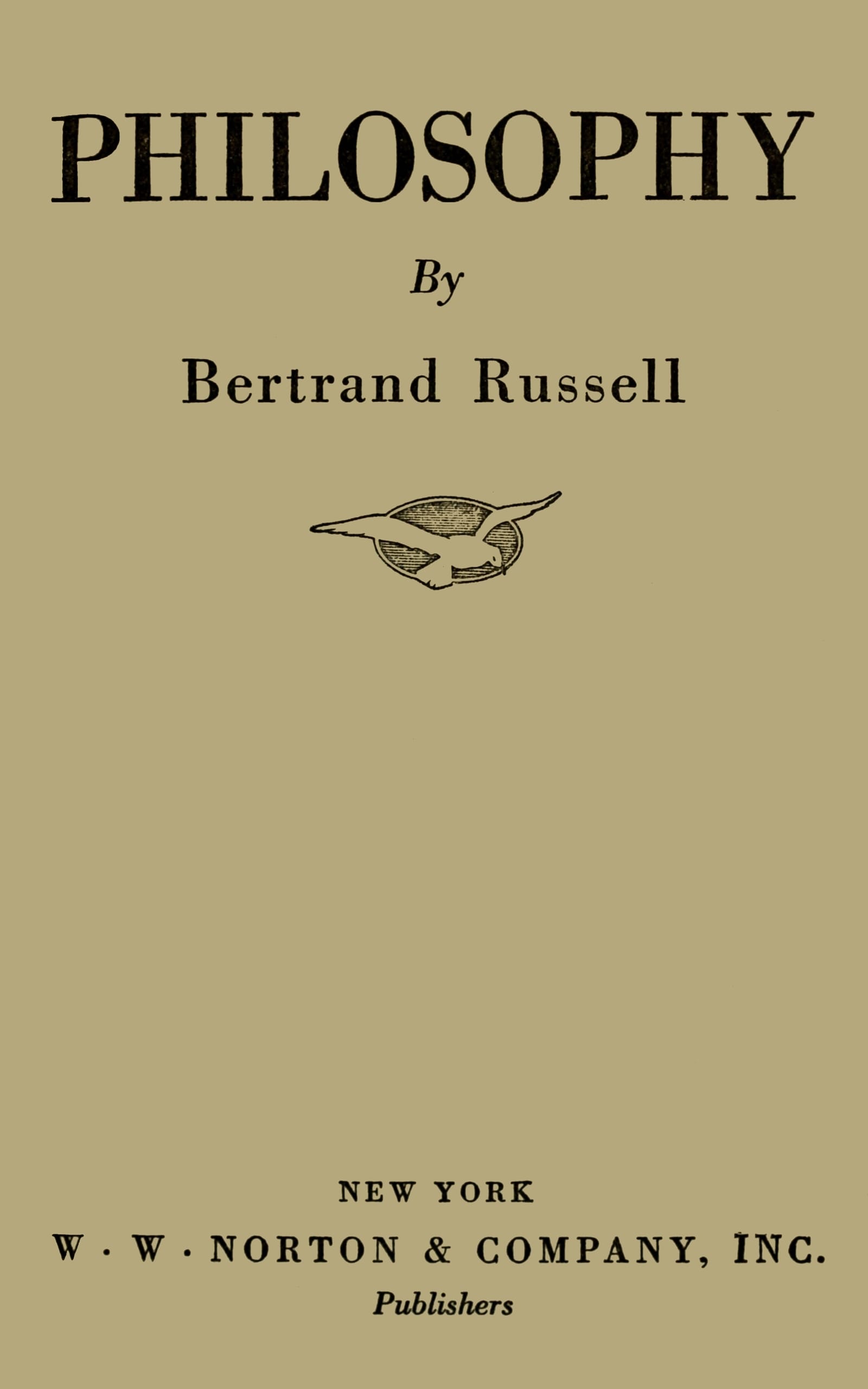
Published in 1927, Bertrand Russell's 'Philosophy' is a philosophical treatise that examines the nature of philosophical inquiry and its distinction from empirical science. Russell addresses fundamental problems and doubts in the pursuit of knowledge, emphasizing the need for rigorous analysis and critical thinking. He challenges conventional definitions of philosophy, advocating for a clarification of ordinary beliefs to attain greater consistency and truth. This work is notable for its exploration of the essence of philosophical thought and its impact on the understanding of reality and human knowledge.
Editions
X-Ray
“A stupid man's report of what a clever man says can never be accurate, because he unconsciously translates what he hears into something he can understand.””
— Bertrand Russell
“To teach how to live without certainty, and yet without being paralyzed by hesitation, is perhaps the chief thing that philosophy, in our age, can still do for those who study it.””
— Bertrand Russell
“Mathematics, rightly viewed, possesses not only truth, but supreme beauty”
— Bertrand Russell
“Almost everything that distinguishes the modern world from earlier centuries is attibutable to science, which achieved its most spectacular triumphs in the seventeenth century.””
— Bertrand Russell
“Men are born ignorant, not stupid; they are made stupid by education.””
— Bertrand Russell
“The search for something permanent is one of the deepest of the instincts leading men to philosophy.””
— Bertrand Russell
“This [Hegel's philosophy] illustrates an important truth, namely, that the worse your logic, the more interesting the consequences to which it gives rise.””
— Bertrand Russell
“William James describes a man who got the experience from laughing-gas; whenever he was under its influence, he knew the secret of the universe, but when he came to, he had forgotten it. At last, with immense effort, he wrote down the secret before the vision had faded. When completely recovered, he rushed to see what he had written. It was: "A smell of petroleum prevails throughout.””
— Bertrand Russell
“I dislike Nietzsche because he likes the contemplation of pain, because he erects conceit into a duty, because the men whom he most admires are conquerors, whose glory is cleverness in causing men to die.””
— Bertrand Russell
Link to this book
Add a free, dofollow link to Lex on your blog, forum, syllabus, or reading list.

<a href="https://lex-books.com/book/philosophy-802f8b26-ee3b-4b26-af98-fcd4dbbf09a7"><img src="https://lex-books.com/badges/read-on-lex.svg" alt="Read Philosophy by Bertrand Russell free on Lex" width="160" height="40"></a>[](https://lex-books.com/book/philosophy-802f8b26-ee3b-4b26-af98-fcd4dbbf09a7)[url=https://lex-books.com/book/philosophy-802f8b26-ee3b-4b26-af98-fcd4dbbf09a7][img]https://lex-books.com/badges/read-on-lex.svg[/img][/url]Read Philosophy by Bertrand Russell free on Lex: https://lex-books.com/book/philosophy-802f8b26-ee3b-4b26-af98-fcd4dbbf09a7Cite this book
Reading this edition for a paper or guide? Copy a citation.
Russell, Bertrand. Philosophy. Lex, lex-books.com/book/philosophy-802f8b26-ee3b-4b26-af98-fcd4dbbf09a7.Russell, B. (1927). Philosophy. Lex. https://lex-books.com/book/philosophy-802f8b26-ee3b-4b26-af98-fcd4dbbf09a7Russell, Bertrand. Philosophy. Lex. https://lex-books.com/book/philosophy-802f8b26-ee3b-4b26-af98-fcd4dbbf09a7.