Persönlichkeit
1921
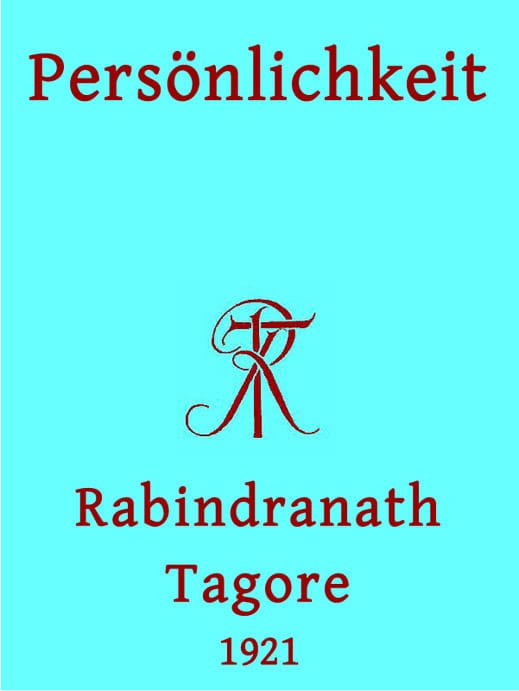
Published in 1921, 'Persönlichkeit' by Rabindranath Tagore is a philosophical treatise that examines the nature of art, consciousness, and personal identity. Tagore argues that true art emerges from individual emotional experiences and serves as a means of expressing one's inner self. He critiques the rigid standards often applied to art, emphasizing the importance of personal relationships and feelings in its creation and appreciation. The work explores the dual nature of humanity, highlighting the interplay between the physical, intellectual, and spiritual aspects of existence.
Editions
PersönlichkeitCurrent
Project Gutenberg · 145 pages (German)
Link to this book
Add a free, dofollow link to Lex on your blog, forum, syllabus, or reading list.

HTML
<a href="https://lex-books.com/book/pers-nlichkeit-aa029f56-5bc9-490e-9826-11fa827fb7b2"><img src="https://lex-books.com/badges/read-on-lex.svg" alt="Read Persönlichkeit by Rabindranath Tagore free on Lex" width="160" height="40"></a>Markdown
[](https://lex-books.com/book/pers-nlichkeit-aa029f56-5bc9-490e-9826-11fa827fb7b2)BBCode
[url=https://lex-books.com/book/pers-nlichkeit-aa029f56-5bc9-490e-9826-11fa827fb7b2][img]https://lex-books.com/badges/read-on-lex.svg[/img][/url]Plain link
Read Persönlichkeit by Rabindranath Tagore free on Lex: https://lex-books.com/book/pers-nlichkeit-aa029f56-5bc9-490e-9826-11fa827fb7b2Cite this book
Reading this edition for a paper or guide? Copy a citation.
MLA
Tagore, Rabindranath. Persönlichkeit. Lex, lex-books.com/book/pers-nlichkeit-aa029f56-5bc9-490e-9826-11fa827fb7b2.APA
Tagore, R. (1921). Persönlichkeit. Lex. https://lex-books.com/book/pers-nlichkeit-aa029f56-5bc9-490e-9826-11fa827fb7b2Chicago
Tagore, Rabindranath. Persönlichkeit. Lex. https://lex-books.com/book/pers-nlichkeit-aa029f56-5bc9-490e-9826-11fa827fb7b2.