Nationalism
1917

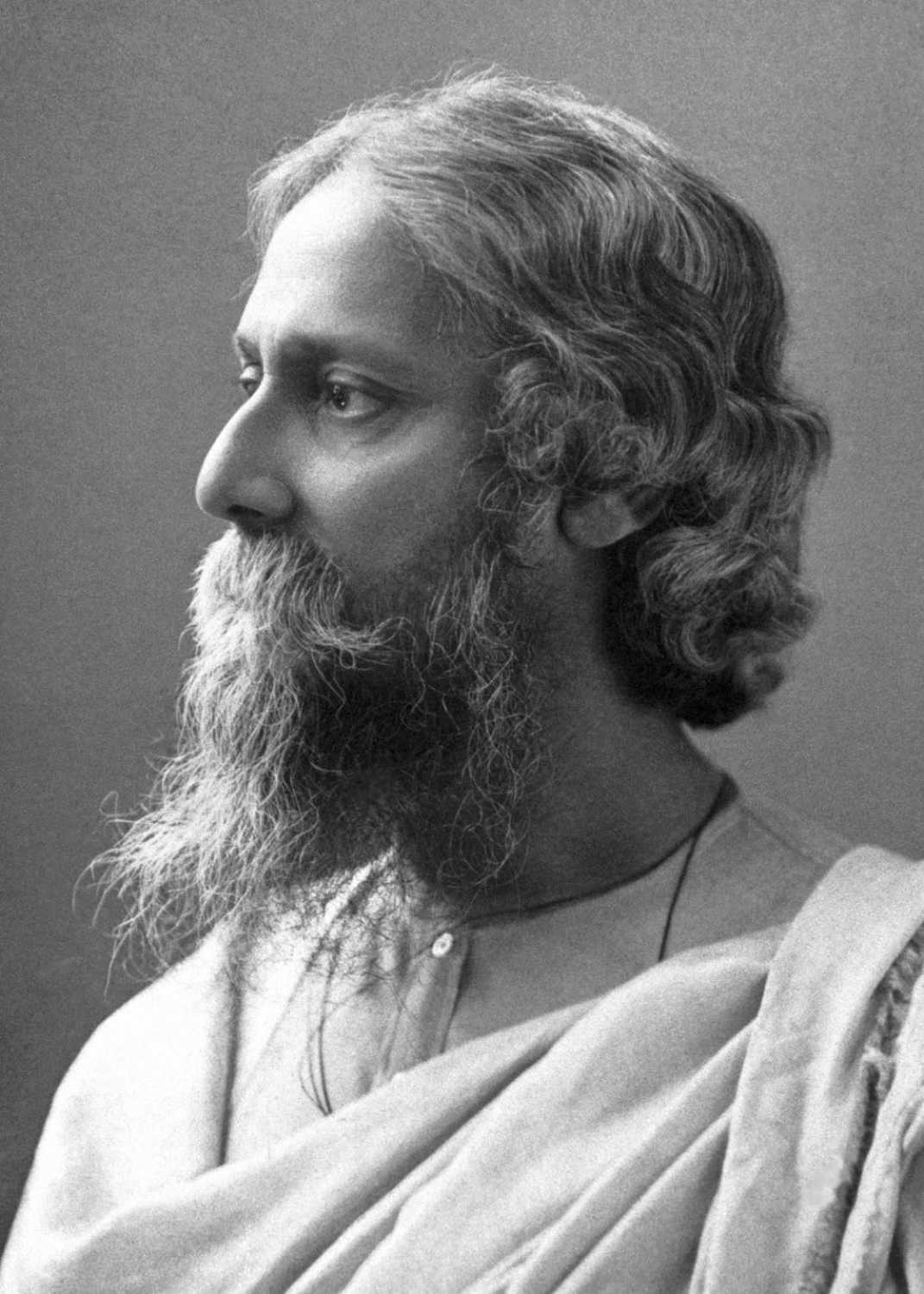
Tagore wrote these piercing lectures in 1916 and 1917, as Europe bled in a war that seemed to prove his worst fears about nationalism correct. He delivers a devastating critique of the nation-state as a mechanistic enterprise that turns human beings into units of production and consumption, reducible to statistics and deployable for violence. Drawing on his experiences in Japan and America, Tagore contrasts the West's worship of machinery and military power with what he sees as deeper truths about human connection, spiritual unity, and social cooperation. He was not naive about the political realities facing colonized peoples, but he refused to accept that liberation meant adopting the very imperialism that had subjugated them. This slim, urgent volume reads less like a dusty treatise than like a man shouting warnings from the future. A century later, as nationalist movements surge again across the globe, Tagore's question cuts to the bone: what are we willing to become in the name of the nation?
Editions

X-Ray
“I am willing to serve my country, but my worship I reserve for Right which is far greater than my country. To worship my country as a god is to bring a curse upon it.””
— Rabindranath Tagore
“for we women are not only the deities of the household fire, but the flame of the soul itself.””
— Rabindranath Tagore
“Men can only think. Women have a way of understanding without thinking. Woman was created out of God's own fancy. Man, He had to hammer into shape.””
— Rabindranath Tagore
“that which is eternal within the moment only becomes shallow if spread out in time.””
— Rabindranath Tagore
“Today I feel that I shall win through. I have come to the gateway of the simple; I am now content to see things as they are. I have gained freedom myself; I shall allow freedom to others. In my work will be my salvation.””
— Rabindranath Tagore
“to tyrannize for the country is to tyrannize over the country””
— Rabindranath Tagore
“If one had to fill in, little by little, the gap between day and night, it would take an eternity to do it. But the sun rises and the darkness is dispelled- a moment is sufficient to overcome an infinite distance.””
— Rabindranath Tagore
“The greedy man who is fond of his fish stew has no compunction in cutting up the fish according to his need. But the man who loves the fish wants to enjoy it in the water; and if that is impossible he waits on the bank; and even if he comes back home without a sight of it he has the consolation of knowing that the fish is all right. Perfect gain is the best of all; but if that is impossible, then the next best gain is perfect losing.””
— Rabindranath Tagore
“Woman knows man well enough where he is weak, but she is quite unable to fathom him where he is strong. The fact is that man is as much a mystery to woman as woman is to man. If that were not so, the separation of the sexes would only have been a waste of Nature's energy.””
— Rabindranath Tagore
Link to this book
Add a free, dofollow link to Lex on your blog, forum, syllabus, or reading list.

<a href="https://lex-books.com/book/nationalism-13dade19-e714-4b66-8aee-cb3c33a22287"><img src="https://lex-books.com/badges/read-on-lex.svg" alt="Read Nationalism by Rabindranath Tagore free on Lex" width="160" height="40"></a>[](https://lex-books.com/book/nationalism-13dade19-e714-4b66-8aee-cb3c33a22287)[url=https://lex-books.com/book/nationalism-13dade19-e714-4b66-8aee-cb3c33a22287][img]https://lex-books.com/badges/read-on-lex.svg[/img][/url]Read Nationalism by Rabindranath Tagore free on Lex: https://lex-books.com/book/nationalism-13dade19-e714-4b66-8aee-cb3c33a22287Cite this book
Reading this edition for a paper or guide? Copy a citation.
Tagore, Rabindranath. Nationalism. Lex, lex-books.com/book/nationalism-13dade19-e714-4b66-8aee-cb3c33a22287.Tagore, R. (1917). Nationalism. Lex. https://lex-books.com/book/nationalism-13dade19-e714-4b66-8aee-cb3c33a22287Tagore, Rabindranath. Nationalism. Lex. https://lex-books.com/book/nationalism-13dade19-e714-4b66-8aee-cb3c33a22287.