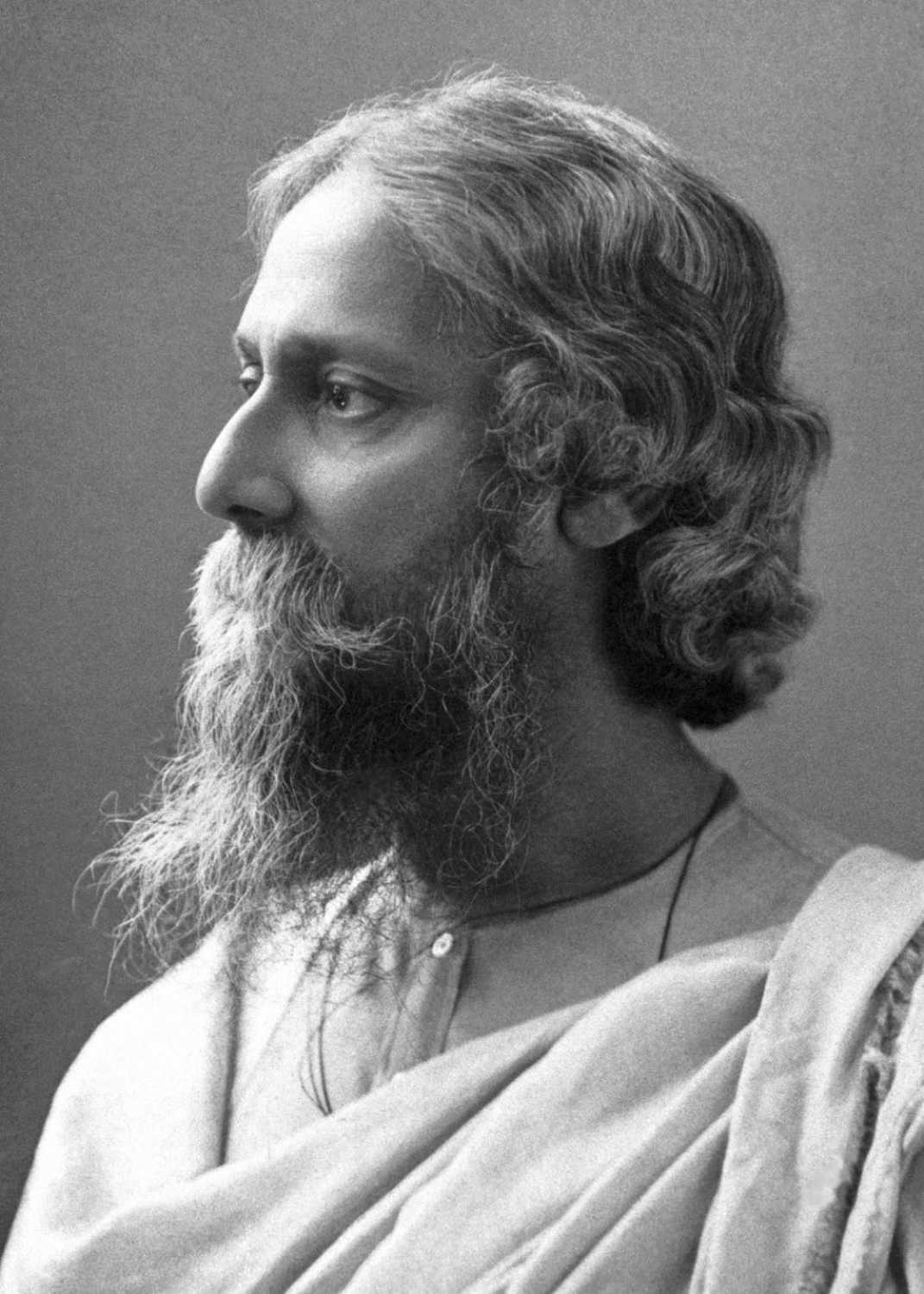
The Spirit of Japan
A thought-provoking lecture composed in the early 20th century. This book offers Tagore's reflections on Japanese culture and civilization, as he shares his observations and philosophical insights acquired during his time in Japan. The work serves as both a cultural critique and a celebration of the essence of Japan, especially in light of its encounters with Western modernization. In ''The Spirit of Japan,'' Tagore explores the profound connection the Japanese people have with nature and the aesthetic beauty embedded in their daily lives. He emphasizes the importance of emotional and spiritual bonds, arguing that Japan's greatness lies not in its material accomplishments but in its ability to harmonize with the natural world. Tagore warns against the encroaching influence of Western modernization that threatens to overshadow Japan's inherent values and beauty. He advocates for a recognition of the deeper spiritual truths that underpin Japanese civilization, urging the nation to preserve its unique cultural identity in the face of a rapidly changing world. Through this lecture, Tagore presents a compelling argument for protecting the moral essence of humanity amidst the superficial pursuits of modernity.
Editions
X-Ray
“True modernism is freedom of mind, not slavery of taste. It is independence of thought and action, not tutelage under European schoolmasters.””
— Rabindranath Tagore
“A mere knowledge of things can be had in a short enough time, but their spirit can only be acquired by centuries of training and self-control. Dominating nature from outside is a much simpler thing than making her your own in love's delight, which is a work of true genius. Your race has shown that genius, not by acquirements, but by creations; not by display of things, but by manifestation of its own inner being.””
— Rabindranath Tagore
“But our fear is, that the poison may be more powerful than the food, and what is strength in her to-day may not be the sign of health, but the contrary; for it may be temporarily caused by the upsetting of the balance of life. Our fear is that evil has a fateful fascination, when it assumes dimensions which are colossal,”
— Rabindranath Tagore
“Have you never felt shame, when you see the trade advertisements, not only plastering the whole town with lies and exaggerations, but invading the green fields, where the peasants do their honest labour, and the hill-tops, which greet the first pure light of the morning? It is so easy to dull our sense of honour and delicacy of mind with constant abrasion, while falsehoods stalk abroad with proud steps in the name of trade, politics and patriotism, that any protest against their perpetual intrusion into our lives is considered to be sentimentalism, unworthy of true manliness.””
— Rabindranath Tagore
“But now, where the spirit of the Western civilisation prevails, the whole people is being taught from boyhood, to foster hatreds and ambitions by all kinds of means,”
— Rabindranath Tagore
“For man's struggle for existence is to exist in the fullness of his nature,”
— Rabindranath Tagore
“One must bear in mind, that those who have the true modern spirit need not modernise, just as those who are truly brave are not braggarts. Modernism is not in the dress of the Europeans; or in the hideous structures, where their children are interned when they take their lessons; or in the square houses with flat straight wall-surfaces, pierced with parallel lines of windows, where these people are caged in their lifetime; certainly modernism is not in their ladies' bonnets, carrying on them loads of incongruities. These are not modern, but merely European. True modernism is freedom of mind, not slavery of taste. It is independence of thought and action, not tutelage under European schoolmasters. It is science, but not its wrong application in life,”
— Rabindranath Tagore
“There, display and extravagance, in dress, in furniture, in costly entertainments, are startling. They seem to push you back into a corner, like a poor intruder at a feast; they are apt to make you envious, or take your breath away with amazement.””
— Rabindranath Tagore
Link to this book
Add a free, dofollow link to Lex on your blog, forum, syllabus, or reading list.

<a href="https://lex-books.com/book/the-spirit-of-japan-a1a263dd-a184-4869-86f5-25002208ea44"><img src="https://lex-books.com/badges/read-on-lex.svg" alt="Read The Spirit of Japan by Rabindranath Tagore free on Lex" width="160" height="40"></a>[](https://lex-books.com/book/the-spirit-of-japan-a1a263dd-a184-4869-86f5-25002208ea44)[url=https://lex-books.com/book/the-spirit-of-japan-a1a263dd-a184-4869-86f5-25002208ea44][img]https://lex-books.com/badges/read-on-lex.svg[/img][/url]Read The Spirit of Japan by Rabindranath Tagore free on Lex: https://lex-books.com/book/the-spirit-of-japan-a1a263dd-a184-4869-86f5-25002208ea44Cite this book
Reading this edition for a paper or guide? Copy a citation.
Tagore, Rabindranath. The Spirit of Japan. Lex, lex-books.com/book/the-spirit-of-japan-a1a263dd-a184-4869-86f5-25002208ea44.Tagore, R. (n.d.). The Spirit of Japan. Lex. https://lex-books.com/book/the-spirit-of-japan-a1a263dd-a184-4869-86f5-25002208ea44Tagore, Rabindranath. The Spirit of Japan. Lex. https://lex-books.com/book/the-spirit-of-japan-a1a263dd-a184-4869-86f5-25002208ea44.