Little Dorrit
1857
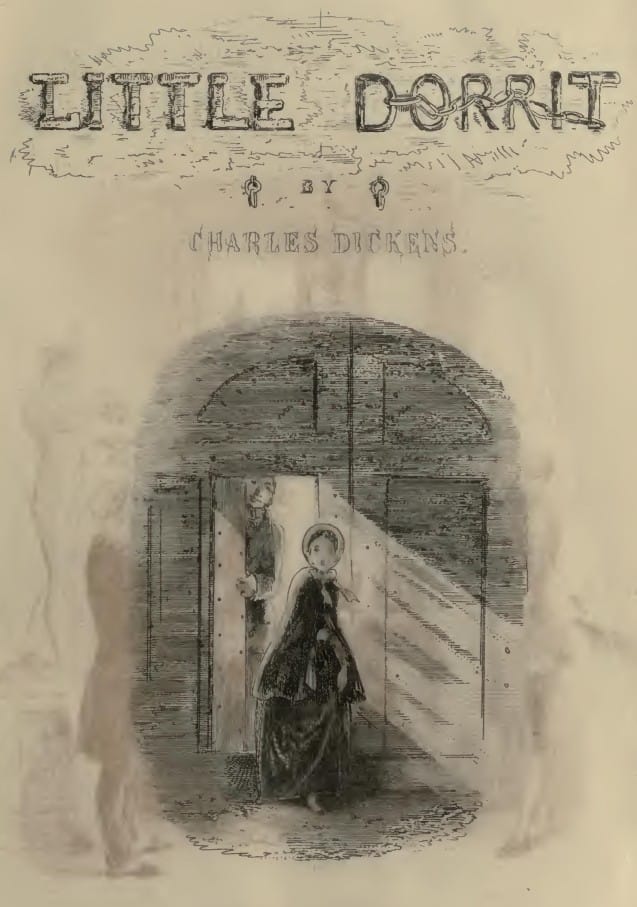
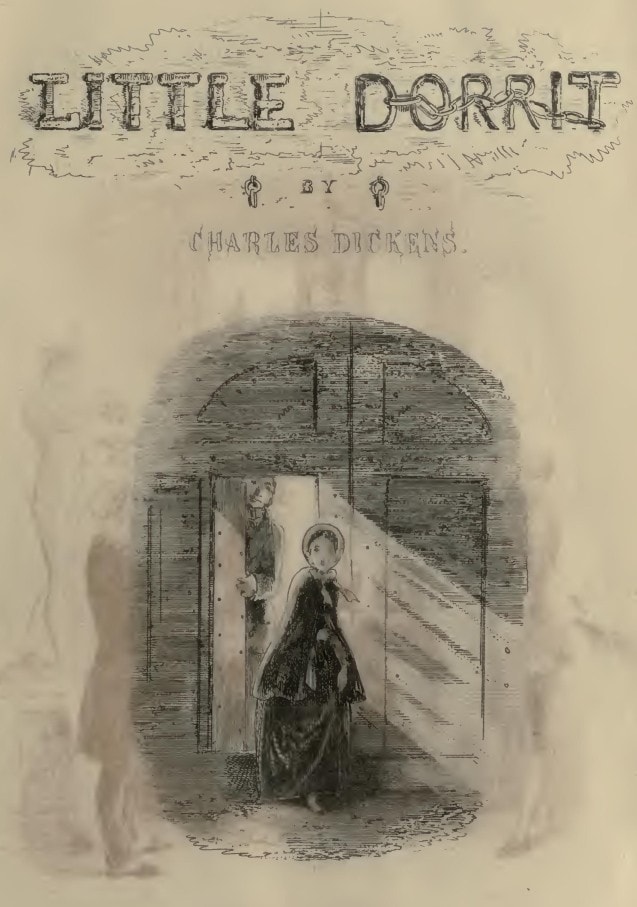
She was born behind bars. Amy Dorrit, youngest child of a debtor imprisoned in the Marshalsea, has never known life outside its walls. When Arthur Clennam returns to London after twenty years abroad, seeking meaning in a life spent uselessly overseas, he finds Little Dorrit tending to her father with a grace that transforms prison bars into something like home. Dickens knew this world intimately his own father was held in the Marshalsea and the novel carries that personal weight beneath its sweeping social critique. The Circumlocution Office, Dickens's scathing portrait of bureaucratic inertia, becomes a second prison where nothing ever gets done and everyone learns to make nothing their business. What begins as a story about debt and incarceration expands into an indictment of a society that traps people in systems designed never to release them. Yet Little Dorrit endures not as tragedy but as testament to how kindness survives in crushing circumstances. For readers who want Victorian fiction that tackles systemic failure without losing sight of individual humanity, this is Dickens at his most compassionate and most savage.
Editions
X-Ray
“[Credit is a system whereby] a person who can't pay, gets another person who can't pay, to guarantee that he can pay.””
— Charles Dickens
“One always begins to forgive a place as soon as it’s left behind.””
— Charles Dickens
“While the flowers, pale and unreal in the moonlight, floated away upon the river; and thus do greater things that once were in our breasts, and near our hearts, flow from us to the eternal sea.””
— Charles Dickens
“Be guided, only by the healer of the sick, the raiser of the dead, the friend of all who were afflicted and forlorn, the patient Master who shed tears of compassion for our infirmities. We cannot but be right if we put all the rest away, and do everything in remembrance of Him. There is no vengeance and no infliction of suffering in His life, I am sure. There can be no confusion in following Him, and seeking for no other footsteps, I am certain!””
— Charles Dickens
“You talk very easily of hours, sir! How long do you suppose, sir, that an hour is to a man who is choking for want of air?””
— Charles Dickens
“And thus ever by day and night, under the sun and under the stars, climbing the dusty hills and toiling along the weary plains, journeying by land and journeying by sea, coming and going so strangely, to meet and to act and react on one another, move all we restless travellers through the pilgrimage of life.””
— Charles Dickens
“It was the shadow of Some one who had gone by long before: of Some one who had gone on far away quite out of reach, never, never to come back. It was bright to look at; and when the tiny woman showed it to the Princess, she was proud of it with all her heart, as a great, great, treasure. When the Princess had considered it a little while, she said to the tiny woman, And you keep watch over this, every day? And she cast down her eyes, and whispered, Yes. Then the Princess said, Remind me why. To which the other replied, that no one so good and so kind had ever passed that way, and that was why in the beginning. She said, too, that nobody missed it, that nobody was the worse for it, that Some one had gone on to those who were expecting him-- 'Some one was a man then?' interposed Maggy. Little Dorrit timidly said yes, she believed so; and resumed:'-- Had gone on to those who were expecting him, and that this remembrance was stolen or kept back from nobody. The Princess made answer, Ah! But when the cottager died it would be discovered there. The tiny woman told her No; when that time came, it would sink quietly into her own grave, and would never be found.””
— Charles Dickens
“She forgot to be shy at the moment, in honestly warning him awayfrom the sunken wreck he had a dream of raising; and looked at himwith eyes which assuredly, in association with her patient face,her fragile figure, her spare dress, and the wind and rain, did notturn him from his purpose of helping her.””
— Charles Dickens
“Every failure teaches a man something, if he will learn; and you are too sensible a man not to learn from this failure.””
— Charles Dickens
Link to this book
Add a free, dofollow link to Lex on your blog, forum, syllabus, or reading list.

<a href="https://lex-books.com/book/little-dorrit-9fa2c7fe-5c93-4f45-b00e-01a850bf635d"><img src="https://lex-books.com/badges/read-on-lex.svg" alt="Read Little Dorrit by Charles Dickens free on Lex" width="160" height="40"></a>[](https://lex-books.com/book/little-dorrit-9fa2c7fe-5c93-4f45-b00e-01a850bf635d)[url=https://lex-books.com/book/little-dorrit-9fa2c7fe-5c93-4f45-b00e-01a850bf635d][img]https://lex-books.com/badges/read-on-lex.svg[/img][/url]Read Little Dorrit by Charles Dickens free on Lex: https://lex-books.com/book/little-dorrit-9fa2c7fe-5c93-4f45-b00e-01a850bf635dCite this book
Reading this edition for a paper or guide? Copy a citation.
Dickens, Charles. Little Dorrit. Lex, lex-books.com/book/little-dorrit-9fa2c7fe-5c93-4f45-b00e-01a850bf635d.Dickens, C. (1857). Little Dorrit. Lex. https://lex-books.com/book/little-dorrit-9fa2c7fe-5c93-4f45-b00e-01a850bf635dDickens, Charles. Little Dorrit. Lex. https://lex-books.com/book/little-dorrit-9fa2c7fe-5c93-4f45-b00e-01a850bf635d.