How We Think
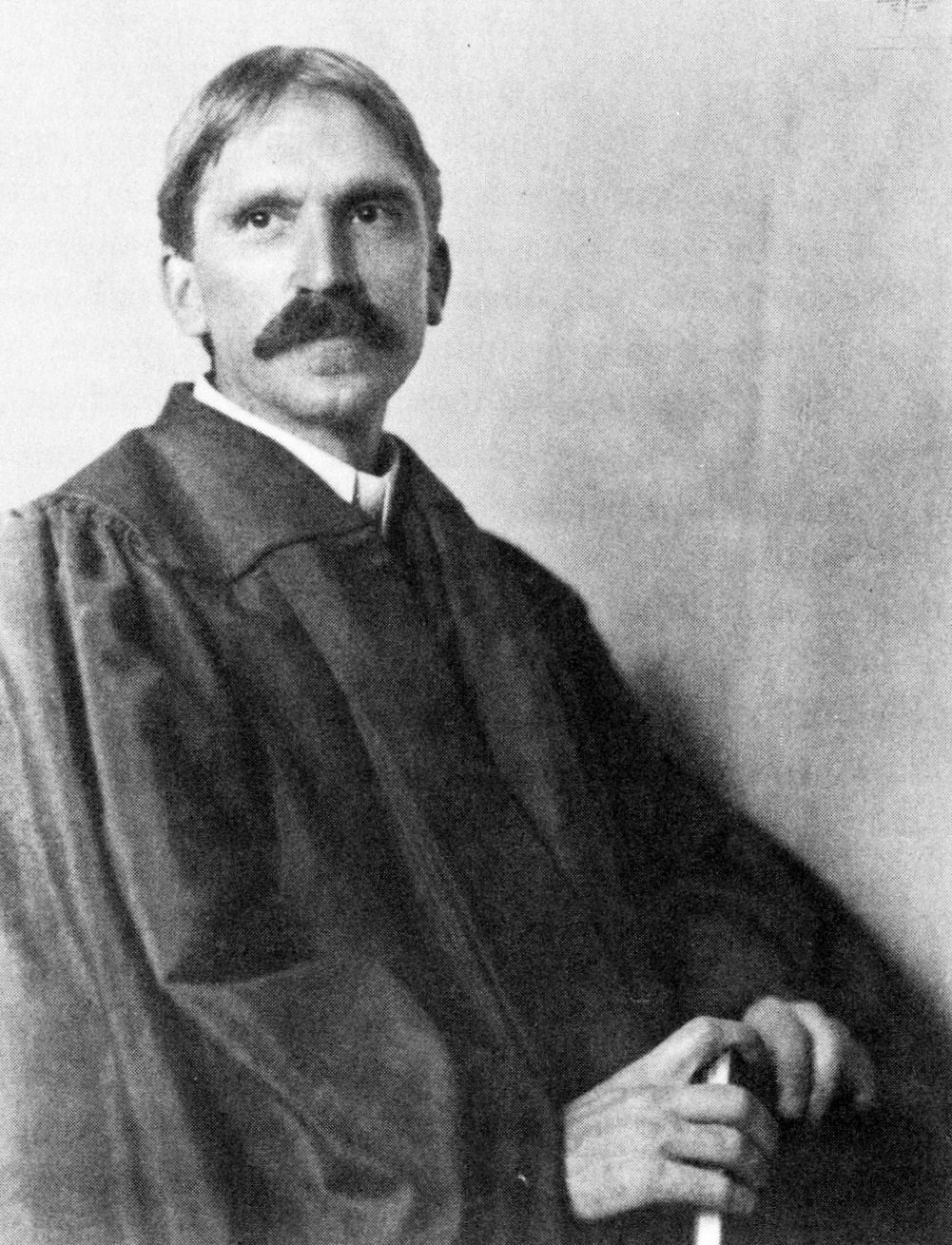
No words cross our lips more often than "thinking." Yet as Dewey observed in 1910, few of us have seriously examined what the word actually means. This philosopher who founded America's progressive education movement presents a radical proposition: schools fail not from lack of content but from neglecting to teach the fundamental skill of thinking itself. He distinguishes between casual mental wandering and genuine reflective thought, the disciplined practice that transforms passive reception into active, purposeful inquiry. Drawing on scientific method, Dewey shows how education can train minds to grapple with real problems rather than memorize disconnected facts. Written over a century ago, his diagnosis of education's failures, fragmented curricula, passive learning, the absence of genuine inquiry, sounds urgently familiar today. For anyone who has ever wondered why school feels so disconnected from real thinking, this book offers both a rigorous analysis and a vision for what education could become.
Editions
X-Ray
“Every one has experienced how learning an appropriate name for what was dim and vague cleared up and crystallized the whole matter. Some meaning seems distinct almost within reach, but is elusive; it refuses to condense into definite form; the attaching of a word somehow (just how, it is almost impossible to say) puts limits around the meaning, draws it out from the void, makes it stand out as an entity on its own account.””
— John Dewey
“wonder is the mother of all science.””
— John Dewey
“Active, persistent, and careful consideration of any belief or supposed form of knowledge in the light of the grounds that support it, and the further conclusions to which it tends, constitutes reflective thought… It is a conscious and voluntary effort to establish belief upon a firm basis of reasons.””
— John Dewey
“it is of the highest concernment that care should be taken of its conduct is a moderate statement. While the power of thought frees us from servile subjection to instinct, appetite, and routine, it also brings with it the occasion and possibility of error and mistake. In elevating us above the brute, it opens to us the possibility of failures to which the animal, limited to instinct, cannot sink.””
— John Dewey
“Whole object of intellectual education is formation of logical disposition””
— John Dewey
“Education is the development of all those capacities in the individual which will enable him to control his environment and fulfil his responsibilities.””
— John Dewey
“In object lessons in elementary education and in laboratory instruction in higher education, the subject is often so treated that the student fails to "see the forest on account of the trees.””
— John Dewey
“Reflection involves not simply a sequence of ideas, but a consequence”
— John Dewey
“The very essence of civilized culture is that we deliberately erect monuments and memorials, lest we forget...””
— John Dewey
Link to this book
Add a free, dofollow link to Lex on your blog, forum, syllabus, or reading list.

<a href="https://lex-books.com/book/how-we-think-2e8a8035-b294-4535-ac80-72ceb875440c"><img src="https://lex-books.com/badges/read-on-lex.svg" alt="Read How We Think by John Dewey free on Lex" width="160" height="40"></a>[](https://lex-books.com/book/how-we-think-2e8a8035-b294-4535-ac80-72ceb875440c)[url=https://lex-books.com/book/how-we-think-2e8a8035-b294-4535-ac80-72ceb875440c][img]https://lex-books.com/badges/read-on-lex.svg[/img][/url]Read How We Think by John Dewey free on Lex: https://lex-books.com/book/how-we-think-2e8a8035-b294-4535-ac80-72ceb875440cCite this book
Reading this edition for a paper or guide? Copy a citation.
Dewey, John. How We Think. Lex, lex-books.com/book/how-we-think-2e8a8035-b294-4535-ac80-72ceb875440c.Dewey, J. (n.d.). How We Think. Lex. https://lex-books.com/book/how-we-think-2e8a8035-b294-4535-ac80-72ceb875440cDewey, John. How We Think. Lex. https://lex-books.com/book/how-we-think-2e8a8035-b294-4535-ac80-72ceb875440c.