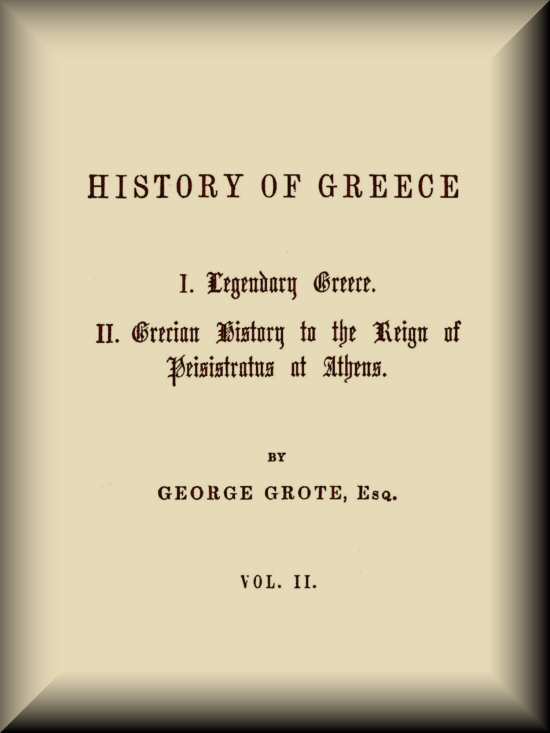
History of Greece, Volume 02 (of 12)
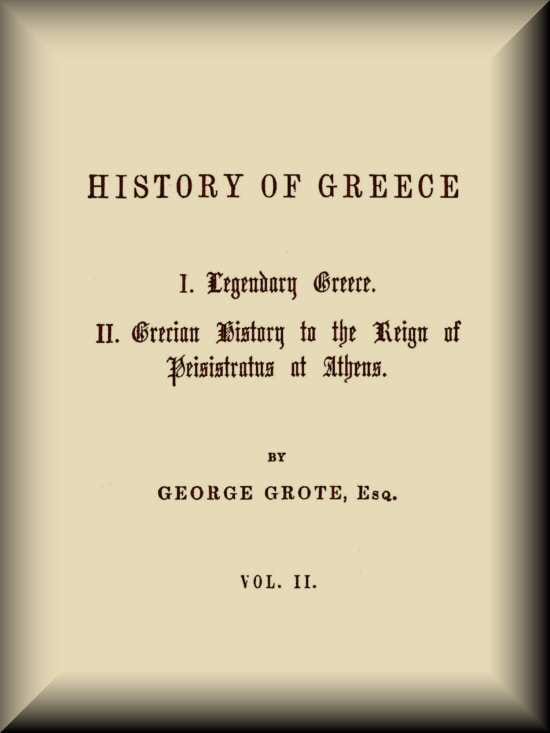
George Grote's second volume tackles the most elusive period in Greek history: the legendary age when myth and memory blur. Here Grote traces the return of the Herakleids, the Dorian migrations that swept across the Peloponnesus, and the mythic origins of the great royal houses, the Perseids and Pelopids, whose wars and alliances would eventually give way to the historical Greek city-states. These are the stories Greeks told themselves about who they were: tales of exile and return, of kingdoms lost and won, of heroes whose blood claimed the land. Grote approaches this foggy territory with characteristic 19th-century rigor, treating these myths not as fairy tales but as windows into the social and political institutions that would define Dorian Sparta, Argos, and Messenia. For anyone seeking to understand how Greece moved from legend to history, from the Mycenaean world to the city-states we recognize, this volume maps the crucial transition. Grote's encyclopedic patience with these ancient narratives reveals how deeply the Greeks themselves believed their origins mattered.
Editions

X-Ray
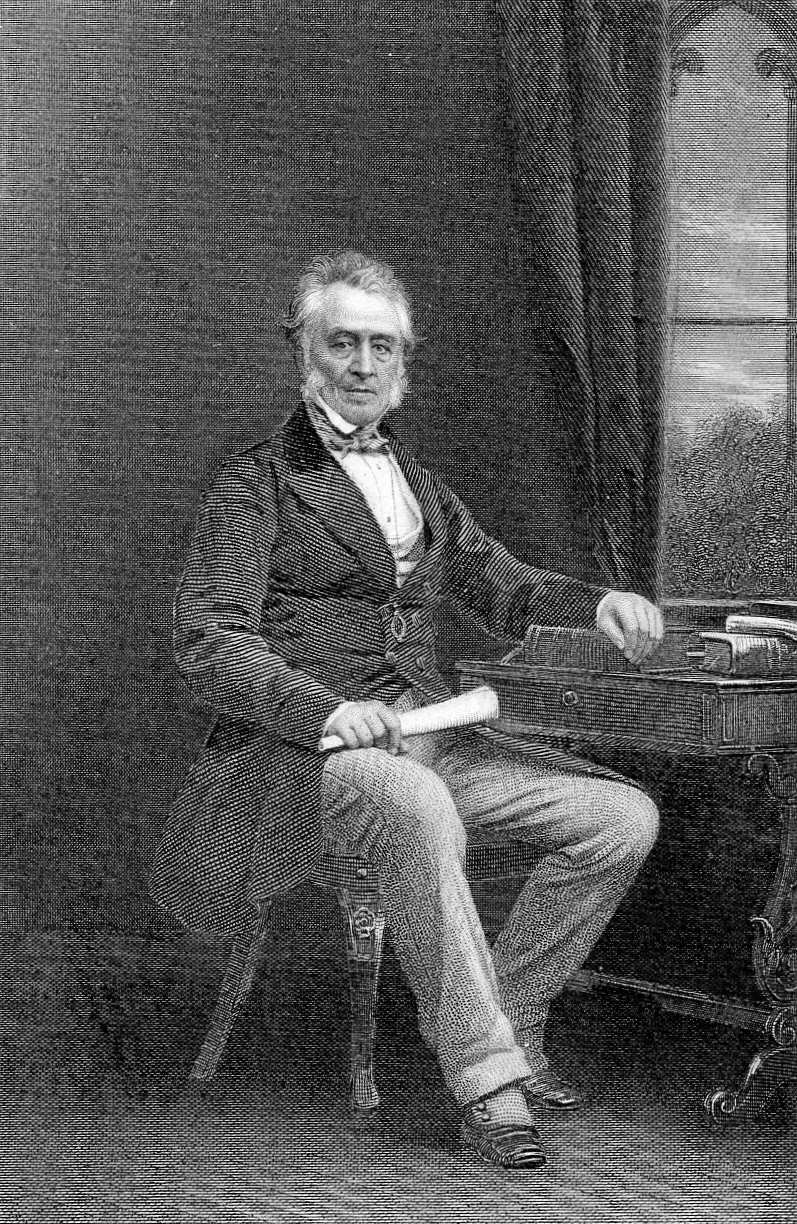
The author of 'History of Greece, Volume 02 (of 12)', who critically analyzes ancient sources and historical narratives.
Mythical descendants of Herakles, whose 'Return' is a central legend explaining the Dorian invasion and settlement of Peloponnesus.
A major Hellenic group, who, allied with the Herakleids, conquered and settled Peloponnesus, forming key city-states like Sparta and Argos.
One of the three Herakleid brothers who led the Dorian invasion, receiving Argos in the legendary land division.
About History of Greece, Volume 02 (of 12)
Chapter Summaries
- XVIII
- This chapter details the legendary 'Return of the Herakleids' into Peloponnesus, their alliance with the Dorians, and the subsequent division of lands among Têmenus, Kresphontês, and Aristodêmus. It also covers the Æolic, Ionic, and Doric emigrations to Asia Minor and the Aegean islands, marking the transition from mythical to historical Greece and the 'intermediate blank' in tradition.
- XIX
- Grote critically examines ancient and modern attempts to apply chronology to Grecian legends, arguing that the lack of authentic data makes such efforts illusory. He critiques Mr. Clinton's methods and the reliance on genealogies, emphasizing the inherent blend of truth and fiction in early poetic accounts, which renders them unsuitable for precise historical dating.
- XX
- This chapter uses legendary poems as valuable sources for understanding early Greek society and manners, even if not for historical facts. It contrasts the personal, monarchical rule of heroic Greece with the constitutional governments of historical Greece, detailing the roles of kings, councils, and assemblies, and exploring social aspects like family ties, hospitality, and the evolution of justice from private revenge to public law.
Key Themes
- Transition from Myth to History
- Grote meticulously dissects the legendary accounts of early Greece, such as the Return of the Herakleids and the Trojan War, highlighting their explanatory function for later institutions rather than their historical veracity. He emphasizes the 'intermediate blank' between legendary and historical periods, arguing that this gap is natural for the genesis of legend, which thrives on a remote, undetermined past.
- Formation of Greek Identity and Communities
- The text traces the migrations and settlements of the major Hellenic groups—Dorians, Ionians, and Aeolians—across mainland Greece, the Aegean islands, and Asia Minor. It shows how these movements led to the establishment of distinct city-states and confederacies, each with its own local legends and evolving political structures, contributing to a broader, yet fragmented, Hellenic aggregate.
- Nature of Early Governance
- Grote contrasts the personal, divinely-sanctioned monarchy of legendary Greece, where a king's authority rested on personal ascendancy and divine favor, with the more institutionalized and accountable forms of government (oligarchy, democracy) that emerged in historical Greece. He uses the Homeric agora and boulê to illustrate the rudimentary nature of early political participation.
Characters
- George Grote(author)
- The author of 'History of Greece, Volume 02 (of 12)', who critically analyzes ancient sources and historical narratives.
- Herakleids(protagonist)
- Mythical descendants of Herakles, whose 'Return' is a central legend explaining the Dorian invasion and settlement of Peloponnesus.
- Dorians(supporting)
- A major Hellenic group, who, allied with the Herakleids, conquered and settled Peloponnesus, forming key city-states like Sparta and Argos.
- Têmenus(supporting)
- One of the three Herakleid brothers who led the Dorian invasion, receiving Argos in the legendary land division.
- Kresphontês(supporting)
- One of the three Herakleid brothers who led the Dorian invasion, securing Messênê through a trick in the legendary land division.
- Aristodêmus(supporting)
- Son of Aristomachus and father of Têmenus and Kresphontês, he died before the land division, with his twin sons inheriting Sparta.
Link to this book
Add a free, dofollow link to Lex on your blog, forum, syllabus, or reading list.

<a href="https://lex-books.com/book/history-of-greece-volume-02-of-12-dac9fe91-a227-47a2-8d3e-069841724cda"><img src="https://lex-books.com/badges/read-on-lex.svg" alt="Read History of Greece, Volume 02 (of 12) by George Grote free on Lex" width="160" height="40"></a>[](https://lex-books.com/book/history-of-greece-volume-02-of-12-dac9fe91-a227-47a2-8d3e-069841724cda)[url=https://lex-books.com/book/history-of-greece-volume-02-of-12-dac9fe91-a227-47a2-8d3e-069841724cda][img]https://lex-books.com/badges/read-on-lex.svg[/img][/url]Read History of Greece, Volume 02 (of 12) by George Grote free on Lex: https://lex-books.com/book/history-of-greece-volume-02-of-12-dac9fe91-a227-47a2-8d3e-069841724cdaCite this book
Reading this edition for a paper or guide? Copy a citation.
Grote, George. History of Greece, Volume 02 (of 12). Lex, lex-books.com/book/history-of-greece-volume-02-of-12-dac9fe91-a227-47a2-8d3e-069841724cda.Grote, G. (n.d.). History of Greece, Volume 02 (of 12). Lex. https://lex-books.com/book/history-of-greece-volume-02-of-12-dac9fe91-a227-47a2-8d3e-069841724cdaGrote, George. History of Greece, Volume 02 (of 12). Lex. https://lex-books.com/book/history-of-greece-volume-02-of-12-dac9fe91-a227-47a2-8d3e-069841724cda.