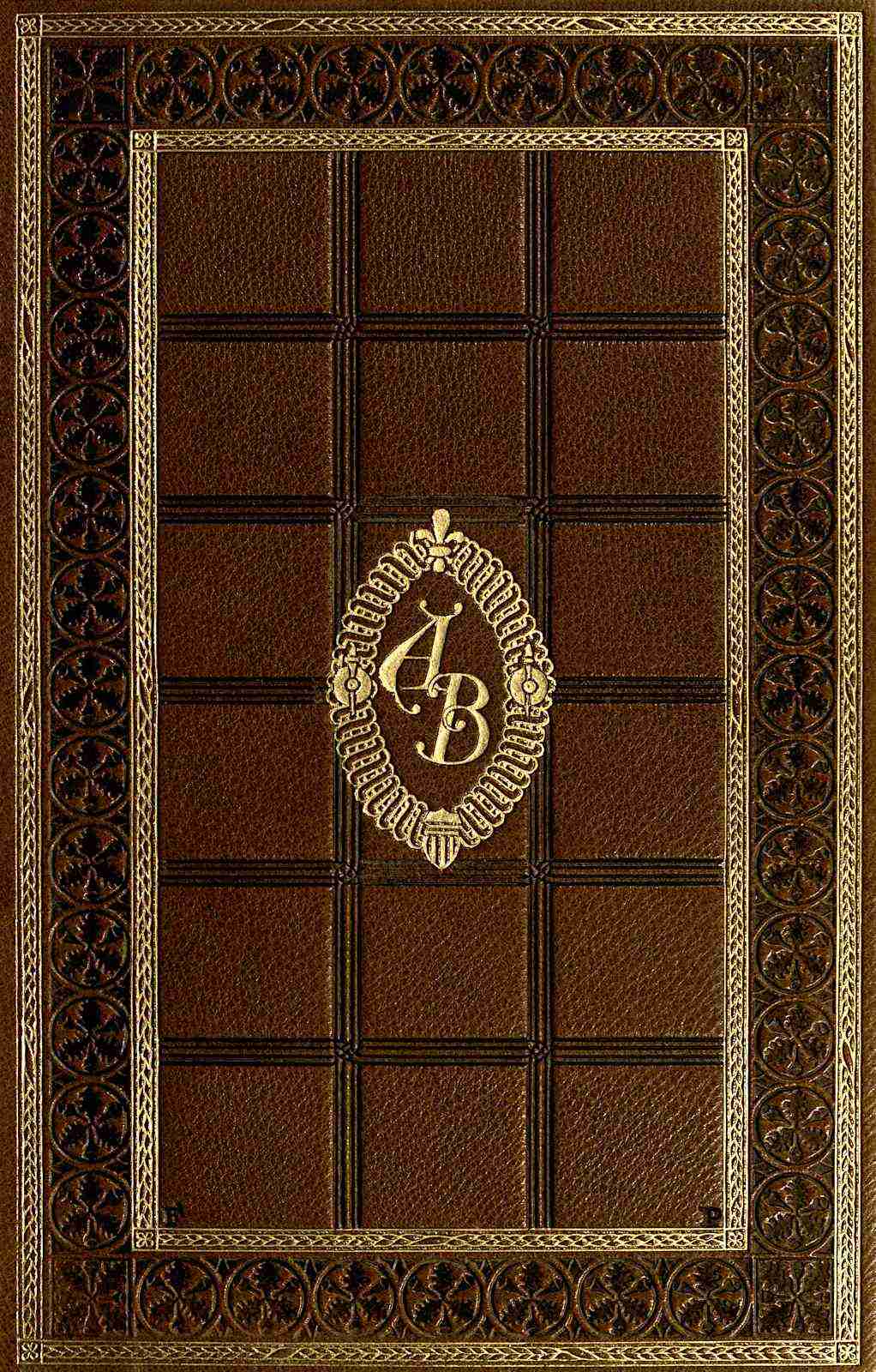
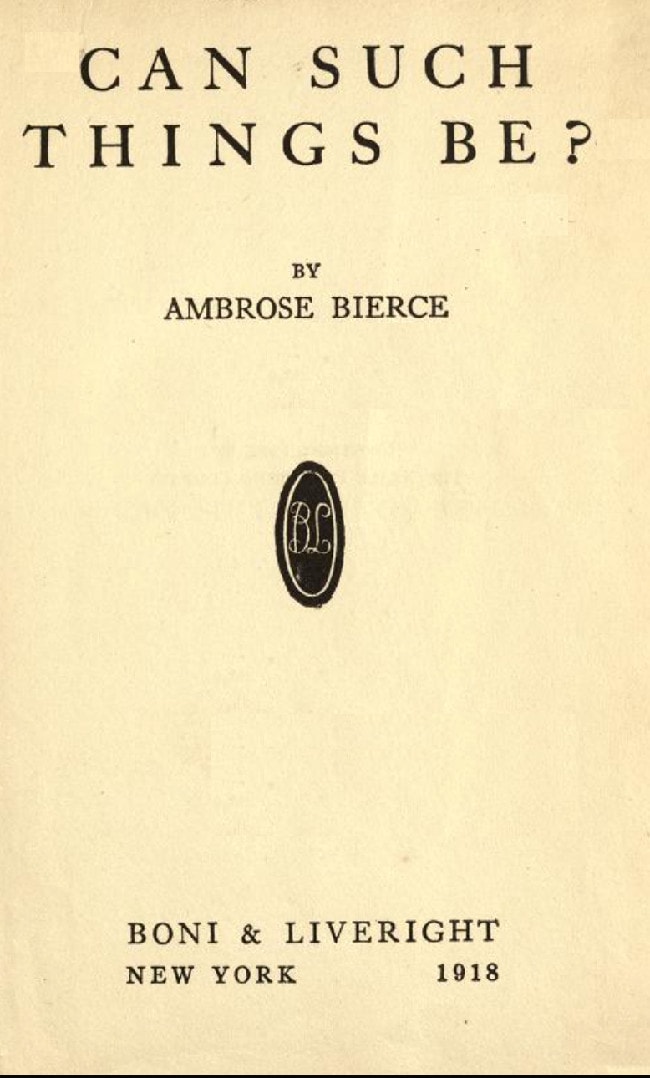
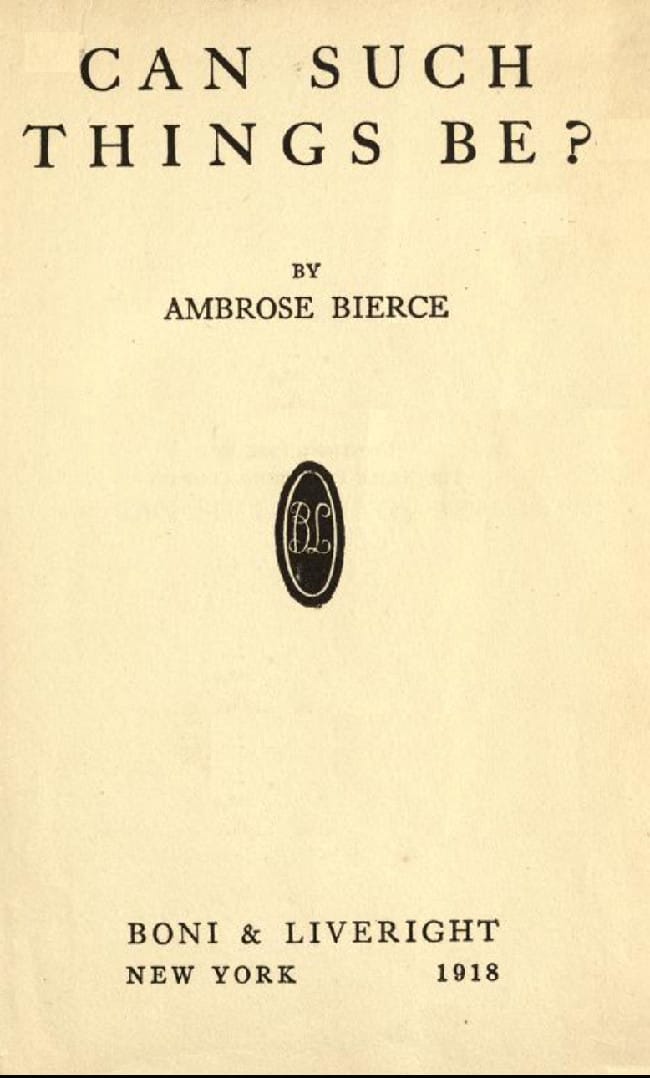
Can Such Things Be?
Twenty-three tales of themacabre, each one a small engine of dread. Ambrose Bierce writes the way a surgeon operates: precisely, without sentiment, and always aware that beneath the skin of the world lies something cold and unknowable. These are not ghost stories in the decorative sense. They are investigations into what happens when the boundary between the living and the dead becomes thin enough to tear. A man wakes in a forest with no memory, pursued by the spectral image of a woman he cannot name. A soldier cheats the noose only to find himself in a slower, stranger hell. A dying philosopher debates God with his doctor and loses, somehow, either way. Bierce's prose is lean as a blade, his humor black as pitch, and his conclusions arrive like sudden doors slamming shut in empty rooms. The collection assembles his finest supernatural work into something that feels less like entertainment than like being shown a crack in the universe and invited to peer through. It is short fiction at its most concentrated: a single reading session might leave you afraid to turn off the light.
Editions

X-Ray
“Ah, children of the sunlight and the gaslight, how little you know of the world in which you live!””
— Ambrose Bierce
“The man was Halpin Frayser. He lived in St. Helena, but where he lives now is uncertain, for he is dead. ””
— Ambrose Bierce
“He wrote with terrible rapidity, the twig in his fingers rilling blood without renewal; but in the middle of a sentence his hands denied their service to his will, his arms fell to his sides, the book to the earth; and powerless to move or cry out, he found himself staring into the sharply drawn face and blank, dead eyes of his own mother, standing white and silent in the garments of the grave!””
— Ambrose Bierce
“When he had ended, the holy hermit was a moment silent, then said: "My son, I have attended to thy story and I know the maiden. I have myself seen her, as have many. Know, then, that she is capricious for she imposeth conditions that man cannot fulfill, and delinquency is punished by desertion. She cometh only when unsought, and will not be questioned. One manifestation of curiosity, one sign of doubt, one expression of misgiving, and she is away!””
— Ambrose Bierce
“Poverty and zeal are an upper and a nether millstone. It is dangerous to make a third in that kind of sandwich.””
— Ambrose Bierce
Link to this book
Add a free, dofollow link to Lex on your blog, forum, syllabus, or reading list.

<a href="https://lex-books.com/book/can-such-things-be-21dcc6e1-d8df-4055-8c3b-95cb8bc35b37"><img src="https://lex-books.com/badges/read-on-lex.svg" alt="Read Can Such Things Be? by Ambrose Bierce free on Lex" width="160" height="40"></a>[](https://lex-books.com/book/can-such-things-be-21dcc6e1-d8df-4055-8c3b-95cb8bc35b37)[url=https://lex-books.com/book/can-such-things-be-21dcc6e1-d8df-4055-8c3b-95cb8bc35b37][img]https://lex-books.com/badges/read-on-lex.svg[/img][/url]Read Can Such Things Be? by Ambrose Bierce free on Lex: https://lex-books.com/book/can-such-things-be-21dcc6e1-d8df-4055-8c3b-95cb8bc35b37Cite this book
Reading this edition for a paper or guide? Copy a citation.
Bierce, Ambrose. Can Such Things Be?. Lex, lex-books.com/book/can-such-things-be-21dcc6e1-d8df-4055-8c3b-95cb8bc35b37.Bierce, A. (n.d.). Can Such Things Be?. Lex. https://lex-books.com/book/can-such-things-be-21dcc6e1-d8df-4055-8c3b-95cb8bc35b37Bierce, Ambrose. Can Such Things Be?. Lex. https://lex-books.com/book/can-such-things-be-21dcc6e1-d8df-4055-8c3b-95cb8bc35b37.