In the Midst of Life
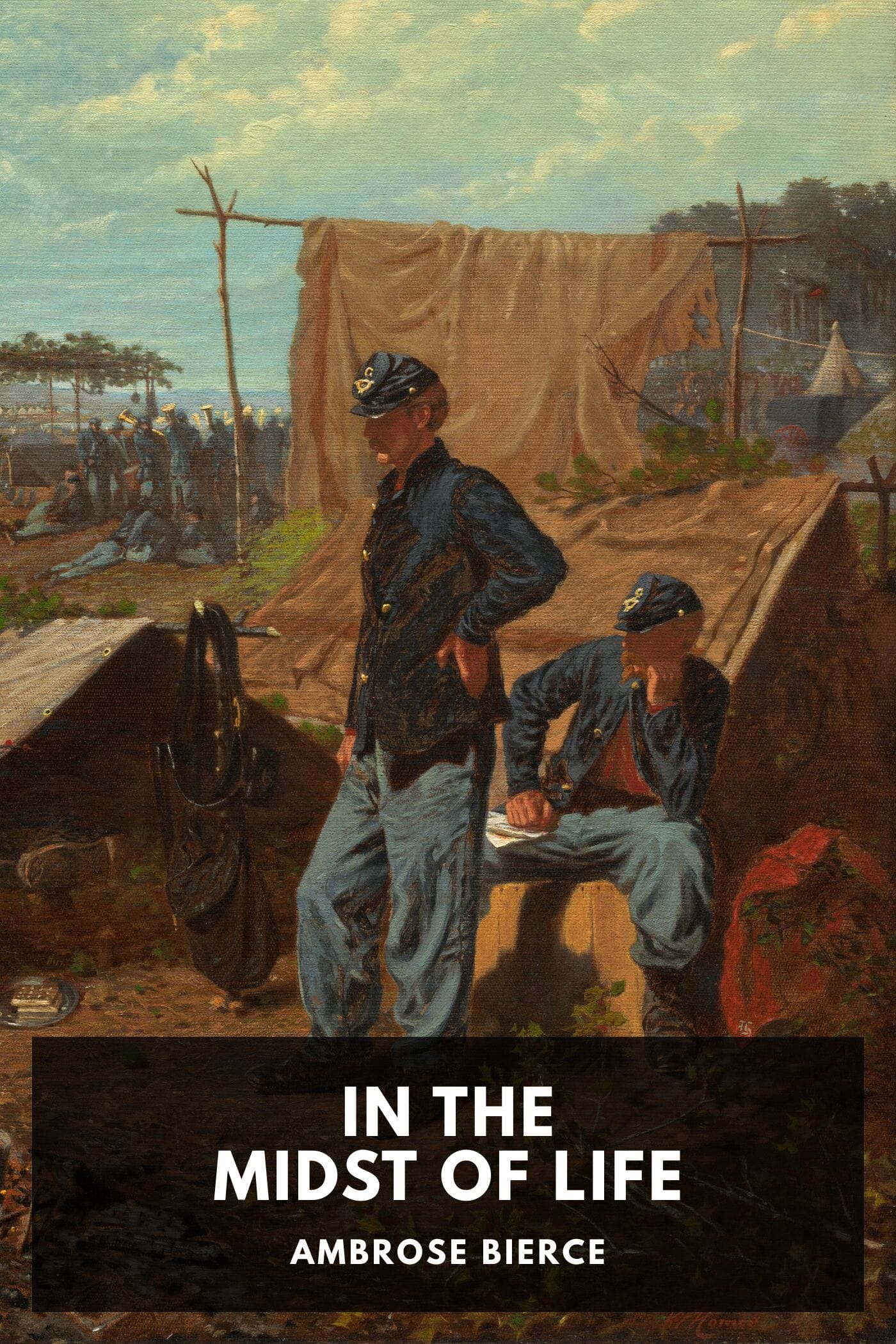
Ambrose Bierce's seminal collection, "In the Midst of Life: Tales of Soldiers and Civilians," plunges into the brutal realities and psychological terrors of the American Civil War and beyond. The "Soldiers" section, drawn from Bierce's own harrowing experiences at Shiloh, Chickamauga, and Kennesaw Mountain, dissects duty, fear, and the chilling proximity of death on the battlefield, famously exemplified by "An Occurrence at Owl Creek Bridge." The "Civilians" section veers into the macabre and supernatural, exploring the dark corners of the human psyche with tales of psychological horror, ironic twists, and unsettling encounters that blur the line between reality and hallucination, cementing Bierce's legacy as a master of the grotesque and the chillingly ambiguous.
Editions

X-Ray
A young Union soldier from Virginia who serves as a sentinel. He faces the moral conflict of potentially killing his own father, who serves in the Confederate army.
A Confederate sympathizer and planter who is captured and hanged by Union forces. His story reveals the power of imagination in the face of death.
A Union scout trapped under debris with his own rifle pointed at his head. He represents courage tested by extreme circumstances.
An artillery officer who follows orders to fire on his own troops due to miscommunication. He embodies the tragic consequences of military duty.
About In the Midst of Life
Chapter Summaries
- 1
- Union sentinel Carter Druse faces the ultimate test when he must shoot a Confederate horseman who turns out to be his own father. The story explores the tragic divisions created by civil war within families.
- 2
- Confederate sympathizer Peyton Farquhar is hanged by Union forces, but experiences an elaborate escape fantasy in his final moments. The story reveals the power of the mind to create alternate realities in extremis.
- 3
- A deaf-mute child wanders into a battlefield aftermath, playing among the wounded and dying soldiers before discovering his own home has been destroyed and his mother killed.
Key Themes
- The Irony of War
- Bierce repeatedly shows how war creates absurd and tragic situations where soldiers must kill their own family members, fire on their own troops, or die for meaningless causes. The ultimate irony is that war, meant to resolve conflicts, creates far greater moral dilemmas.
- The Thin Line Between Life and Death
- Many stories explore the moment of transition between life and death, often revealing that the boundary is more fluid than expected. Characters experience elaborate fantasies in their final moments or encounter the supernatural.
- Duty vs. Personal Conscience
- Characters repeatedly face conflicts between their military or social duties and their personal moral convictions. This tension often leads to tragic outcomes where following orders results in personal destruction.
Characters
- Carter Druse(protagonist)
- A young Union soldier from Virginia who serves as a sentinel. He faces the moral conflict of potentially killing his own father, who serves in the Confederate army.
- Peyton Farquhar(protagonist)
- A Confederate sympathizer and planter who is captured and hanged by Union forces. His story reveals the power of imagination in the face of death.
- Jerome Searing(protagonist)
- A Union scout trapped under debris with his own rifle pointed at his head. He represents courage tested by extreme circumstances.
- Captain Ransome(major)
- An artillery officer who follows orders to fire on his own troops due to miscommunication. He embodies the tragic consequences of military duty.
- Herman Brayle(major)
- A recklessly brave lieutenant whose courage stems from a desire to prove himself after being accused of cowardice by his lover.
- Captain Coulter(major)
- An artillery officer forced to engage enemy guns positioned at his own home, where his family lives.
Link to this book
Add a free, dofollow link to Lex on your blog, forum, syllabus, or reading list.

<a href="https://lex-books.com/book/in-the-midst-of-life-20defe59-7fcc-4655-bc7a-a43592228f43"><img src="https://lex-books.com/badges/read-on-lex.svg" alt="Read In the Midst of Life by Ambrose Bierce free on Lex" width="160" height="40"></a>[](https://lex-books.com/book/in-the-midst-of-life-20defe59-7fcc-4655-bc7a-a43592228f43)[url=https://lex-books.com/book/in-the-midst-of-life-20defe59-7fcc-4655-bc7a-a43592228f43][img]https://lex-books.com/badges/read-on-lex.svg[/img][/url]Read In the Midst of Life by Ambrose Bierce free on Lex: https://lex-books.com/book/in-the-midst-of-life-20defe59-7fcc-4655-bc7a-a43592228f43Cite this book
Reading this edition for a paper or guide? Copy a citation.
Bierce, Ambrose. In the Midst of Life. Lex, lex-books.com/book/in-the-midst-of-life-20defe59-7fcc-4655-bc7a-a43592228f43.Bierce, A. (n.d.). In the Midst of Life. Lex. https://lex-books.com/book/in-the-midst-of-life-20defe59-7fcc-4655-bc7a-a43592228f43Bierce, Ambrose. In the Midst of Life. Lex. https://lex-books.com/book/in-the-midst-of-life-20defe59-7fcc-4655-bc7a-a43592228f43.