The Devil's Dictionary
The Devil's Dictionary
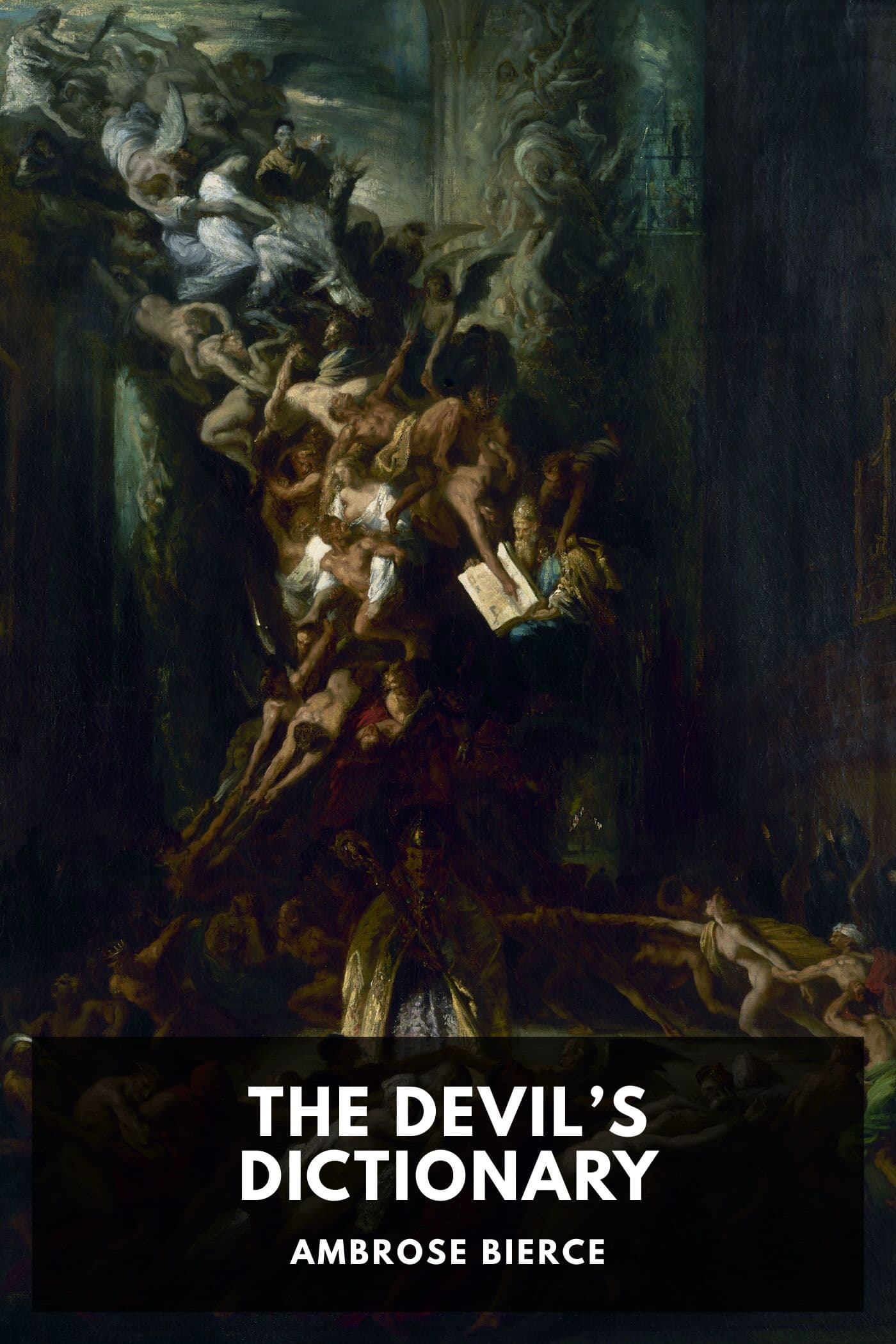
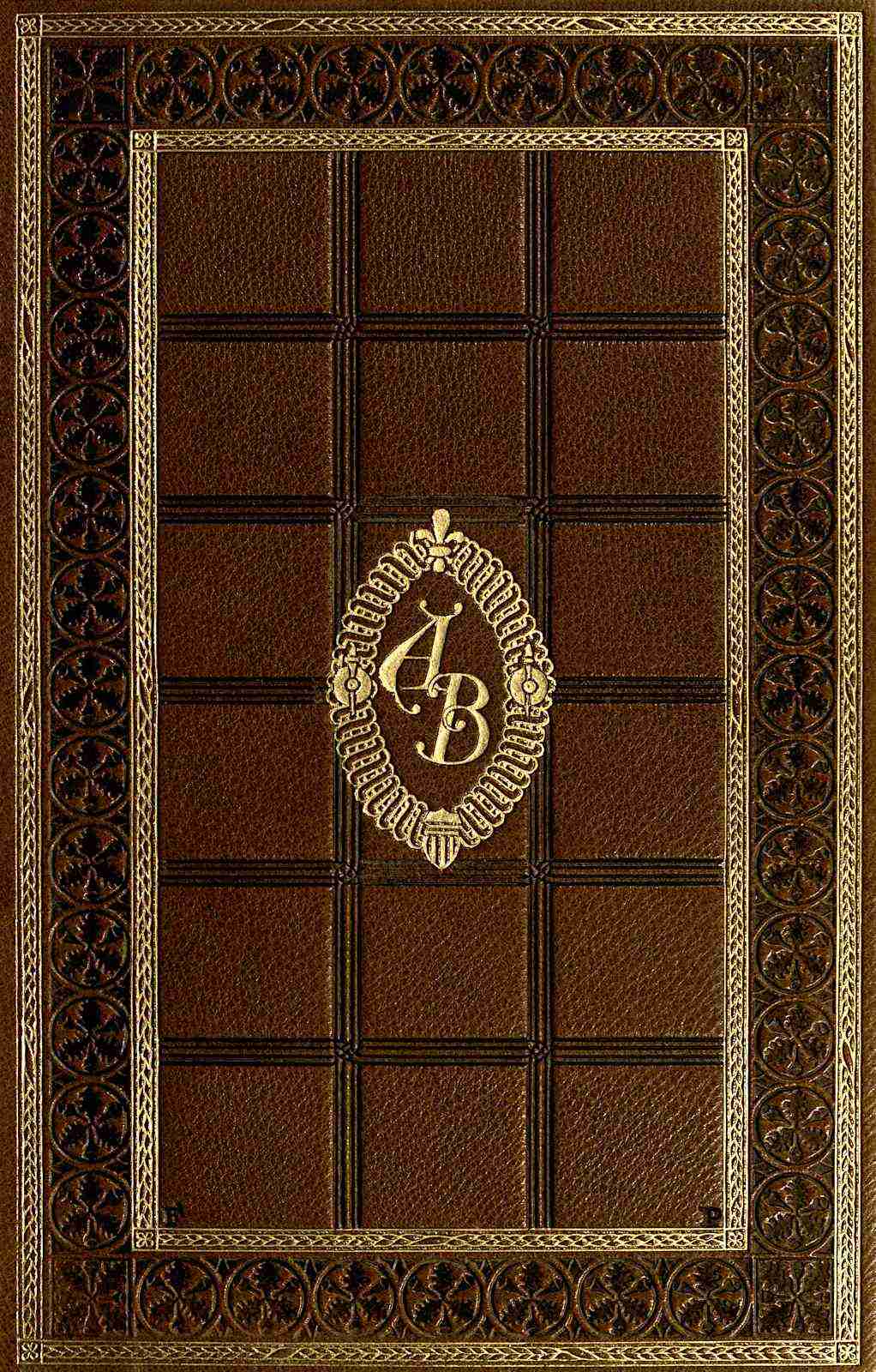
Ambrose Bierce wrote a dictionary, but don't expect any help with your crossword puzzle. Every entry in this infamous volume is a tiny act of literary revenge against language itself, against the comfortable lies we encode in everyday words. First published in 1911 after three decades of weekly installments in newspapers, The Devil's Dictionary collects over a thousand definitions that strip human pretension down to its ridiculous bones. A "bore" becomes "a person who talks when you wish him to listen." "Happiness" is "an agreeable sensation arising from contemplating the misery of another." Each definition reads like a small, perfect epigram, a witty grenade pulled and tossed with absolute composure. Bierce targets everything sacred - love, marriage, religion, politics, success - and finds it all wanting. The pleasure isn't just in recognizing the truth he exposes, but in how beautifully he executes each small cruelty. This is satire that refuses to look away, written by a man who later vanished into the Mexican Revolution, as if the real world finally became too absurd even for him. For anyone who's ever wanted to scream that the emperor has no clothes - but wished they could do it with perfect prose.
Editions
X-Ray
“Love, n. A temporary insanity curable by marriage.””
— Ambrose Bierce
“Quotation, n: The act of repeating erroneously the words of another.””
— Ambrose Bierce
“, n. Garment worn by child when its mother is feeling chilly.””
— Ambrose Bierce
“, n. A person of low taste, more interested in himself than in me.””
— Ambrose Bierce
“Patience, n. A minor form of despair, disguised as a virtue””
— Ambrose Bierce
“To ask that the laws of the universe be annulled in behalf of a single petitioner, confessedly unworthy.””
— Ambrose Bierce
“Selfish, adj. Devoid of consideration for the selfishness of others.””
— Ambrose Bierce
“, n. A body of water occupying about two-thirds of a world made for man”
— Ambrose Bierce
“Lottery: A tax on people who are bad at math.””
— Ambrose Bierce
Link to this book
Add a free, dofollow link to Lex on your blog, forum, syllabus, or reading list.

<a href="https://lex-books.com/book/the-devil-s-dictionary-9c14f6d1-9e85-4ea0-be35-dddd0ef9f71e"><img src="https://lex-books.com/badges/read-on-lex.svg" alt="Read The Devil's Dictionary by Ambrose Bierce free on Lex" width="160" height="40"></a>[](https://lex-books.com/book/the-devil-s-dictionary-9c14f6d1-9e85-4ea0-be35-dddd0ef9f71e)[url=https://lex-books.com/book/the-devil-s-dictionary-9c14f6d1-9e85-4ea0-be35-dddd0ef9f71e][img]https://lex-books.com/badges/read-on-lex.svg[/img][/url]Read The Devil's Dictionary by Ambrose Bierce free on Lex: https://lex-books.com/book/the-devil-s-dictionary-9c14f6d1-9e85-4ea0-be35-dddd0ef9f71eCite this book
Reading this edition for a paper or guide? Copy a citation.
Bierce, Ambrose. The Devil's Dictionary. Lex, lex-books.com/book/the-devil-s-dictionary-9c14f6d1-9e85-4ea0-be35-dddd0ef9f71e.Bierce, A. (n.d.). The Devil's Dictionary. Lex. https://lex-books.com/book/the-devil-s-dictionary-9c14f6d1-9e85-4ea0-be35-dddd0ef9f71eBierce, Ambrose. The Devil's Dictionary. Lex. https://lex-books.com/book/the-devil-s-dictionary-9c14f6d1-9e85-4ea0-be35-dddd0ef9f71e.