Appreciations and Criticisms of the Works of Charles Dickens
Appreciations and Criticisms of the Works of Charles Dickens
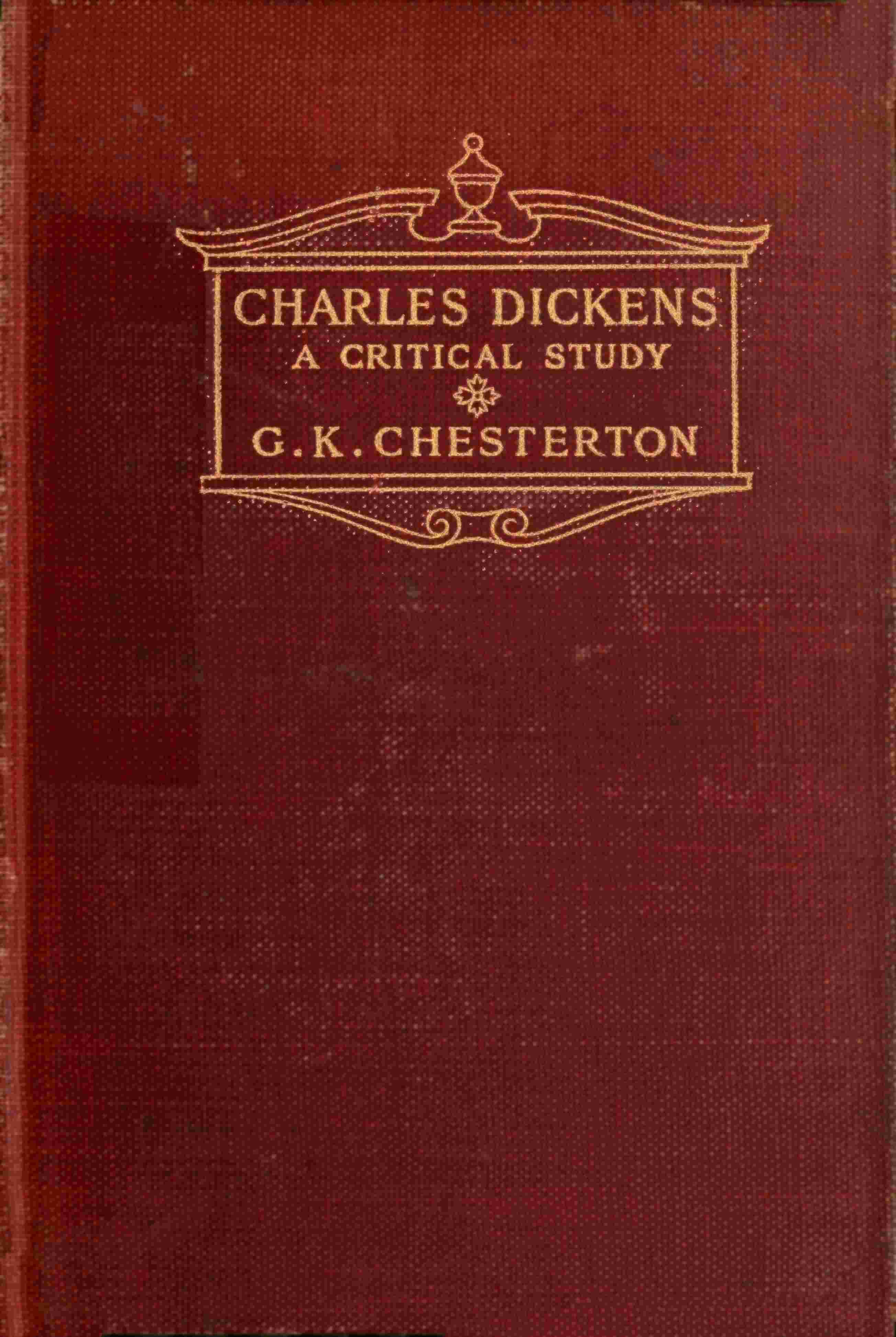
G.K. Chesterton loved a good fight, and in these essays he takes on everyone who ever dismissed Dickens as a mere caricaturist of Victorian excesses. Written with the fierce wit and paradox-loving intelligence that made Chesterton one of the twentieth century's most exhilarating essayists, this collection mounts a passionate defense of Dickens as a serious artist: a man who saw the fractures in industrial society long before they became visible, who understood that humor and humanity are not opposites but companions. The opening piece addresses the anxious question of Dickens's relevance directly, and Chesterton's answer is characteristically brilliant: it is not Dickens who has faded, he argues, but the Victorian world itself. What remains is something prophetic, funny, and deeply true. For readers who want to understand not just Dickens, but why some writers outlive their eras while others become period pieces, Chesterton offers an answer that is as entertaining as it is insightful.
Editions
X-Ray
“A finished tale may give a man immortality in the light and literary sense; but an unfinished tale suggests another immortality, more essential and more strange.””
— G. K. Chesterton
“Somewhere embedded in every ordinary book are the five or six words for which really all the rest will be written.””
— G. K. Chesterton
“The book originated in the suggestion of a publisher; as many more good books have done than the arrogance of the man of letters is commonly inclined to admit. Very much is said in our time about Apollo and Admetus, and the impossibility of asking genius to work within prescribed limits or assist an alien design. But after all, as a matter of fact, some of the greatest geniuses have done it, from Shakespeare botching up bad comedies and dramatising bad novels down to Dickens writing a masterpiece as the mere framework for a Mr. Seymour’s sketches. Nor is the true explanation irrelevant to the spirit and power of Dickens. Very delicate, slender, and bizarre talents are indeed incapable of being used for an outside purpose, whether of public good or of private gain. But about very great and rich talent there goes a certain disdainful generosity which can turn its hand to anything. Minor poets cannot write to order; but very great poets can write to order. The larger the man’s mind, the wider his scope of vision, the more likely it will be that anything suggested to him will seem significant and promising; the more he has a grasp of everything the more ready he will be to write anything. It is very hard (if that is the question) to throw a brick at a man and ask him to write an epic; but the more he is a great man the more able he will be to write about the brick.””
— G. K. Chesterton
“There is no clearer sign of the absence of originality among modern poets than their disposition to find new themes. Really original poets write poems about the spring. They are always fresh, just as the spring is always fresh. Men wholly without originality write poems about torture, or new religions, of some perversion of obscenity, hoping that the mere sting of the subject may speak for them. But we do not sufficiently realise that what is true of the classic ode is also true of the classic joke. A true poet writes about the spring being beautiful because (after a thousand springs) the spring really is beautiful. In the same way the true humourist writes about a man sitting down on his hat, because the act of sitting down on one’s hat (however often and however admirably performed) really is extremely funny. We must not dismiss a new poet because his poem is called To a Skylark; nor must we dismiss a humourist because his new farce is called My Mother-in-law. He may really have splendid and inspiring things to say upon an eternal problem. The whole question is whether he has.””
— G. K. Chesterton
“One could not imagine a process more open to the elephantine logic of the Bible-smasher than this: that the sun should be created after the sunlight. The conception that lies at the back of the phrase is indeed profoundly antagonistic to much of the modern point of view. To many modern people it would sound like saying that foliage existed before the first leaf ; it would sound like saying that childhood existed before a baby was born. The idea is, as I have said, alien to most modern thought, and like many other ideas which are alien to most modern thought, it is a very subtle and a very sound idea. Whatever be the meaning of the passage in the actual primeval poem, there is a very real metaphysical meaning in the idea that light existed before the sun and stars. It is not barbaric; it is rather Platonic. The idea existed before any of the machinery which made manifest the idea. Justice existed when there was no need of judges, and mercy existed before any man was oppressed. The whole difference between construction and creation is exactly this: that a thing constructed can only be loved after it is constructed; but a thing created is loved before it exists, as the mother can love the unborn child. In creative art the essence of a book exists before the book or before even the details or main features of the book; the author enjoys it and lives in it with a kind of prophetic rapture. He wishes to write a comic story before he has thought of a single comic incident. He desires to write a sad story before he has thought of anything sad. He knows the atmosphere before he knows anything. There is a low priggish maxim sometimes uttered by men so frivolous as to take humour seriously a maxim that a man should not laugh at his own jokes. But the great artist not only laughs at his own jokes; he laughs at his own jokes before he has made them.””
— G. K. Chesterton
Link to this book
Add a free, dofollow link to Lex on your blog, forum, syllabus, or reading list.

<a href="https://lex-books.com/book/appreciations-and-criticisms-of-the-works-of-charles-dickens-142a40fc-1e0d-4cb6-81b2-a5c6d10408ad"><img src="https://lex-books.com/badges/read-on-lex.svg" alt="Read Appreciations and Criticisms of the Works of Charles Dickens by G. K. Chesterton free on Lex" width="160" height="40"></a>[](https://lex-books.com/book/appreciations-and-criticisms-of-the-works-of-charles-dickens-142a40fc-1e0d-4cb6-81b2-a5c6d10408ad)[url=https://lex-books.com/book/appreciations-and-criticisms-of-the-works-of-charles-dickens-142a40fc-1e0d-4cb6-81b2-a5c6d10408ad][img]https://lex-books.com/badges/read-on-lex.svg[/img][/url]Read Appreciations and Criticisms of the Works of Charles Dickens by G. K. Chesterton free on Lex: https://lex-books.com/book/appreciations-and-criticisms-of-the-works-of-charles-dickens-142a40fc-1e0d-4cb6-81b2-a5c6d10408adCite this book
Reading this edition for a paper or guide? Copy a citation.
Chesterton, G. K.. Appreciations and Criticisms of the Works of Charles Dickens. Lex, lex-books.com/book/appreciations-and-criticisms-of-the-works-of-charles-dickens-142a40fc-1e0d-4cb6-81b2-a5c6d10408ad.Chesterton, G. K. (n.d.). Appreciations and Criticisms of the Works of Charles Dickens. Lex. https://lex-books.com/book/appreciations-and-criticisms-of-the-works-of-charles-dickens-142a40fc-1e0d-4cb6-81b2-a5c6d10408adChesterton, G. K.. Appreciations and Criticisms of the Works of Charles Dickens. Lex. https://lex-books.com/book/appreciations-and-criticisms-of-the-works-of-charles-dickens-142a40fc-1e0d-4cb6-81b2-a5c6d10408ad.