Προμηθεύς Δεσμώτης
1961

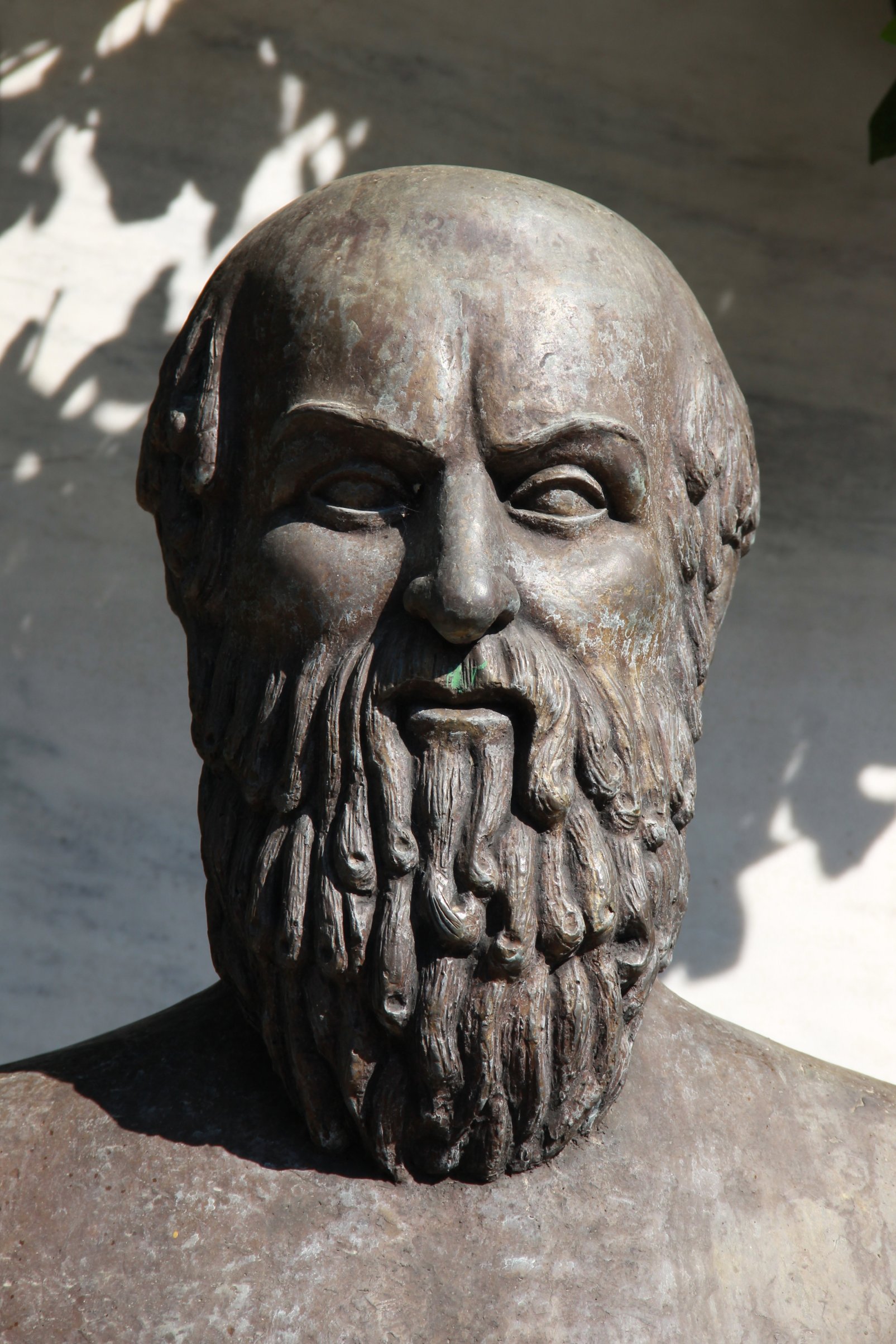
A Titan hangs in chains on a barren cliff, his flesh pierced by iron, his fate sealed by the king of the gods. This is Prometheus, who dared to steal fire from Olympus and give it to humanity, and now pays the price in an eternity of torment. But even as the blacksmith god Hephaestus hammers the shackles into place, even as the personifications of Force and Violence look on, Prometheus does not beg. He does not bow. He alone knows a secret that could topple Zeus from his throne, and he chooses silence over surrender. The Oceanids descend to mourn with him; Oceanus himself urges compromise. All around him, the world begs him to break. Yet Prometheus stands unyielding, a figure of magnificent defiance against divine tyranny. Written in the 5th century BC, this is not merely a story of punishment, but a provocation: what do we owe to each other, and what are we willing to endure for those we love? The play crackles with the terror and beauty of someone who chose humanity over immortality, and paid for it in blood.
Editions
X-Ray
“For it would be better to die once and for all than to suffer pain for all one's life.””
— Aeschylus
“For somehow this is tyranny's disease, to trust no friends.””
— Aeschylus
“Time, as it grows old, teaches all things.””
— Aeschylus
“I gave them hope, and so turned away their eyes from death””
— Aeschylus
“PROMETHEUS: 'Oh, it is easy for the one who stands outside the prison-wall of pain to exhort and teach the one who suffers””
— Aeschylus
“When one is wise, it's wisest to seem foolish.””
— Aeschylus
“Your speech is pompous sounding, full of pride, as fits the lackey of the Gods. You are young and young your rule and you think the tower in which you live is free from sorrow: from it have I not seen two tyrants thrown? The third, who now is king, I shall yet live to see him fall, of all three most suddenly, most dishonored. Do you think I will crouch before your Gods, -so new-and tremble? I am far from that.””
— Aeschylus
“I take my cue from deeds, not words.””
— Aeschylus
“Hear the sum of the whole matter in the compass of one brief word”
— Aeschylus
Link to this book
Add a free, dofollow link to Lex on your blog, forum, syllabus, or reading list.

<a href="https://lex-books.com/book/-3f82dba0-f83b-40bc-b949-1bb059c92adc"><img src="https://lex-books.com/badges/read-on-lex.svg" alt="Read Προμηθεύς Δεσμώτης by Aeschylus free on Lex" width="160" height="40"></a>[](https://lex-books.com/book/-3f82dba0-f83b-40bc-b949-1bb059c92adc)[url=https://lex-books.com/book/-3f82dba0-f83b-40bc-b949-1bb059c92adc][img]https://lex-books.com/badges/read-on-lex.svg[/img][/url]Read Προμηθεύς Δεσμώτης by Aeschylus free on Lex: https://lex-books.com/book/-3f82dba0-f83b-40bc-b949-1bb059c92adcCite this book
Reading this edition for a paper or guide? Copy a citation.
Aeschylus. Προμηθεύς Δεσμώτης. Lex, lex-books.com/book/-3f82dba0-f83b-40bc-b949-1bb059c92adc.Aeschylus (1961). Προμηθεύς Δεσμώτης. Lex. https://lex-books.com/book/-3f82dba0-f83b-40bc-b949-1bb059c92adcAeschylus. Προμηθεύς Δεσμώτης. Lex. https://lex-books.com/book/-3f82dba0-f83b-40bc-b949-1bb059c92adc.