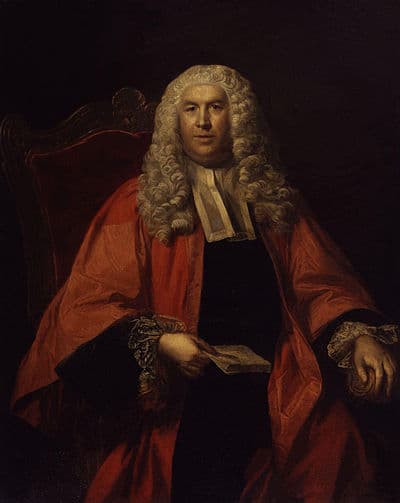
William, Sir Blackstone
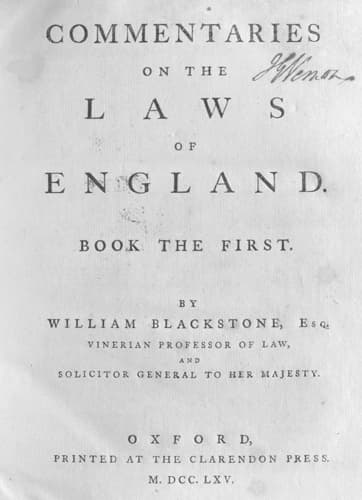
Sir William Blackstone was an English jurist and legal scholar, best known for his influential work, 'Commentaries on the Laws of England.' Published in four volumes between 1765 and 1769, this seminal text systematically outlined the common law of England and established a framework that would shape legal education and practice for generations. Blackstone's work was notable for its clarity and organization, making the complexities of law accessible to both legal practitioners and the general public. His emphasis on the importance of the rule of law and individual rights resonated deeply in the context of the Enlightenment, influencing both American and British legal thought. Beyond his 'Commentaries,' Blackstone served as a professor of law at Oxford and was a member of Parliament. His contributions to legal theory included the concept of natural rights, which would later play a significant role in the development of constitutional law. Blackstone's legacy endures in the legal systems of many English-speaking countries, and his writings remain a cornerstone of legal education. His work not only codified existing laws but also laid the groundwork for future legal reforms, making him a pivotal figure in the history of law and governance.
Famous Quotes
View all 3 quotes“Free men have arms; slaves do not.”
“The liberty of the press is indeed essential to the nature of a free state: but this consists in laying no previous restraints upon publications, and not in freedom from censure for criminal matter when published. Every freeman has an undoubted right to lay what sentiments he pleases before the public: to forbid this, is to destroy the freedom of the press: but if he publishes what is improper, mischievous, or illegal, he must take the consequence of his own temerity.”
“All presumptive evidence of felony should be admitted cautiously; for the law holds it better that ten guilty persons escape, than that one innocent party suffer.”
Books from the author



Link to this page
Add a free, dofollow link to Lex on your blog, forum, syllabus, or reading list.

<a href="https://lex-books.com/author/william-sir-blackstone"><img src="https://lex-books.com/badges/read-on-lex.svg" alt="William, Sir Blackstone on Lex" width="160" height="40"></a>[](https://lex-books.com/author/william-sir-blackstone)[url=https://lex-books.com/author/william-sir-blackstone][img]https://lex-books.com/badges/read-on-lex.svg[/img][/url]William, Sir Blackstone on Lex: https://lex-books.com/author/william-sir-blackstone