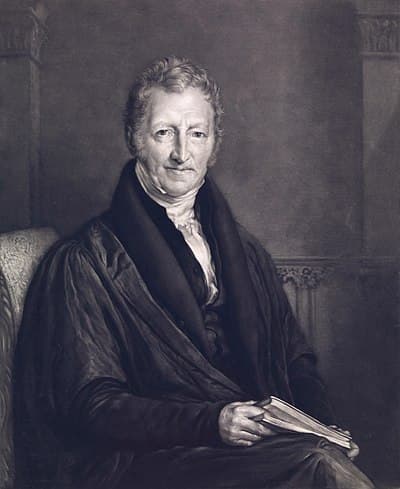
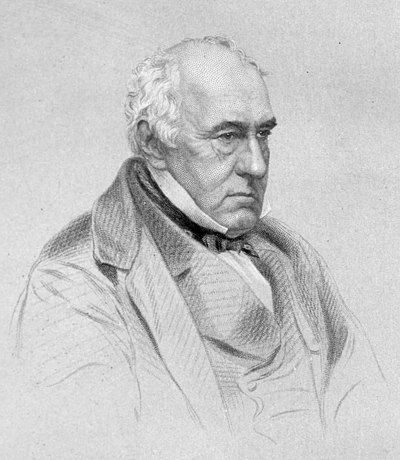
T. R. Malthus
Thomas Robert Malthus was an English cleric and scholar, best known for his influential theories on population growth and its implications for society. His seminal work, 'An Essay on the Principle of Population,' published in 1798, argued that population growth would inevitably outpace food production, leading to widespread famine and societal collapse unless checked by moral restraint or natural disasters. This controversial thesis sparked significant debate and laid the groundwork for modern demographic studies and economic theory, influencing figures such as Charles Darwin and the field of ecology. In addition to his population theories, Malthus wrote extensively on economic issues, particularly concerning agriculture and land use. His works, including 'Observations on the Effects of the Corn Laws' and 'An Inquiry into the Nature and Progress of Rent,' examined the relationship between agricultural policies and economic stability. Malthus's insights into the dynamics of supply and demand, as well as his critiques of government intervention in markets, contributed to the development of classical economics. His legacy endures in discussions of sustainability and resource management, making him a pivotal figure in both economic and environmental thought.
Famous Quotes
View all 10 quotes“The constancy of the laws of nature, or the certainty with which we may expect the same effects from the same causes, is the foundation of the faculty of reason.””
“man as he really is, inert, sluggish, and averse from labour, unless compelled by necessity””
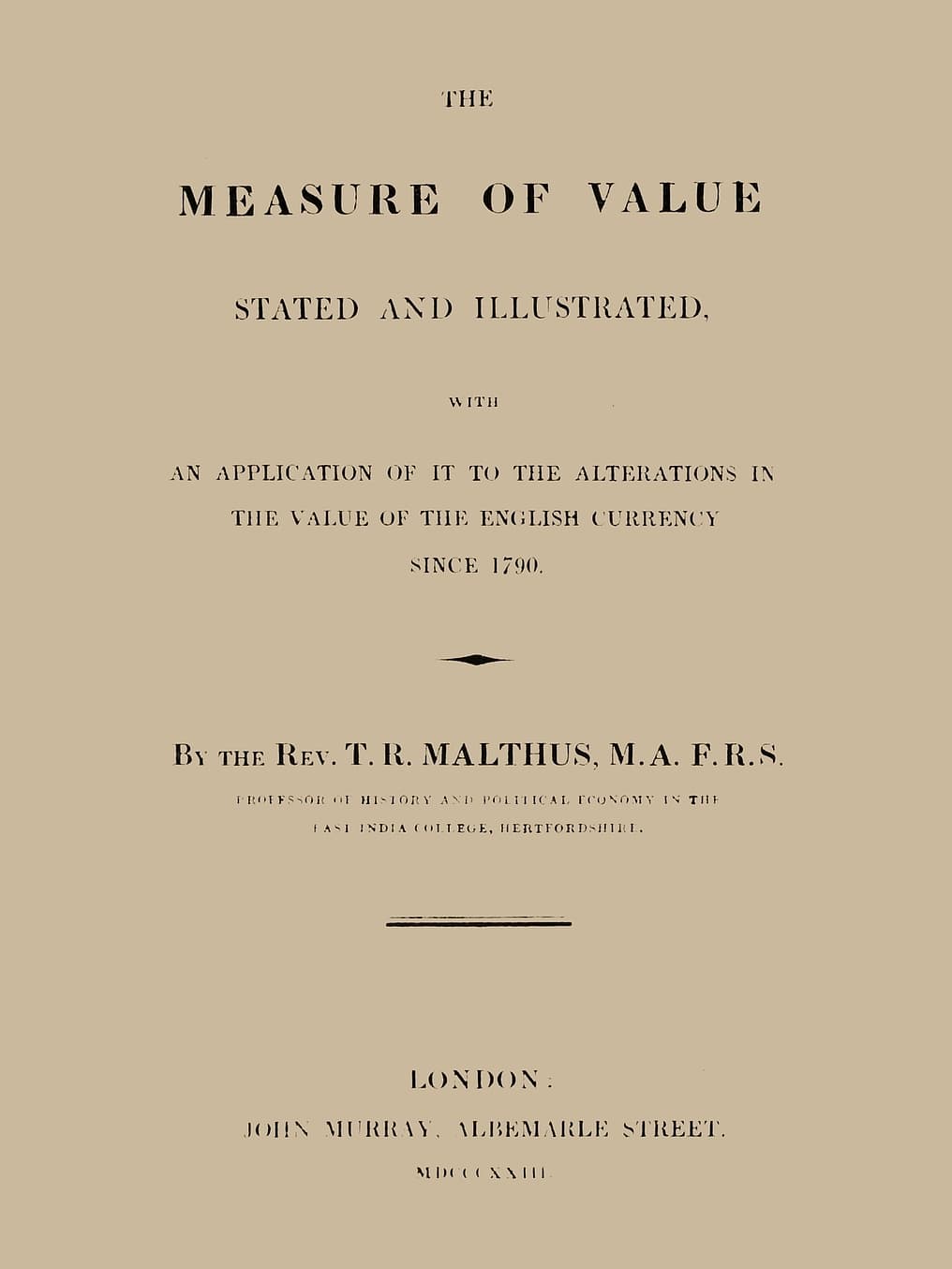
Books from the author






Link to this page
Add a free, dofollow link to Lex on your blog, forum, syllabus, or reading list.

<a href="https://lex-books.com/author/t-r-malthus"><img src="https://lex-books.com/badges/read-on-lex.svg" alt="T. R. Malthus on Lex" width="160" height="40"></a>[](https://lex-books.com/author/t-r-malthus)[url=https://lex-books.com/author/t-r-malthus][img]https://lex-books.com/badges/read-on-lex.svg[/img][/url]T. R. Malthus on Lex: https://lex-books.com/author/t-r-malthus