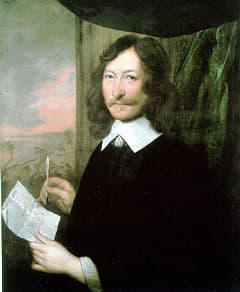
William Lilly
William Lilly was a prominent seventeenth-century English astrologer whose influence on the field of astrology remains significant. Born in Leicestershire to a yeoman farmer, he moved to London as a young man and eventually secured his fortune by marrying his former employer's widow. This newfound stability allowed him to delve deeply into the study of astrology, culminating in the publication of his groundbreaking work, 'Christian Astrology,' in 1647. This text was notable for being the first comprehensive astrological guide printed in English, rather than Latin, and it provided insights that resonated with a nation grappling with the turmoil of the English Civil War. Lilly's annual almanacs became immensely popular, selling around 30,000 copies a year by 1659, solidifying his status as the foremost astrologer in England. His autobiography, published in 1681, offers a unique glimpse into the political landscape of his time, detailing interactions with notable figures such as Oliver Cromwell and recounting events like the Great Fire of London. Lilly's candid and entertaining narrative not only chronicled his life but also provided valuable historical context about his contemporaries, making it a significant contribution to both astrology and English literature. His legacy endures as a pivotal figure in the development of Western astrological tradition, bridging the gap between the mystical and the political in a time of great change.
Famous Quotes
View all 6 quotes“For sweetest things turn sourest by their deeds; Lillies that fester smell far worse than weeds.””
“They that have power to hurt and will do none,That do not do the thing they most do show,Who, moving others, are themselves as stone,Unmoved, cold, and to temptation slow,They rightly do inherit Heaven's graces,And husband nature's riches from expense;They are the lords and owners of their faces,Others but stewards of their excellence.The summer's flow'r is to the summer sweetThough to itself it only live and die;But if that flow'r with base infection meet,The basest weed outbraves his dignity:For sweetest things turn sourest by their deeds;Lillies that fester smell far worse than weeds.””
“I'm Homer Smith."Mother Maria Marthe formed his name silently with her lips, then uttered it as it translated in her mind: "Homerus Schmidt.""Oh, ja! Schmidt!"Broad smiles broke across the faces of the three women. This was something they could understand, a stranger named Schmidt.””
Books from the author


Link to this page
Add a free, dofollow link to Lex on your blog, forum, syllabus, or reading list.

<a href="https://lex-books.com/author/william-lilly"><img src="https://lex-books.com/badges/read-on-lex.svg" alt="William Lilly on Lex" width="160" height="40"></a>[](https://lex-books.com/author/william-lilly)[url=https://lex-books.com/author/william-lilly][img]https://lex-books.com/badges/read-on-lex.svg[/img][/url]William Lilly on Lex: https://lex-books.com/author/william-lilly