Walter Hamilton
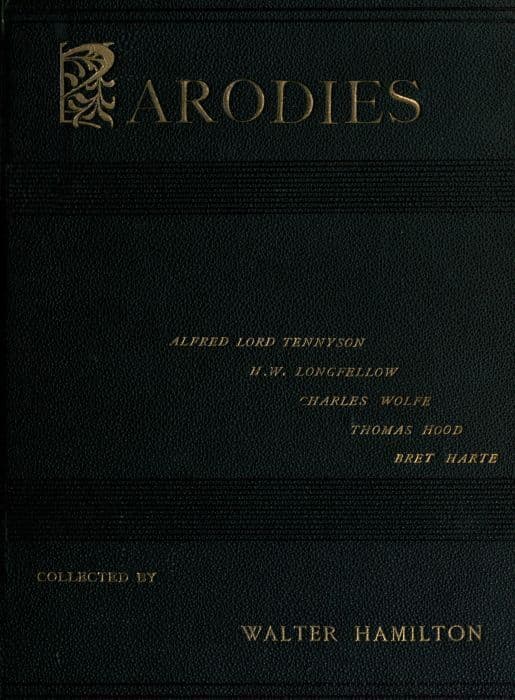
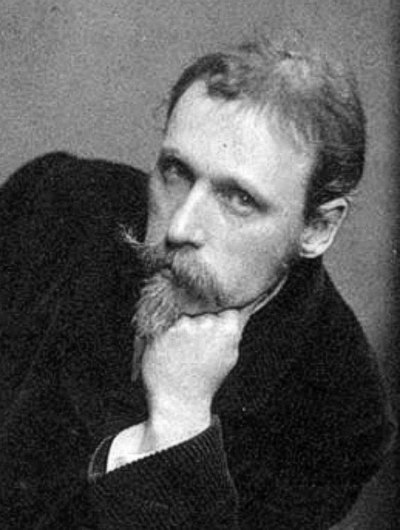
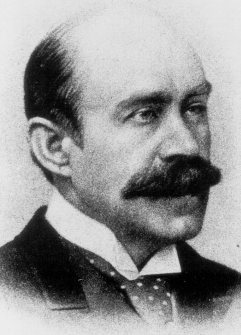
Walter Hamilton was a British author and critic known for his sharp wit and keen observations on literature and art during the late 19th century. His notable works include 'Parodies of the Works of English & American Authors,' where he showcased his talent for satire by humorously imitating the styles of various prominent writers. This collection not only entertained readers but also provided a critical lens through which to view the literary trends of his time. Hamilton's parodies, including those on Tennyson's 'Charge of the Light Brigade,' exemplified his ability to blend humor with insightful commentary on contemporary literature. In addition to his parodic works, Hamilton contributed to the discourse on art and aesthetics with 'The Æsthetic Movement in England,' where he explored the cultural and artistic shifts of the period. His writings often reflected the complexities of the æsthetic movement, which emphasized beauty and sensory experience over moral or narrative content. Hamilton's 'A Hand-book: or, Concise Dictionary of Terms Used in the Arts and Sciences' further showcased his commitment to education and clarity in the arts, making complex concepts accessible to a broader audience. Through his varied contributions, Hamilton left a lasting impact on literary criticism and the understanding of aesthetic principles in the late Victorian era.
Famous Quotes
View all 2 quotes“Oscar Wilde was born in Dublin, on the 15th October, 1856, so that he is now about twenty-six years of age, but brief as has been his career, it has been full of promise for the future. The son of highly intellectual parents, he has had an exceptional education, has travelled much in wild and remote, through classic lands, and in the course of these journeys has learnt to appreciate the beauties of the old authors, in whose works whilst at college he attained exceptional proficiency. But his naturally enthusiastic temperament teaches him to hope for better in the future than has been achieved in the past, and to see how vast will be the influence of Art and Literature on the coming democracy of Intellect, when education and culture shall have taught men to pride themselves on what they have done, and not alone on the deeds of their ancestors.”
“For the soul to be as good as possible, it must be corrected—even if that correction is painful. (Socrates discussing why it's worse to commit injustice than to suffer it.)”
Books from the author


Link to this page
Add a free, dofollow link to Lex on your blog, forum, syllabus, or reading list.

<a href="https://lex-books.com/author/walter-hamilton"><img src="https://lex-books.com/badges/read-on-lex.svg" alt="Walter Hamilton on Lex" width="160" height="40"></a>[](https://lex-books.com/author/walter-hamilton)[url=https://lex-books.com/author/walter-hamilton][img]https://lex-books.com/badges/read-on-lex.svg[/img][/url]Walter Hamilton on Lex: https://lex-books.com/author/walter-hamilton