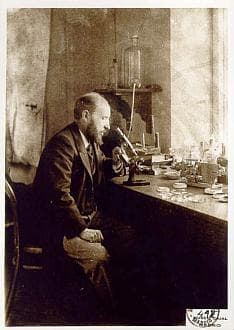
Santiago Ramón y Cajal
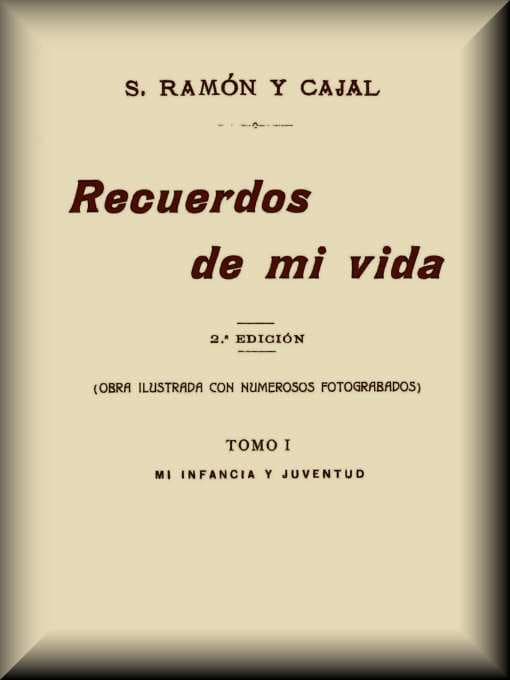
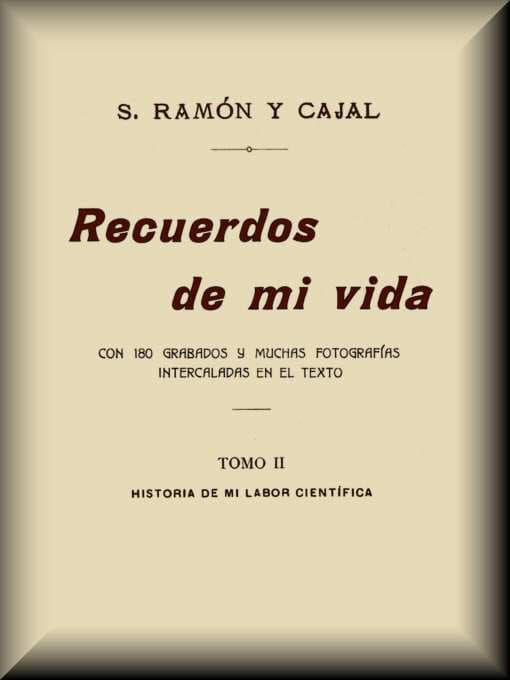
Santiago Ramón y Cajal was a pioneering Spanish neuroscientist and pathologist, often referred to as the father of modern neuroscience. Born in a small town in Spain, he initially pursued a career in medicine, where his fascination with the nervous system led him to conduct groundbreaking research on the structure of the brain and spinal cord. Cajal's meticulous drawings of neurons, which he produced using a staining technique he developed, revealed the intricate architecture of the nervous system and established the neuron doctrine, which posits that neurons are the fundamental units of the brain. His seminal works, including 'Textura del Sistema Nervioso del Hombre y de los Vertebrados' and 'Recollections of My Life,' not only documented his scientific findings but also provided insight into his life as a scientist and thinker. Cajal's contributions to neuroscience were recognized with the Nobel Prize in Physiology or Medicine in 1906, an honor he shared with Camillo Golgi, who had developed a competing theory of neural structure. Cajal's legacy extends beyond his scientific achievements; he was also a passionate advocate for the importance of science in society and the need for education in the sciences. His work laid the foundation for future research in neurobiology and has influenced generations of scientists, making him a central figure in the history of biology and medicine. Today, Cajal is celebrated not only for his discoveries but also for his artistic representation of the nervous system, which continues to inspire both scientists and artists alike.
Famous Quotes
View all 18 quotes“Perseverance is a virtue of the less brilliant.””
“As long as our brain is a mystery, the universe, the reflection of the structure of the brain will also be a mystery.””
“Heroes and scholars represent the opposite extremes... The scholar struggles for the benefit of all humanity, sometimes to reduce physical effort, sometimes to reduce pain, and sometimes to postpone death, or at least render it more bearable. In contrast, the patriot sacrifices a rather substantial part of humanity for the sake of his own prestige. His statue is always erected on a pedestal of ruins and corpses... In contrast, all humanity crowns a scholar, love forms the pedestal of his statues, and his triumphs defy the desecration of time and the judgment of history.””
Books from the author



Link to this page
Add a free, dofollow link to Lex on your blog, forum, syllabus, or reading list.

<a href="https://lex-books.com/author/santiago-ramón-y-cajal"><img src="https://lex-books.com/badges/read-on-lex.svg" alt="Santiago Ramón y Cajal on Lex" width="160" height="40"></a>[](https://lex-books.com/author/santiago-ramón-y-cajal)[url=https://lex-books.com/author/santiago-ramón-y-cajal][img]https://lex-books.com/badges/read-on-lex.svg[/img][/url]Santiago Ramón y Cajal on Lex: https://lex-books.com/author/santiago-ramón-y-cajal