
Robert Dale Owen
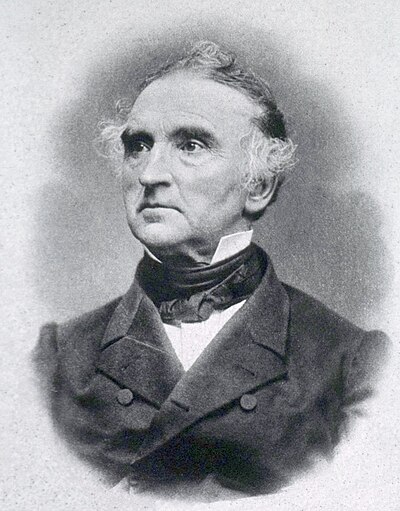
Robert Dale Owen was a Scottish-born Welsh-American social reformer and politician whose influence extended across various social and political landscapes in the 19th century. A member of the Democratic Party, he served in the Indiana House of Representatives and represented Indiana in the U.S. House of Representatives from 1843 to 1847. During his congressional tenure, Owen was instrumental in the establishment of the Smithsonian Institution, serving on its first Board of Regents. His political activities also included participation in the Indiana Constitutional Convention of 1850 and a diplomatic role as U.S. chargé d'affaires to Naples from 1853 to 1858. Owen was deeply influenced by the socialist ideals of his father, Robert Owen, and played a significant role in the New Harmony community, a utopian society founded in 1825. He was a prolific writer, producing pamphlets, articles, and books that articulated his views on social reform, including women’s rights, public education, and the abolition of slavery. His advocacy for married women's property rights and divorce was notable, as he successfully pushed for constitutional changes in Indiana. Owen's commitment to social justice and education left a lasting legacy, marking him as a significant figure in the early American social reform movement.
Famous Quotes
View all 1 quotes“all cooperative schemes which provide equal remuneration to the skilled and industrious and the ignorant and idle must work their own downfall, For by this unjust plan they must of necessity eliminate the valuable members and retain only the improvident, unskilled and vicious.”
Books from the author



Link to this page
Add a free, dofollow link to Lex on your blog, forum, syllabus, or reading list.

<a href="https://lex-books.com/author/robert-dale-owen"><img src="https://lex-books.com/badges/read-on-lex.svg" alt="Robert Dale Owen on Lex" width="160" height="40"></a>[](https://lex-books.com/author/robert-dale-owen)[url=https://lex-books.com/author/robert-dale-owen][img]https://lex-books.com/badges/read-on-lex.svg[/img][/url]Robert Dale Owen on Lex: https://lex-books.com/author/robert-dale-owen