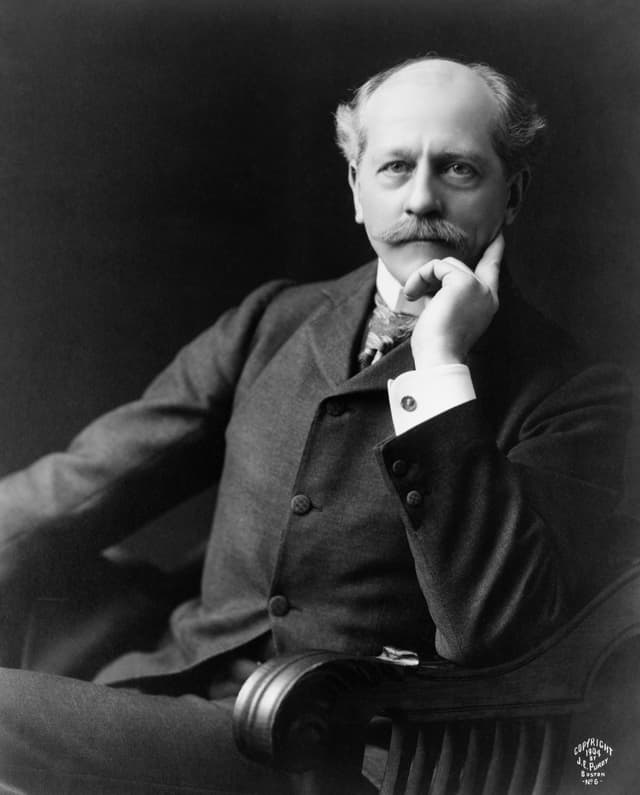
Percival Lowell
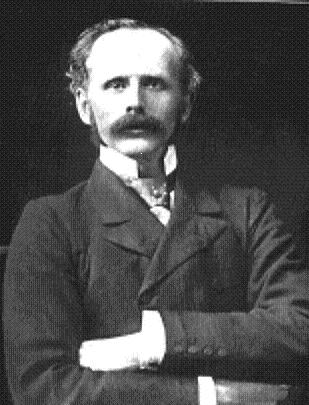
Percival Lowell was an influential American businessman, author, mathematician, and astronomer known for his groundbreaking theories about Mars and the possibility of a ninth planet in our Solar System. He became famous for his assertion that there were canals on Mars, a claim that sparked widespread interest and debate in both scientific and popular circles. Lowell's fascination with the red planet led him to establish the Lowell Observatory in Flagstaff, Arizona, where he conducted extensive observations and research that laid the groundwork for future astronomical discoveries. In addition to his work on Mars, Lowell's advocacy for the existence of a ninth planet ultimately culminated in the discovery of Pluto, which occurred 14 years after his death. His writings, including "Mars and Its Canals" and "The Evolution of Worlds," showcased his unique blend of scientific inquiry and imaginative speculation, making significant contributions to the fields of astronomy and planetary science. Lowell's legacy endures through his influence on subsequent generations of astronomers and his role in expanding our understanding of the cosmos.
Famous Quotes
View all 1 quotes“If astronomy teaches anything, it teaches that man is but a detail in the evolution of the universe, and the resemblant though diverse details are inevitably to be expected in the hosts of orbs around him. He learns that, though he will probably never find his double anywhere, he is destined to discover any number of cousins scattered through space.”
Books from the author



Link to this page
Add a free, dofollow link to Lex on your blog, forum, syllabus, or reading list.

<a href="https://lex-books.com/author/percival-lowell"><img src="https://lex-books.com/badges/read-on-lex.svg" alt="Percival Lowell on Lex" width="160" height="40"></a>[](https://lex-books.com/author/percival-lowell)[url=https://lex-books.com/author/percival-lowell][img]https://lex-books.com/badges/read-on-lex.svg[/img][/url]Percival Lowell on Lex: https://lex-books.com/author/percival-lowell