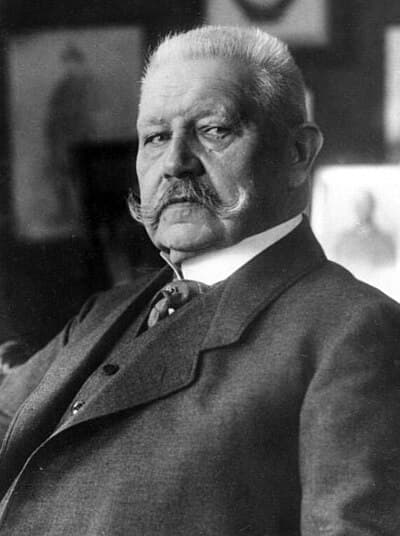
Paul von Hindenburg
Paul von Hindenburg was a prominent German military officer and statesman, best known for his leadership during World War I and his later role as President of Germany. Born into a minor Prussian noble family in the Grand Duchy of Posen, he began his military career after completing his education as a cadet. Hindenburg's early military service included participation in the Austro-Prussian and Franco-Prussian wars, and he quickly ascended the ranks, eventually becoming a member of the German General Staff. His military acumen was particularly evident during World War I, where he gained national fame for his decisive victory at the Battle of Tannenberg, which solidified his status as a national hero and led to a cult of personality surrounding him. After the war, Hindenburg's influence extended into politics when he was elected President of Germany in 1925. His presidency was marked by political instability and economic challenges, culminating in the rise of the Nazi Party. In a controversial decision, he appointed Adolf Hitler as Chancellor in 1933, a move that facilitated the Nazi seizure of power. Hindenburg's legacy is complex; while he is celebrated for his military achievements, his political decisions contributed to the rise of totalitarianism in Germany, leaving a lasting impact on the nation's history and the trajectory of the 20th century.
Books from the author


Link to this page
Add a free, dofollow link to Lex on your blog, forum, syllabus, or reading list.

<a href="https://lex-books.com/author/paul-von-hindenburg"><img src="https://lex-books.com/badges/read-on-lex.svg" alt="Paul von Hindenburg on Lex" width="160" height="40"></a>[](https://lex-books.com/author/paul-von-hindenburg)[url=https://lex-books.com/author/paul-von-hindenburg][img]https://lex-books.com/badges/read-on-lex.svg[/img][/url]Paul von Hindenburg on Lex: https://lex-books.com/author/paul-von-hindenburg