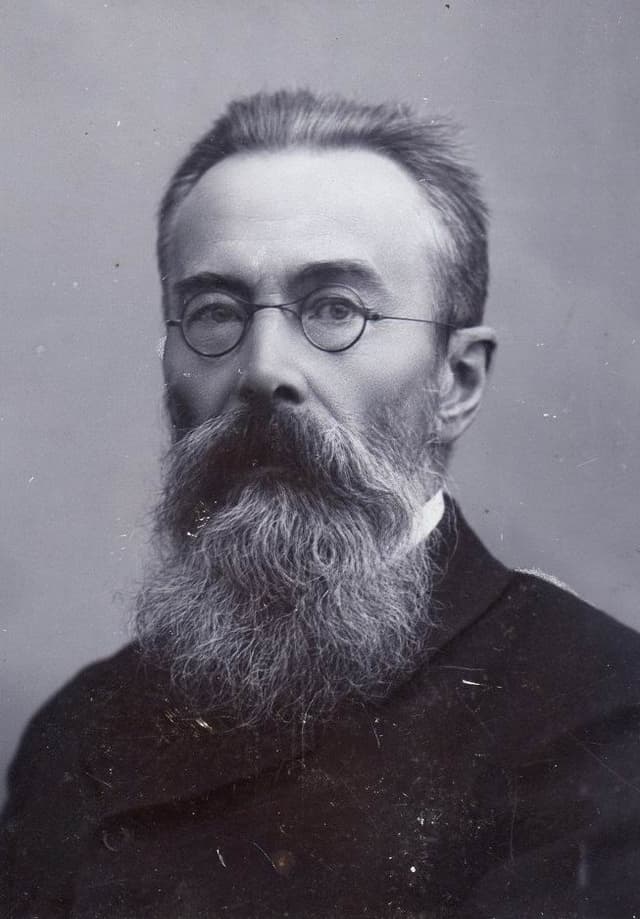
Nikolay Rimsky-Korsakov
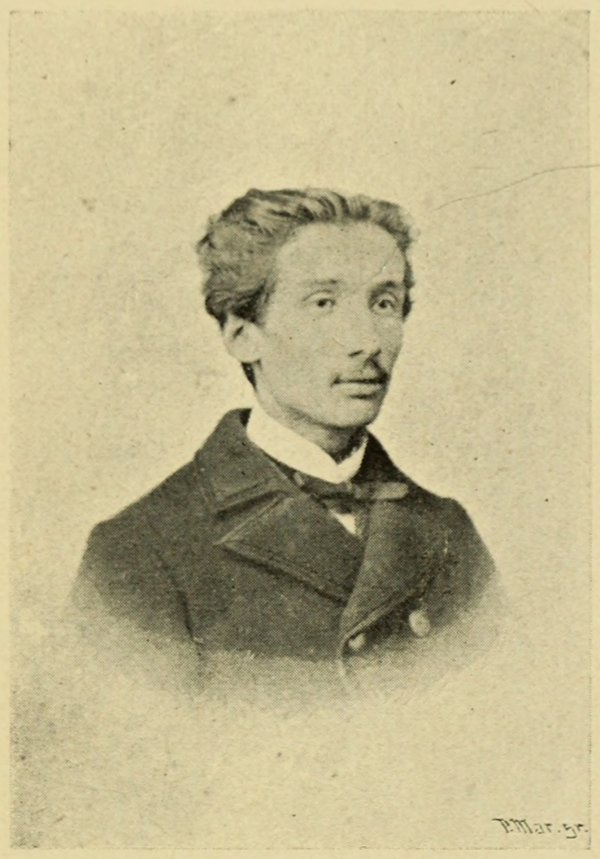
Nikolai Rimsky-Korsakov was a prominent Russian composer and a key figure in the group known as The Five, who sought to establish a distinct national style in classical music. His orchestral works, including the vibrant 'Capriccio Espagnol,' the evocative 'Russian Easter Festival Overture,' and the enchanting symphonic suite 'Scheherazade,' remain central to the classical repertoire. Rimsky-Korsakov's compositions often drew inspiration from Russian folk tales and exotic themes, reflecting his commitment to musical orientalism while also incorporating Western techniques he mastered during his tenure as a professor at the Saint Petersburg Conservatory. In addition to his prolific output of operas and orchestral pieces, Rimsky-Korsakov had a unique dual career, serving as an officer in the Imperial Russian Navy and later as Inspector of Naval Bands. This naval background not only fueled his lifelong fascination with the sea but also enriched his orchestration skills, particularly in woodwind and brass instrumentation. His pedagogical legacy continued through his students and his influential textbook on orchestration, which was completed posthumously by his son-in-law. Rimsky-Korsakov's innovative blend of Russian folk elements with Western compositional techniques solidified his status as a pivotal figure in the development of Russian classical music.
Books from the author


Link to this page
Add a free, dofollow link to Lex on your blog, forum, syllabus, or reading list.

<a href="https://lex-books.com/author/nikolay-rimsky-korsakov"><img src="https://lex-books.com/badges/read-on-lex.svg" alt="Nikolay Rimsky-Korsakov on Lex" width="160" height="40"></a>[](https://lex-books.com/author/nikolay-rimsky-korsakov)[url=https://lex-books.com/author/nikolay-rimsky-korsakov][img]https://lex-books.com/badges/read-on-lex.svg[/img][/url]Nikolay Rimsky-Korsakov on Lex: https://lex-books.com/author/nikolay-rimsky-korsakov