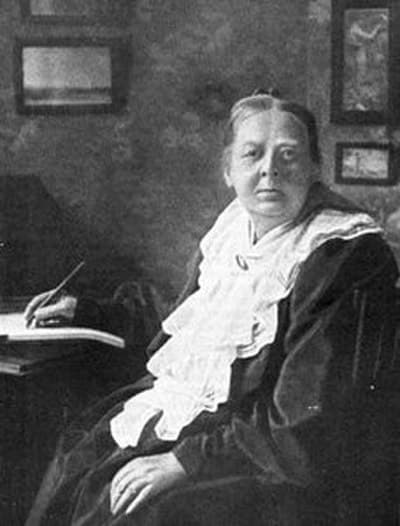
Mary Everest Boole
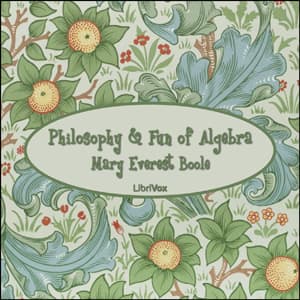
Mary Everest Boole was a self-taught mathematician and educator who made significant contributions to the field of mathematics and the philosophy of education. Born in Wickwar, Gloucestershire, she married the renowned logician George Boole, and together they navigated the academic landscape of the 19th century. Boole is best known for her didactic works, particularly 'Philosophy and Fun of Algebra,' which aimed to make mathematics accessible and enjoyable for children. Her innovative approach included playful activities, such as curve stitching, to engage young minds in mathematical concepts. Boole's progressive ideas on education were encapsulated in her influential work 'The Preparation of the Child for Science,' where she advocated for an experiential learning environment that encouraged exploration and creativity. Her contributions are particularly notable in the context of women's roles in academia during a time when such opportunities were limited. As a pioneering figure, Mary Everest Boole's legacy continues to inspire educators and feminists alike, highlighting the importance of inclusivity and creativity in learning.
Famous Quotes
View all 2 quotes“Mathematics had never had more than a secondary interest for him [her husband, George Boole]; and even logic he cared for chiefly as a means of clearing the ground of doctrines imagined to be proved, by showing that the evidence on which they were supposed to give rest had no tendency to prove them.”
“Only dead mathematics can be taught where competition prevails: living mathematics must always be a communal possession.”
Audiobooks from the author

Link to this page
Add a free, dofollow link to Lex on your blog, forum, syllabus, or reading list.

<a href="https://lex-books.com/author/mary-everest-boole"><img src="https://lex-books.com/badges/read-on-lex.svg" alt="Mary Everest Boole on Lex" width="160" height="40"></a>[](https://lex-books.com/author/mary-everest-boole)[url=https://lex-books.com/author/mary-everest-boole][img]https://lex-books.com/badges/read-on-lex.svg[/img][/url]Mary Everest Boole on Lex: https://lex-books.com/author/mary-everest-boole