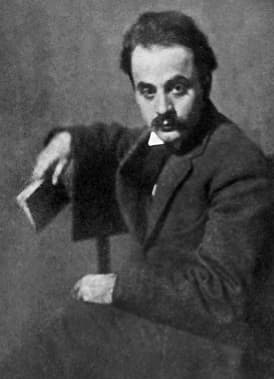
Kahlil Gibran
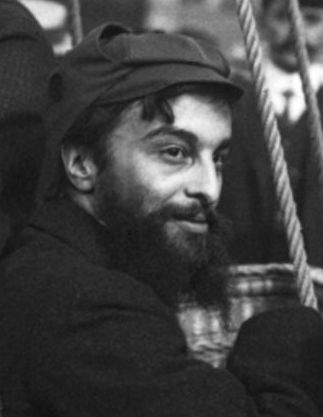
Kahlil Gibran was a Lebanese-American writer, poet, and visual artist, renowned for his profound literary contributions that blend philosophy and spirituality. Born in Bsharri, Lebanon, he immigrated to the United States with his family in 1895, where he faced early hardships that shaped his artistic vision. Gibran's education in Boston and later in Paris exposed him to various cultural and political ideas, influencing his writing style and thematic choices. His first major work, The Madman, was published in 1918, but it was his 1923 masterpiece, The Prophet, that solidified his legacy. This book, a collection of poetic essays, explored themes of love, freedom, and self-knowledge, and has since become one of the best-selling books in history, translated into over 100 languages. Gibran's literary significance lies not only in his poetic prowess but also in his ability to bridge Eastern and Western philosophies. His works often challenged societal norms and religious conventions, reflecting his own experiences as an immigrant and a seeker of truth. Despite his rejection of the title, many consider him a philosopher for his deep explorations of the human condition. Gibran's influence extends beyond literature; he inspired generations of writers and thinkers, and his legacy continues through the Kahlil Gibran Museum in his hometown, which preserves his artistic and literary heritage. His life and work remain a testament to the power of words to transcend cultural boundaries and resonate with the universal human experience.
Famous Quotes
View all 3 quotes“You talk when you cease to be at peace with your thoughts.”
“If you love somebody, let them go, for if they return, they were always yours. If they don't, they never were.”
“Let there be spaces in your togetherness, And let the winds of the heavens dance between you. Love one another but make not a bond of love: Let it rather be a moving sea between the shores of your souls. Fill each other's cup but drink not from one cup. Give one another of your bread but eat not from the same loaf. Sing and dance together and be joyous, but let each one of you be alone, Even as the strings of a lute are alone though they quiver with the same music. Give your hearts, but not into each other's keeping. For only the hand of Life can contain your hearts. And stand together, yet not too near together: For the pillars of the temple stand apart, And the oak tree and the cypress grow not in each other's shadow.”
Books from the author



Link to this page
Add a free, dofollow link to Lex on your blog, forum, syllabus, or reading list.

<a href="https://lex-books.com/author/kahlil-gibran"><img src="https://lex-books.com/badges/read-on-lex.svg" alt="Kahlil Gibran on Lex" width="160" height="40"></a>[](https://lex-books.com/author/kahlil-gibran)[url=https://lex-books.com/author/kahlil-gibran][img]https://lex-books.com/badges/read-on-lex.svg[/img][/url]Kahlil Gibran on Lex: https://lex-books.com/author/kahlil-gibran