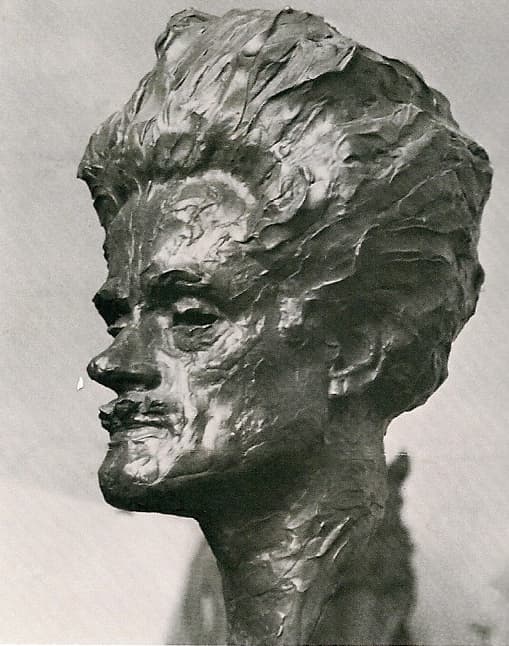
Hugh MacDiarmid
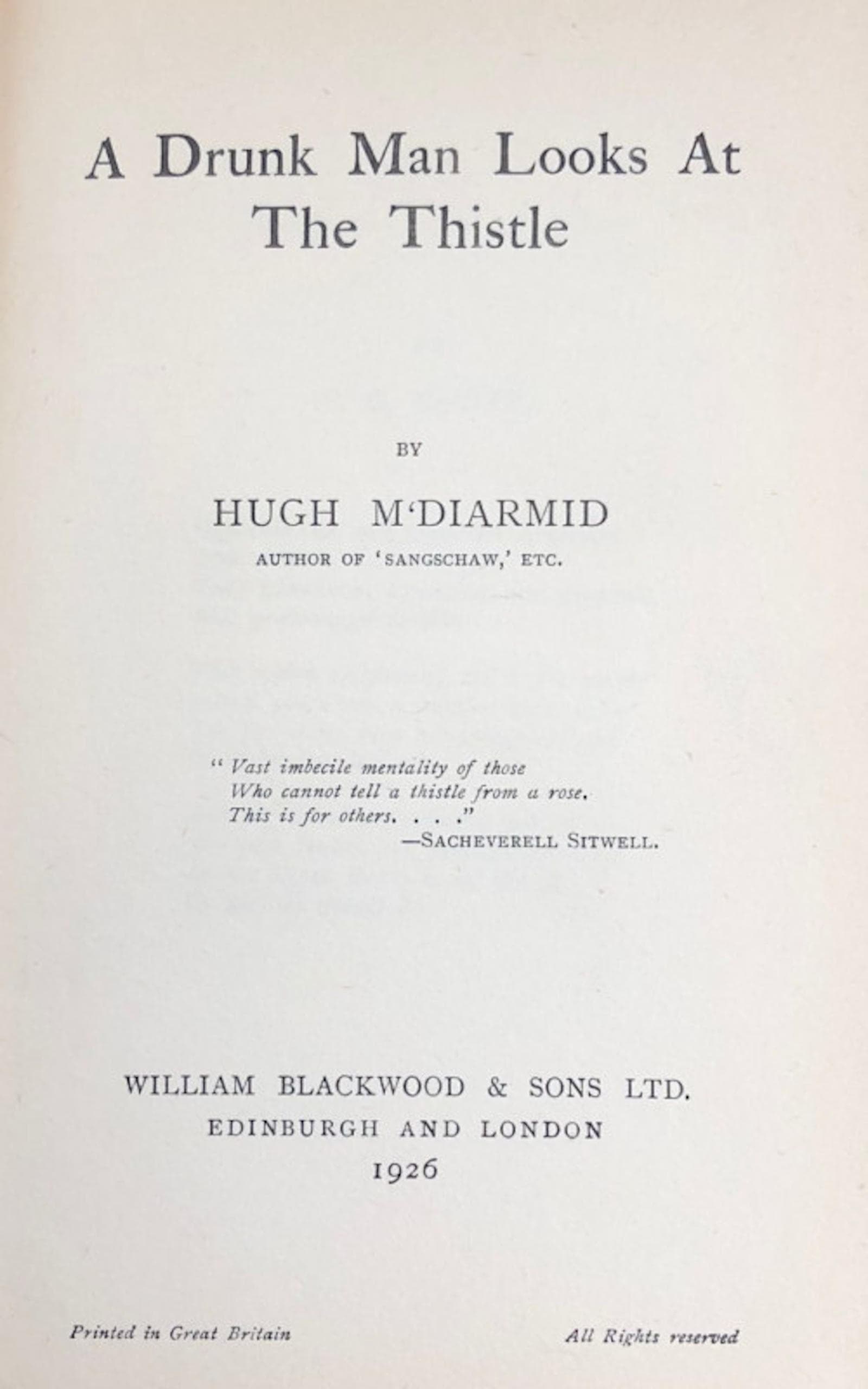
Hugh MacDiarmid, born Christopher Murray Grieve, was a pivotal Scottish poet, journalist, and political figure whose work played a crucial role in the Scottish Renaissance. He emerged from the small border town of Langholm, Dumfriesshire, where he was educated before briefly working as a teacher. His early writing, including 'Annals of the Five Senses,' was primarily in English, but he later became renowned for his innovative use of 'synthetic Scots,' a literary form of the Scots language that he developed himself. This linguistic experimentation not only showcased his poetic prowess but also emphasized his commitment to Scottish identity and culture. MacDiarmid's political engagement was as significant as his literary contributions. A founding member of the National Party of Scotland, he later joined the Communist Party of Great Britain, reflecting his complex political views that combined nationalism with socialist ideals. His poetry, infused with a deep sense of Scottish heritage and a desire for social change, resonated through works such as 'A Drunk Man Looks at the Thistle.' Despite facing expulsion from the Communist Party due to his nationalist sympathies, MacDiarmid remained a vocal advocate for Scottish independence and cultural revival throughout his life. His legacy endures as a cornerstone of Scottish literature and political thought, influencing generations of writers and activists alike.
Famous Quotes
View all 3 quotes“And until that day comes every true man's place/ is to reject all else and be with the lowest,/ the poorest - in the bottom of that deepest of wells/ in which alone is truth; in which is truth only - truth that should shine like the sun,/ with a monopoly of movement, and a sound like talking to God.”
“We are so easily baffled by appearances And do not realize that these stones are one with the stars.”
“It requires great love of it deeply to read The configuration of a land, Gradually grow conscious of fine shadings, Of great meanings in slight symbols, Hear at last the great voice that speaks softly, See the swell and fall upon the flank Of a statue carved out in a whole country’s marble, Be like Spring, like a hand in a window Moving New and Old things carefully to and fro, Moving a fraction of flower here, Placing an inch of air there, And without breaking anything. So I have gathered unto myself All the loose ends of Scotland, And by naming them and accepting them, Loving them and identifying myself with them, Attempt to express the whole.”
Books from the author


Link to this page
Add a free, dofollow link to Lex on your blog, forum, syllabus, or reading list.

<a href="https://lex-books.com/author/hugh-macdiarmid"><img src="https://lex-books.com/badges/read-on-lex.svg" alt="Hugh MacDiarmid on Lex" width="160" height="40"></a>[](https://lex-books.com/author/hugh-macdiarmid)[url=https://lex-books.com/author/hugh-macdiarmid][img]https://lex-books.com/badges/read-on-lex.svg[/img][/url]Hugh MacDiarmid on Lex: https://lex-books.com/author/hugh-macdiarmid