
Hrotsvitha
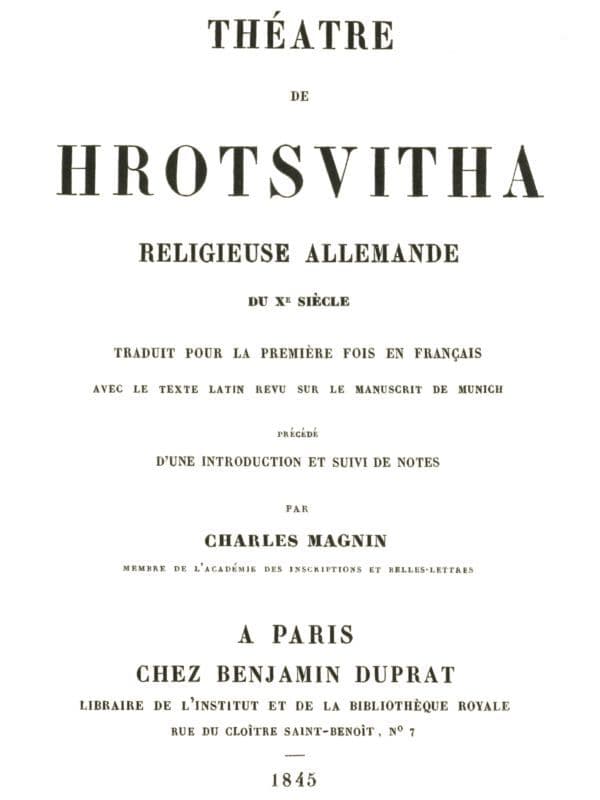
Hrotsvitha was a 10th-century German nun, playwright, and poet, recognized as one of the earliest female writers in Western literature. Living in the monastery of Gandersheim, she composed a series of plays that were notable for their unique blend of classical forms and Christian themes. Her works, which included the collection 'Dulcitius' and 'Paphnutius', were groundbreaking in their portrayal of strong female characters and their moral fortitude, challenging the prevailing narratives of her time that often relegated women to passive roles. Hrotsvitha's plays were inspired by the Roman playwright Terence, but she infused them with a distinctly Christian perspective, making her a pioneer of medieval drama and a precursor to later theatrical traditions. Hrotsvitha's significance extends beyond her literary contributions; she represents a crucial link in the history of women in literature, showcasing the intellectual capabilities of women in a male-dominated society. Her works were largely forgotten until the Renaissance, when they were rediscovered and appreciated for their originality and depth. Hrotsvitha's legacy endures as a testament to the resilience of female voices in literature and the enduring power of storytelling in shaping cultural narratives.
Books from the author


Link to this page
Add a free, dofollow link to Lex on your blog, forum, syllabus, or reading list.

<a href="https://lex-books.com/author/hrotsvitha"><img src="https://lex-books.com/badges/read-on-lex.svg" alt="Hrotsvitha on Lex" width="160" height="40"></a>[](https://lex-books.com/author/hrotsvitha)[url=https://lex-books.com/author/hrotsvitha][img]https://lex-books.com/badges/read-on-lex.svg[/img][/url]Hrotsvitha on Lex: https://lex-books.com/author/hrotsvitha